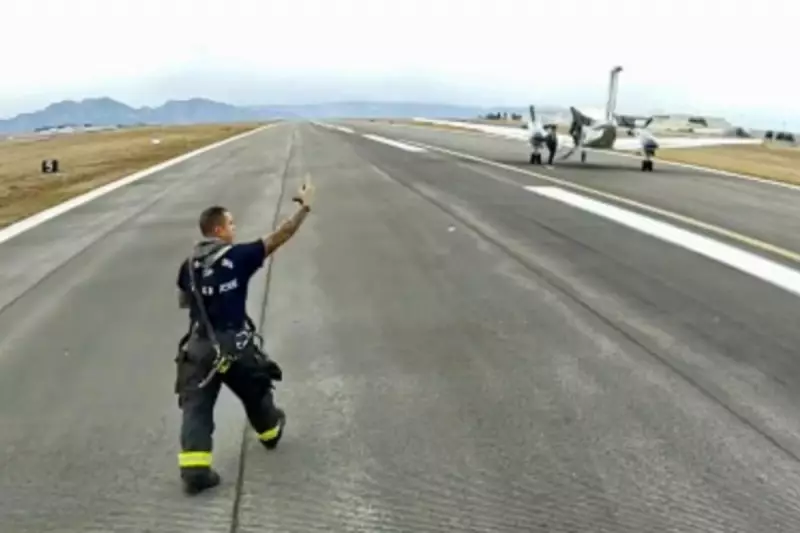
In a landmark moment for aviation safety, a private jet successfully performed the world's first fully automated emergency landing using an onboard 'Autoland' system after a sudden cabin depressurisation.
An Unprecedented Emergency Unfolds
The incident involved a Beechcraft Super King Air twin-engine jet, operated by Buffalo River Aviation. On Saturday, the aircraft experienced a rapid, uncommanded loss of pressurisation during its flight, creating a critical situation for the two pilots on board.
According to a statement from the company's CEO, Chris Townsley, the crew immediately followed procedure and donned their oxygen masks. The aircraft was equipped with Garmin Aviation's latest safety suite, which includes Emergency Descent Mode (EDM) and the Autoland system.

"The aircraft... automatically engaged exactly as designed when the cabin altitude exceeded the prescribed safe levels," Mr Townsley confirmed.
Technology Takes Control
This triggered Garmin's Autoland technology, a system first released in 2019 but never before used from start to finish in a genuine emergency. The system autonomously directed the plane to the nearest suitable airport, navigating based on a complex set of parameters including weather, terrain, and runway conditions.
The Federal Aviation Administration (FAA) stated that the pilot had lost communication with air traffic control, underscoring the seriousness of the situation. The Autoland system guided the aircraft to a safe touchdown at Rocky Mountain Metropolitan Airport in Broomfield, Colorado, located less than half an hour's drive northwest of Denver.
Garmin, a company widely known for its consumer fitness watches but also a major player in aviation tech, confirmed to CBS Colorado that the activation resulted in a "successful landing."
A Safe Outcome and Ongoing Scrutiny
Importantly, Buffalo River Aviation clarified that the pilots were not incapacitated, contrary to some initial reports. The company explained the crew made a conscious decision to let the automated system handle the landing to "minimize additional variables" in a highly unpredictable emergency, prioritising a safe outcome above all else.
The North Metro Fire Rescue District, which responded to the landing at the Colorado airport, reported that no patients required treatment or hospital transport. The charter company also noted there were no passengers aboard the flight at the time.
While this event marks a triumphant validation of the life-saving potential of autonomous aviation technology, the FAA has opened an investigation into the incident, which is standard procedure for such events.