Pilots Confront Chaos as Missile Strikes Paralyse Middle Eastern Skies
Captains operating passenger aircraft carrying hundreds of individuals bear the ultimate responsibility for determining appropriate actions when confronted with sudden disruptions. This week, as missiles pierced the skies over the Middle East amid expanding hostilities involving Iran, the United States, and Israel, regimented flight paths descended into turmoil. Pilots were compelled to execute mid-air turnarounds or navigate through increasingly narrow air corridors, with countless lives resting in their hands.
Veteran Pilot Recounts High-Stakes Decision-Making
Keith Tonkin, an experienced Australian aviator who has flown Boeing 747s, understands the immense pressure faced by flight crews during such crises. He recalls a harrowing incident in the early 2000s when India conducted unexpected live missile drills over the Bay of Bengal, forcing him to recalculate his route from Rome to Singapore. "The first thing is: Where are we? And how much fuel have we got and where do we need to go?" Tonkin emphasises. With sufficient fuel reserves, he and his co-pilot opted to circumvent the danger zone, highlighting the critical judgments pilots must make when standard support systems falter.
Tonkin notes that while pilots typically rely on computer readouts and rapid communication with airline operations centres, unforeseen emergencies often leave them dependent on their own expertise. "You're stuck in that airplane until you land safely," he states, underscoring the isolation and accountability inherent in the cockpit.

Airspace Closures Trigger Widespread Diversion Dilemmas
Following airstrikes by the US and Israel and retaliatory missile barrages from Iran, airspace across the region was abruptly closed last Saturday. This precipitated mass disruptions, compelling airborne aircraft to divert to the nearest available airports. Steve Cornell, vice-president of the Australian and International Pilots Association, reveals that some airlines with dwindling fuel supplies were forced to land even without clearance from air traffic controllers. "Their only option was to land, whether they were going to be cleared to do so or not," Cornell explains.
He adds that proximity to major hubs like Dubai, Doha, and Abu Dhabi severely limited alternatives as these airports shut down. In contrast, pilots farther from the conflict zone had more time to strategise, such as an Emirates flight from Auckland that returned to New Zealand after eight hours in the air. Diversions, however, introduced additional complications, including airport congestion, refuelling delays, and passenger inconveniences with unfamiliar immigration procedures.
Calm Teamwork Proves Essential in Crisis Management
Christopher Docherty, a first officer who experienced a bullet piercing his seat during a flight to Haiti in 2024, stresses the importance of composed collaboration between captains and co-pilots. Alongside captain Juan Zuluaga, he successfully rerouted their damaged aircraft to Santiago after it was shot six times, with post-flight analysis confirming their decisions were correct. "The fact that we had two pilots in this cockpit on this day was why this flight was successful," Docherty remarked at a recognition event.
Cornell observes that pilots operated under significant stress this week due to scarce information. "Information was fairly scarce to come by, so they were operating under a fairly high level of uncertainty, which is stressful for anyone," he says. Despite this, airlines maintain robust contingency plans, including satellite phone advisories and pre-programmed alternate routes, to support crews.
Navigating Congested Corridors and Communicating with Passengers
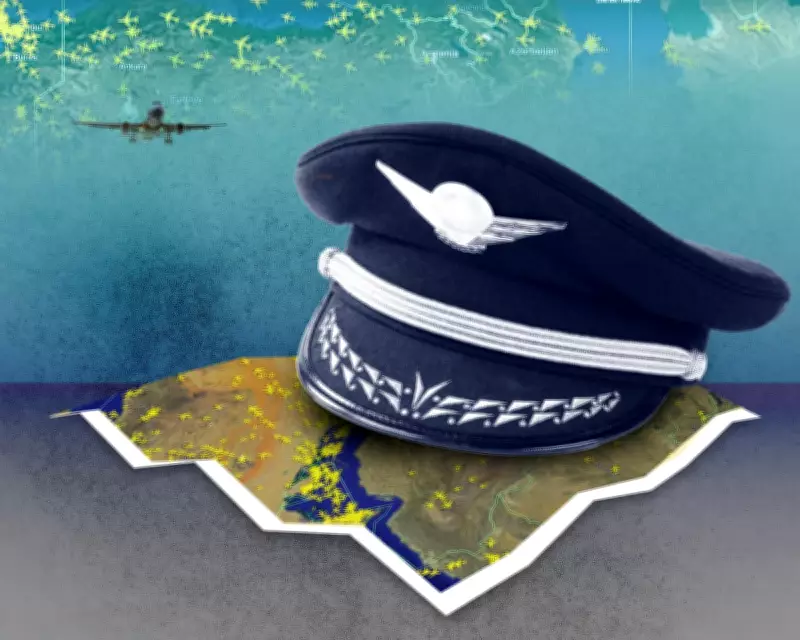
Once pilots alter their course, they must promptly notify air traffic controllers. Dr Tony Stanton, consultant director of Strategic Air, notes that controllers faced heightened challenges in recent days, struggling to integrate flights into overcrowded air routes while maintaining safe separations. Air traffic maps reveal aircraft squeezed into key pathways bypassing Iran, such as those over Turkey to the north and Egypt and Oman to the south, creating global delays.

Stanton also addresses the delicate task of informing passengers about nearby military actions. "You don't want to scare the crap out of people," he cautions. "You've got to ask yourself: do people need to know? Will it just scare people when they can't do anything about it anyway?" In some instances, transparency proved effective, as demonstrated by an American Airlines captain who openly announced a return to Philadelphia to avoid conflict zones, earning passenger appreciation.
Pilots undergo rigorous training and testing to uphold passenger comfort and safety, with major airlines providing extensive backend support. "If you're flying with the major airline, you could rest assured that there's a whole lot of work that's been done in the background to ensure the safety of that flight," Stanton assures.