

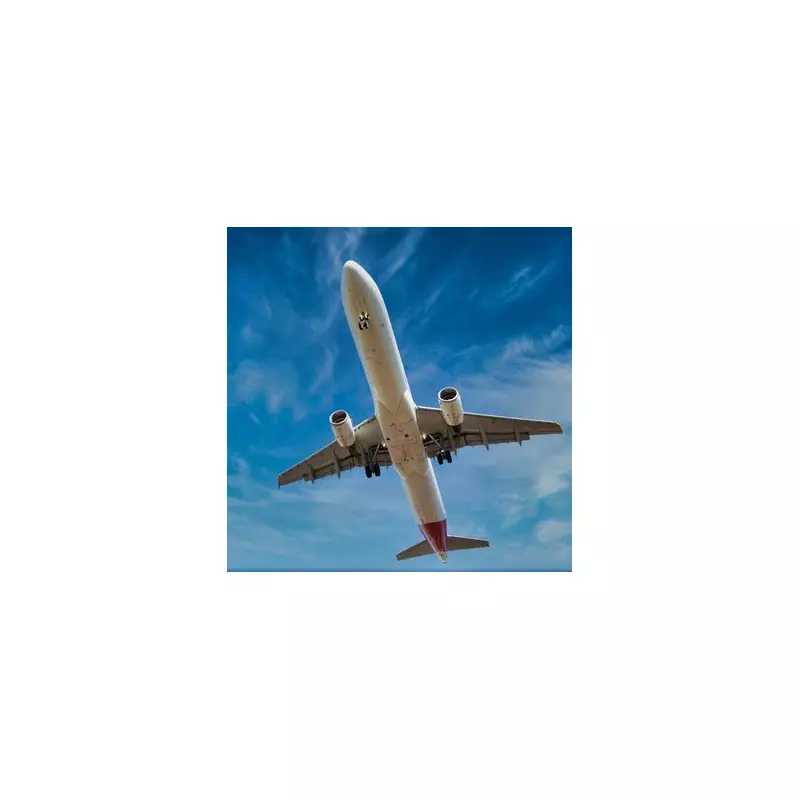
For the quarter of Brits who experience a fear of flying, the terrifying thought of two planes colliding in the sky can be a major source of anxiety. Now, a pilot has taken to social media to deliver a crucial dose of reality, explaining just how exceptionally rare such an event is in modern commercial aviation.
The Sky is a Highly Controlled Space
In a recent and reassuring post on Instagram, the pilot addressed the common fear head-on. He confirmed that while the idea of a mid-air collision feels frightening, the reality is that it is "extraordinarily rare" for commercial aircraft.
He was keen to dispel the myth of the skies as a chaotic free-for-all. "The sky is not a chaotic space," he stated. "It is completely organised and controlled." Every aircraft follows defined routes, with constant separation managed meticulously by both air traffic controllers on the ground and sophisticated automatic systems onboard the planes themselves.

A Safety Record Transformed Since 2002
Offering further concrete reassurance, the pilot highlighted a pivotal fact: the last mid-air collision between two commercial planes happened in 2002. For over two decades, this specific type of catastrophe has not been repeated in the commercial sector.
He emphasised that this remarkable safety record is not down to chance. "Not because of luck," he explained, "but because that accident changed and further strengthened safety systems." This continuous evolution of protocols and technology has created an incredibly robust defensive shield.
Technology and the 'Critical 10' Minutes
The primary technological guardian against collisions is the TCAS (Traffic Collision Avoidance System), an advanced onboard system that monitors nearby aircraft and provides pilots with instructions to avoid conflict. While these systems make commercial aviation exceptionally safe, the pilot noted that mid-air incidents, though still rare, occur more frequently with smaller, general aviation aircraft, averaging around 1.5 annually in the US.
He also pointed out that statistically, the most dangerous phases of flight are not during cruise altitude. The highest risk occurs during the first few minutes after take-off and the last minutes before landing, often called the "critical 10". Most incidents happen due to the combination of lower altitudes, slower speeds, and more complex manoeuvres, with landing often cited as slightly riskier than takeoff.
Managing Flight Anxiety with Practical Steps
Understanding the facts and immense safety margins can be a powerful tool against aviophobia, which affects an estimated 10% of people intensely. For those seeking to manage their nerves, experts and the pilot suggest several techniques:
- Practice relaxation methods like deep breathing and mindfulness during the flight.
- Distract yourself with a book, music, or a film.
- Speak to the cabin crew, who are trained to assist nervous passengers.
- Avoid caffeine and alcohol before and during the journey.
- For persistent fear, consider therapies like Cognitive Behavioural Therapy (CBT), which is highly effective for phobias.
The pilot's core message is one of confidence in a system built on relentless improvement. By sharing these insights, he aims to replace fear with knowledge, reminding everyone that flying remains one of the safest modes of transport in the world.






