
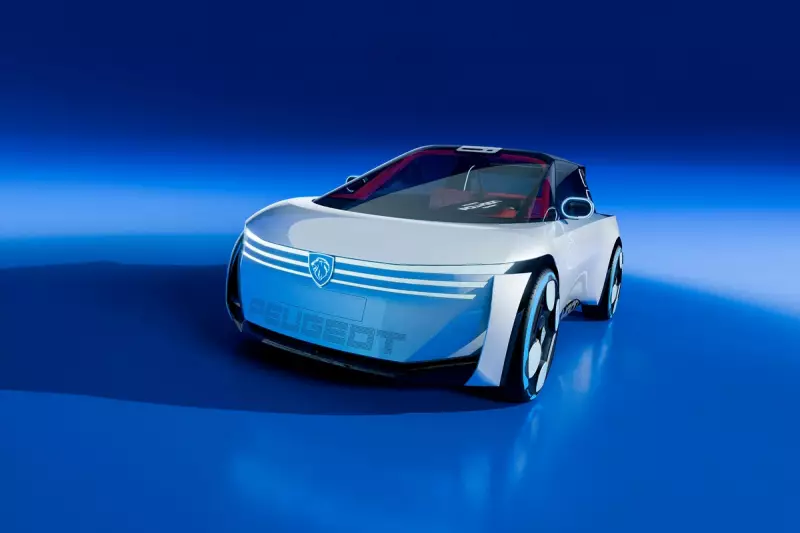
Peugeot has unveiled a groundbreaking electric concept car that not only previews the next-generation 208 supermini but introduces what the French manufacturer claims will revolutionise driving enjoyment. The Polygon concept, first showcased virtually in the popular game Fortnite, represents Peugeot's vision for its future electric vehicles starting from 2027.
The End of the Traditional Steering Wheel
At the heart of the Polygon concept lies Peugeot's most radical innovation: the Hypersquare steering control system. This isn't merely a redesigned wheel but a complete reimagining of how drivers interact with their vehicles. Replacing the conventional circular steering wheel that has dominated automotive design for over a century, the square-shaped controller operates through advanced steer-by-wire technology.
According to Peugeot, this system delivers "exceptional responsiveness and precision" while eliminating the mechanical connection between the steering mechanism and front wheels. The technology allows the steering ratio to adjust dynamically based on vehicle speed, requiring just 170 degrees of rotation in either direction for low-speed manoeuvring while maintaining stability at higher velocities.
Advanced Display Technology and Personalisation
The Polygon concept pushes Peugeot's signature i-Cockpit into new territory by replacing conventional dashboard screens with an expansive Micro-LED panel positioned behind the Hypersquare controller. This transforms the entire windscreen into a massive 24cm by 74cm infotainment display – equivalent to a 31-inch screen directly in the driver's line of sight.
Peugeot has embraced personalisation as a core philosophy, enabling owners to quickly swap components including the Hypersquare controller, dashboard elements, seats, and wheel covers. The concept features three distinct configurations – Urban, Player, and Explorer – each with unique styling cues originally presented within Fortnite before becoming part of the physical prototype.
Exterior lighting has been completely reimagined with Micro-LED technology, transforming Peugeot's iconic three-claw signature into a dramatic horizontal arrangement. A separate Micro-LED display on the C-pillar pays homage to the classic Peugeot 205 while providing an intuitive charging interface that allows owners to check battery levels from outside the vehicle.
Sustainability and Real-World Testing
Despite its futuristic appearance, Peugeot insists the Polygon concept is far from a mere design exercise. The company has engineered it as a fully driveable prototype that serves as a physical testbed for technologies scheduled to appear in production vehicles from 2027 onwards.
Sustainability plays a crucial role in the concept's construction, featuring recycled materials throughout the cabin. Forged textiles made from dismantled Peugeot seats cover interior surfaces, while 3D-printed R-PET shells form the base of the new seats. Even the interior lacquer incorporates recycled materials sourced from end-of-life tyres.
The brand emphasises that reduced component counts not only contribute to lighter weight but also facilitate easier maintenance and end-of-life disassembly. Goodyear has developed special laser-engraved tyres with coloured sidewalls to complement the concept's configurable aesthetic, supported by intelligent tyre technology that provides real-time road condition insights.
Peugeot describes the Polygon name as reflecting the vehicle's multiple personalities, positioning it as the clearest indication yet of how driving enjoyment, pure design, and environmental responsibility will converge in its future electric vehicles, likely beginning with the new Peugeot 208 supermini expected in 2027.