Investigators to Unveil Multiple Causes in Fatal Washington Midair Collision That Claimed 67 Lives
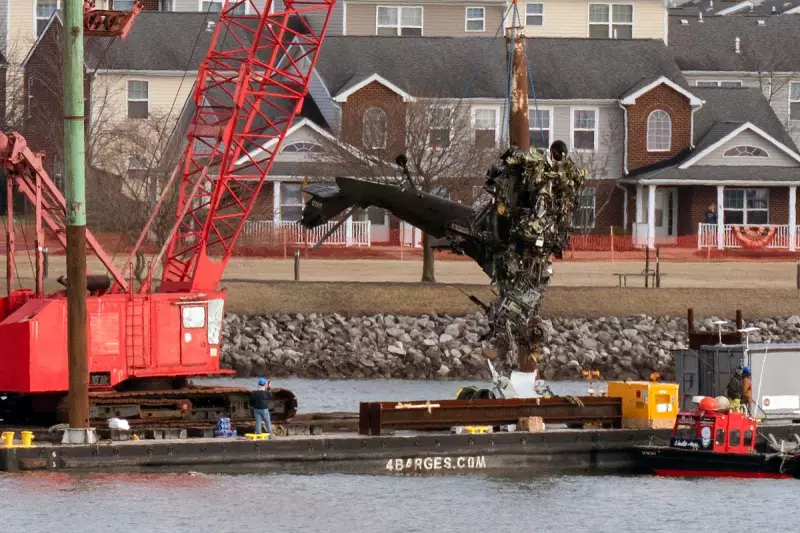
The National Transportation Safety Board is poised to reveal its comprehensive findings this Tuesday regarding the catastrophic midair collision near Washington, D.C., that resulted in the deaths of 67 individuals on January 29, 2025. This tragic incident, involving an American Airlines jet and an Army Black Hawk helicopter, represents the deadliest aviation disaster on American soil since 2001.
Systemic Failures and Overlooked Warnings
Investigators are expected to present a detailed analysis of numerous contributing factors rather than attributing the crash to a single cause. The hearing will scrutinise a cascade of failures within the aviation system, with the board aiming to propose substantial regulatory changes to prevent similar tragedies in the future. The Federal Aviation Administration has already implemented temporary restrictions, ensuring aircraft and helicopters will no longer share the same airspace around Ronald Reagan Washington National Airport.
Families Demand Action and Accountability
Victims' families are urging authorities to implement the NTSB's recommendations without delay, expressing concern that past safety suggestions have often been overlooked. Tim Lilley, whose son Sam served as first officer on the American Airlines flight, articulated this sentiment powerfully. "I hope officials in Congress and the administration will make changes now instead of waiting for another disaster," Lilley stated. A pilot himself with experience flying Black Hawk helicopters in the Washington area, he added, "Instead of writing aviation regulation in blood, let's start writing it in data. Because all the data was there to show this accident was going to happen. This accident was completely preventable."

Key Factors Identified in the Investigation
Over the past year, the NTSB has highlighted several critical elements that contributed to the disaster:
- A poorly designed helicopter route along the Potomac River that allowed aircraft to come within 75 feet of each other
- The Black Hawk flying 78 feet higher than its designated altitude of 200 feet
- Multiple warnings that the FAA ignored in the years preceding the collision
- The Army's decision to disable a key system that would have broadcast the helicopter's location more clearly
Inadequate Separation and Controller Practices
The investigation revealed that the helicopter route, known as Route 4, permitted dangerously close proximity between aircraft, particularly when planes were landing on Reagan Airport's secondary runway. Normally, air traffic controllers maintain at least 500 feet of separation for safety, making what NTSB Chairwoman Jennifer Homendy described as "an intolerable risk to flight safety."
Furthermore, controllers at Reagan had developed a practice of asking pilots to maintain visual separation themselves to accommodate more aircraft on what airport authorities called the country's busiest runway. The FAA discontinued this practice following the crash.
Instrument Discrepancies and Height Violations
The NTSB discovered that the Black Hawk's barometric altimeter was reading 80 to 100 feet lower than the actual altitude recorded by the flight data recorder. Investigators tested three other Black Hawks from the same Army unit and found similar discrepancies, suggesting the pilots may not have realised their true altitude.
The collision occurred 278 feet above the Potomac River, despite regulations prohibiting the helicopter from exceeding 200 feet in that airspace.
Historical Warnings and Near Misses
FAA controllers had been warning about the risks posed by helicopter traffic around Reagan Airport since at least 2022. The NTSB found there had been 85 near misses between planes and helicopters in the three years preceding the crash, along with more than 15,000 close proximity events. Pilots reported collision alarms activating in their cockpits at least monthly.
Despite these clear warning signs, officials declined to add cautions to helicopter charts regarding the secondary runway that the American Airlines jet was attempting to land on when the collision occurred.

Families Grapple with Preventable Tragedy
Rachel Feres, who lost her cousin Peter Livingston along with his wife Donna and their two young daughters—both promising figure skaters—expressed the family's anguish upon learning how many concerns had been ignored. "It became very quickly clear that this crash should never have happened," Feres said. "And as someone who is not particularly familiar with aviation and how our aviation system works, we were just hearing things over and over again that I think really, really shocked people, really surprised people."
Broader Aviation Safety Context
While the Washington collision was the first in a series of high-profile aviation incidents throughout 2025 that alarmed the public, the total number of crashes that year was actually the lowest since the pandemic began in 2020, with 1,405 nationwide. Aviation experts maintain that flying remains the safest mode of travel due to multiple overlapping safety layers, but acknowledge that too many of these protective measures failed simultaneously on January 29, 2025.
The NTSB hearing represents a crucial opportunity to address systemic vulnerabilities and implement meaningful changes to enhance aviation safety protocols across the United States.