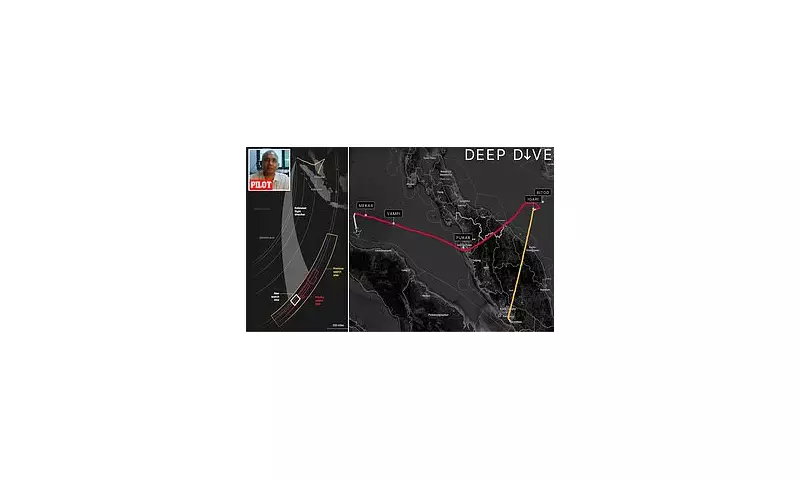
A new, privately-funded mission to locate the wreckage of Malaysia Airlines Flight MH370 has officially commenced, marking the most significant search effort in years. The initiative, led by the American marine robotics company Ocean Infinity, aims to finally solve the enduring mystery that has captivated the world for nearly a decade.
The Cutting-Edge Search Vessel Sets Sail
The mission's centrepiece is the Norwegian research vessel 'Seabed Constructor', a state-of-the-art ship equipped with an array of autonomous underwater vehicles (AUVs). This vessel is now en route to a newly identified priority search area in the vast southern Indian Ocean, based on a fresh analysis of satellite data. The company is operating on a "no-find, no-fee" basis, meaning payment is contingent on successfully locating the aircraft.
The 'Seabed Constructor' is a formidable asset in deep-sea exploration. It carries eight AUVs capable of operating at extreme depths, which will methodically map the seabed using sonar technology. This advanced equipment can cover vast areas more efficiently than previous searches, scanning the ocean floor with high-resolution detail to identify any man-made objects.

A Decade of Mystery and Heartbreak
Flight MH370, a Boeing 777 carrying 239 people, vanished from radar screens on 8 March 2014 during a routine flight from Kuala Lumpur to Beijing. Despite one of the most extensive and costly multinational searches in aviation history, the main wreckage has never been found. Only a handful of confirmed debris fragments have washed ashore on Indian Ocean coastlines, offering tragic clues but no definitive answers.
The official search, led by Australia, was suspended in January 2017 after scouring 120,000 square kilometres of remote ocean. The disappearance has spawned countless theories, from mechanical failure and pilot action to catastrophic fire or hijacking, but a conclusive explanation remains elusive. For the families of the victims, the lack of closure has been a continuous source of anguish.
New Analysis Fuels Renewed Hope
This renewed effort is driven by a comprehensive re-examination of the available evidence by a team of independent experts. Their work has pinpointed a new search zone, north of the area previously combed by authorities. The analysis incorporated satellite communications data, oceanographic drift modelling of the recovered debris, and advanced performance calculations of the aircraft.
Ocean Infinity successfully located the missing Argentine submarine ARA San Juan in 2018, demonstrating its technical prowess. The company's confidence in this new data has convinced the Malaysian government to grant it permission for this latest attempt. While the challenges of searching such a deep and rugged underwater landscape are immense, this mission represents the most credible lead in years.
The global aviation community and the grieving families will be watching closely. A successful discovery would not only provide long-awaited answers but could also yield crucial data from the flight recorders to help prevent future tragedies. The deep dive for MH370 has begun anew.