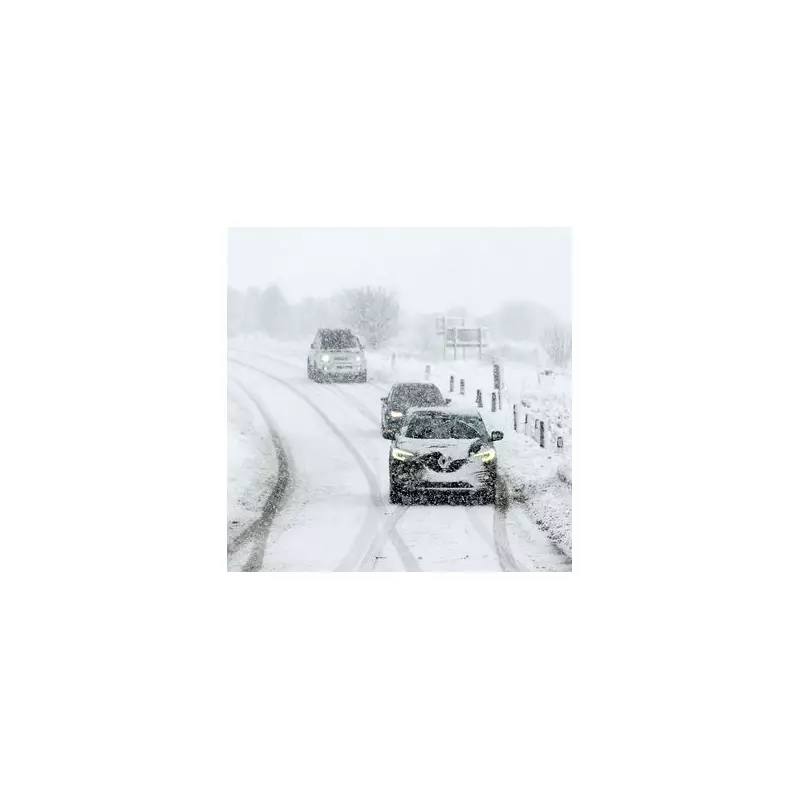
As winter tightens its grip on the UK, motoring experts are issuing a stark warning to drivers contemplating journeys in snowy and icy conditions. The advice comes with a clear message: if you can avoid driving, stay at home.
The Five Biggest Winter Driving Blunders
Specialists from the Institute of Advanced Motorists (IAM) RoadSmart have highlighted a series of critical errors that drivers commonly make when facing treacherous winter weather. These mistakes can turn a simple trip into a dangerous ordeal.
One of the most frequent and hazardous errors involves poor visibility. Drivers are strongly advised to fully clear all snow and ice from their windscreen, windows, mirrors, and lights before setting off. A mere 'porthole' cleared on the windscreen is not only illegal but severely compromises a driver's view of pedestrians, cyclists, and other road users.

Another major misjudgement is selecting the wrong gear. IAM RoadSmart recommends using a higher gear than normal on slippery surfaces to prevent wheel spin. Gentle manoeuvres are key; harsh acceleration, braking, or steering can quickly lead to a loss of control.
Preparation and Planning Are Paramount
Failing to prepare for the unexpected is a significant risk. Experts urge motorists to plan their route carefully, sticking to main roads which are more likely to be gritted. It is also crucial to allow substantially more time for your journey, reducing the need to rush.
Packing an emergency kit could be a lifesaver. Essential items to carry in the car include:
- A fully charged mobile phone and in-car charger
- An ice scraper and de-icer
- A warm blanket, extra clothing, and waterproof boots
- A torch and spare batteries
- Some food and a warm drink in a flask
- A first-aid kit
- Jump leads
- A warning triangle
Furthermore, checking your vehicle's fitness for winter is a non-negotiable step. Ensuring your tyres have adequate tread depth (at least 3mm is recommended for winter) and that all fluids, especially screenwash, are topped up with antifreeze concentrate, is vital.
The Legal and Safety Consequences
Ignoring this advice carries serious consequences. Driving with obscured windows is a traffic offence that can result in a fixed penalty notice. More importantly, the human cost of accidents caused by poor winter driving can be devastating.
Richard Gladman, head of driving and riding standards at IAM RoadSmart, emphasised the importance of a cautious mindset. "The best tip is to not drive at all if the weather is too bad," he stated. "If you absolutely must travel, then being prepared, planning ahead, and driving smoothly and slowly are the keys to staying safe."
With weather warnings frequently issued across the country, taking these expert precautions is not just sensible—it could prevent a collision and save lives. The message is clear: when snow falls, the safest place is often off the roads entirely.