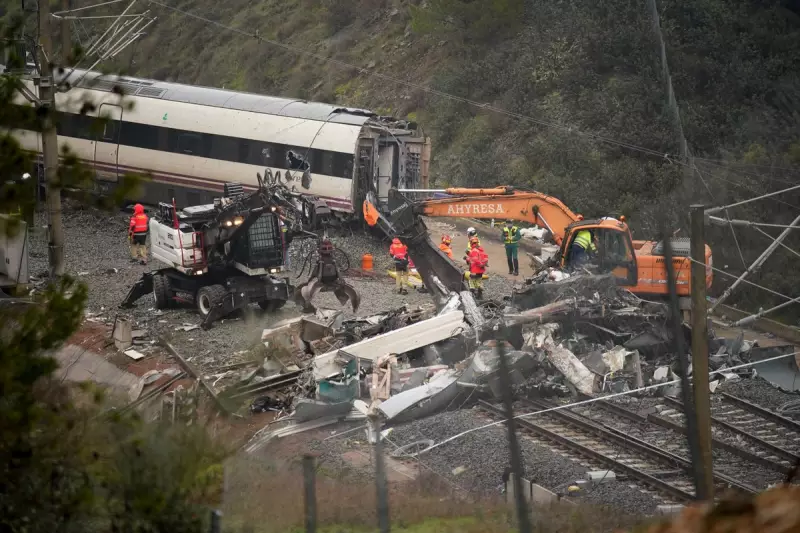
A significant piece of metal discovered near the location of a catastrophic high-speed train crash in Spain may provide vital clues into the cause of one of Europe's deadliest railway disasters, according to sources and experts. The component, found in a remote hilly area near the southern town of Adamuz, is believed to be a crucial missing undercarriage part that investigators have been urgently seeking.
Investigation Focuses on Missing Bogie Component
Inaki Barron, the head of Spain's railway accident investigating body CIAF, stated earlier this week that the investigation would concentrate on locating a missing bogie. This component serves as the essential connection point between a speeding train and the tracks, making it potentially instrumental in understanding why the derailment occurred. The discovery of this metal piece could represent the breakthrough investigators have been searching for since the tragic incident unfolded on Sunday night.
Discovery and Examination of the Component
Photographic evidence from Tuesday shows the substantial metal piece partially submerged in a small stream approximately 15 metres below the railway bridge and about 300 metres from the primary crash site. Search teams utilizing drone technology initially spotted the component earlier in the week, and investigators have since conducted physical examinations at the location.

A spokesperson for the Civil Guard police force confirmed from Adamuz that authorities are carefully examining the piece to determine its exact nature and origin. "We will look at it to determine what it is," the spokesperson stated, adding that due to its considerable size and weight, the component has remained in its discovery location and has not yet been collected for laboratory analysis.
Potential Significance in the Investigation
A source familiar with the ongoing probe indicated that the discovered component is believed to be a bogie—the wheeled undercarriage assembly—from the first train that derailed, which was operated by the private consortium Iryo. According to this source, the tremendous speed and violent impact between the two trains likely propelled the heavy bogie outward "like a bullet," explaining its distant location from the main wreckage site.
Scottish railway engineer and writer Gareth Dennis provided expert context, explaining that "bogies—the element holding the wheels and suspension to the train—are often thrown loose during high-energy derailments." He emphasized that "the location of this bogie and the section of the train it departed from will help investigators establish the precise trajectories of the derailed vehicles and the energies involved."
Ongoing Investigation and Official Responses
Over the past three days, investigators have meticulously combed the area surrounding the crash site, cordoning off the zone and systematically documenting every piece of evidence along the tracks. The recently discovered component was photographed outside the cordoned area on Tuesday afternoon and showed no visible markings that might immediately identify its origin.
Spain's state rail company Renfe issued a statement on Wednesday confirming that "the part is currently under investigation by railway accident investigating body CIAF and we cannot add any information or comments outside the scope of that investigation." Meanwhile, the Spanish Transport Ministry, Iryo, and Adif have not yet responded to requests for confirmation regarding whether the photographed piece is indeed the missing bogie. Italy's Ferrovie dello Stato, the majority owner of Iryo, has declined to comment citing the ongoing investigation.
Context of the Tragic Incident
The devastating crash occurred on Sunday night in a remote hilly region near Adamuz, resulting in at least 42 fatalities and marking one of Europe's most severe railway accidents in recent history. Rescue operations continued throughout the week as recovery teams worked to clear the wreckage and search for answers about what caused the high-speed trains to derail.
The discovery of this potentially crucial component represents a significant development in an investigation that has captured international attention and raised important questions about railway safety protocols and high-speed train operations in challenging terrain.