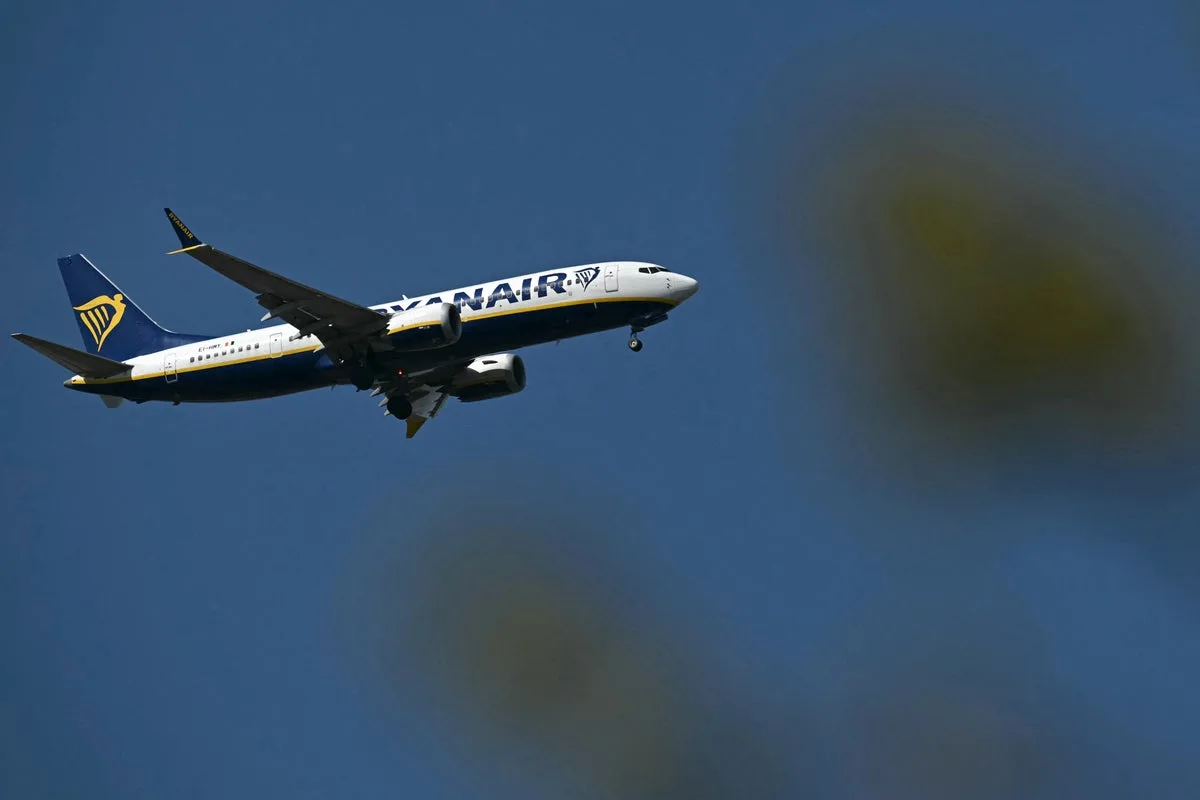
A deepening jet fuel crisis is leaving Brits scrambling over their summer holiday plans, with more than 30 airlines axing flights or adding extra charges. Thousands of holidaymakers in the UK have already been affected by the ongoing war in the Middle East, and now airlines have warned passengers to expect flight cancellations during the May half-term holidays as fuel supplies are squeezed.
What is Causing the Crisis?
The Gulf accounts for around 50% of Europe's aviation fuel imports. With Iran effectively closing the Strait of Hormuz in response to US and Israeli retaliations, prices are skyrocketing. Major concerns about looming fuel shortages have emerged. Prices have surged dramatically in recent weeks, climbing from roughly $85-$90 per barrel to as high as $150-$200. Meanwhile, international energy chief Fatih Birol warned last week that Europe could have as little as six weeks of jet fuel supply remaining if the Strait stays closed.
Airlines have already been forced to hike up fares for passengers, cut routes and reassess financial plans to try and deal with the spike in fuel prices. But what does it all mean in reality for Brits looking to book a summer escape? And are there ways to safeguard your trip as the crisis escalates? Here is everything you need to know.
What to Do if Your Flight Gets Cancelled
We spoke to travel insurance expert Simon McCulloch, Chief Commercial Officer at travel insurance firm Staysure, who says the situation in the Strait of Hormuz is serious and the impacts are already being felt deeply across the aviation industry. The jet fuel that aircrafts use is made by refining crude oil, so the price of jet fuel comprises both the crude oil component and the refinery component, both of which have increased significantly in recent weeks.
But he urges people to not put their summer holidays on hold. The expert told the Daily Mirror: "Pricing and supply-chain issues for airlines are not a reason to stop travelling altogether. The majority of flights are still expected to operate, although travellers should be prepared for higher fares, timetable changes and, in some cases, possible cancellations if disruption continues. If your flight is cancelled, airlines must offer a refund or an alternative flight, and in many cases provide meals, accommodation and assistance during delays at the airport under UK passenger rights rules. Package holiday customers also benefit from ATOL protection and UK package travel regulations."
Steps to Take if Your Flight is Cancelled
If your flight is cancelled, experts advise asking for a refund or replacement at the airport, or you can claim from the airline later. You also have a legal right to help with costs if the cancellation delays you two or more hours. Travel insurance can add another layer of financial protection for a range of different situations from medical emergencies, repatriation, losing your belongings as well as cancellation. Simon noted it can also help with missed connections, alternative accommodation and disruption-related expenses where consumer rights alone may not be enough, however this will depend on the terms of your policy and the levels of cover you chose.
"With the right level of planning and the right protection in place there is no reason why people should put off planning their summer holiday," he says. Simon also suggests looking at alternative ways to travel and being more flexible. He says: "For European trips, the Channel Tunnel and cross-Channel ferries remain genuinely practical alternatives, with destinations such as Paris, Bruges and the Loire Valley easily accessible without flying. Rail connections across Europe also continue to improve, and for many short-haul journeys they can be more straightforward."
What is Fuel Hedging?
Hedging works as a price insurance where airlines will lock in a specific price for fuel in advance. It offers budget certainty so that if the price goes up, the airline is already fixed into a lower rate. However, the risk is that if the prices drop lower than what was locked in, the airline will still have to pay the higher rate, while competitors who did not hedge will have cheaper operations.
According to the Financial Times, European airlines have already hedged 80% of the fuel they need for the year, but are said to be delaying taking out any new hedges in the hope the prices will fall. The publication reports that some carriers have paused any new financial contracts amid the conflict. Ryanair group chief executive Michael O'Leary told the publication: "I do not think we will do any hedging for the next three months. We would always vary a little bit if we thought there is a short-term jump - clearly nobody is doing any hedging now with these kind of rates."
Meanwhile, a spokesperson for airline Cathay Pacific warned that fuel accounted for around 30% of the total operating costs and is critical to their operations. They told us: "If the steep increase of fuel costs cannot be effectively mitigated, we would not be able to sustain the effective operations of our network. Like many airlines, Cathay undertakes fuel hedging to manage fuel price volatility. However, in 2026 our hedging covers only around 30% of the crude oil component and hedging does not apply to the refinery component, making this measure insufficient given the scale of the recent surge in jet fuel price. Given the current situation, many airlines globally have implemented fuel surcharges around the world at comparable levels in response to the increase in jet fuel price."
Where is Best to Fly To?
While it is generally safe to travel at the moment despite the tensions in the Middle East, experts urge people to take caution with where they are going. Alicia Hempsted, Travel Insurance Expert at MoneySuperMarket, said Brits need to be more strategic with planning. She told us: "A safe approach is to prioritise destinations with frequent flights from the UK. Cities like Barcelona, Lisbon and Paris are strong options because they are travelled to by multiple daily flights from across the UK, giving travellers flexibility if schedules change. The key is to avoid destinations with limited flight schedules and instead stick to major routes where airlines have more capacity to adapt."
Fewer Flights and Higher Prices
Airlines UK, which represents the likes of Jet2, Ryanair, British Airways and easyJet, is lobbying for an emergency jet fuel plan from the government to tackle the crisis. Countries like Australia and several EU nations maintain a strategic jet fuel reserve (typically enough for 21–30 days) to prevent a total collapse of air travel if Middle Eastern oil exports are completely cut off. The International Energy Agency (IEA) has coordinated the release of millions of barrels of strategic oil reserves to help try and stabilise the market and ensure airlines can operate smoothly.
A confidential briefing document, seen by ITV News, was reportedly submitted to ministers and the regulator, the Civil Aviation Authority (CAA), cautioning that should the disruption continue or worsen, it will compel airlines to reduce flights and drive up fares. The document is said to show that airlines are requesting the temporary import of Jet A grade fuel. It is produced in the US and not currently permitted in the UK or Europe.
Kenton Jarvis, boss of budget airline easyJet, said suppliers had guaranteed deliveries for the next three weeks but offered little reassurance beyond that, according to a report by Financial Times. He said: "But no-one is telling us we have no immediate issues in six weeks, because they are not prepared to say that." While the UK and parts of Europe are believed to have sufficient supplies for now, long-haul carriers face greater risks when operating in fuel-dependent regions.
A Government spokesperson said: "UK airlines are clear that they are currently not seeing a shortage of jet fuel. We continue to work with fuel suppliers, airlines and international counterparts on our contingency planning, to ensure people keep moving and businesses are supported while the conflict is ongoing. Our overriding priority is to de-escalate this conflict, open up the Strait and prevent disruption to passengers."
For those looking for some reassurance, Tricia Handley-Hughes, UK & Ireland Managing Director at InteleTravel told the Daily Mirror flights are still operating and the industry is actively managing fuel supply. "Warnings about jet fuel shortages reflect a real pressure on the system, not an immediate shutdown of travel. What we are likely to see is adjustment resulting in fewer flights and higher prices, but not a blanket cancellation of summer holidays."
Full List of Airlines Cancelling Flights and Adding Fees So Far
- AirAsia X - Cut around 10% of flights and introduced a fuel surcharge of roughly 20%.
- Air France-KLM - Raising long-haul fares, plus cabin fares by 50 euros per round trip, as well as cancelling flights. KLM, the group's Dutch arm, is set to scrap 160 European services in the coming months.
- Air India - Switching to distance-based fuel surcharges, warning current pricing does not cover rising costs, reports the Independent.
- Air New Zealand - Reducing flights through May and June, increasing fares and suspending its full-year earnings forecast.
- Akasa Air - Introducing fuel surcharges ranging between 199 and 1,300 Indian rupees ($2 to $14) on both domestic and international routes.
- Alaska Air - Increasing checked baggage fees by up to $150 on North American routes, as well as for its Hawaiian Airlines unit.
- American Airlines - Raising baggage fees by $10 each for the first and second checked bags and by $150 for the third checked bag, while cutting some economy benefits.
- Asiana Airlines - Cutting 22 flights between April and July due to fuel costs.
- Cathay Pacific - Cancelling a small portion of flights from mid-May until the end of June and increasing fuel surcharges.
- China Eastern Airlines - The airline said it would raise fuel surcharges for domestic flights from April 5, with flights of 800km and below hit with a 60 yuan ($9) surcharge and a 120 yuan surcharge for flights over 800km.
- Delta Airlines - Delta said it would cut capacity by around 3.5 percentage points from its original plan and raise fees for checked bags.
- Easyjet - CEO Kenton Jarvis previously said European consumers should expect higher ticket prices towards the end of summer, when existing fuel hedges come to an end.
- Greater Bay Airlines - Said it would raise fuel surcharges on most routes from April 1, while keeping them unchanged on mainland China and Japan routes. Its surcharge for flights between Hong Kong and the Philippines will more than double, the carrier said.
- Hong Kong Airlines - The airline said it would raise fuel surcharges by up to 35% from March 12, with the sharpest increase on flights between Hong Kong and the Maldives, Bangladesh and Nepal.
- Indigo - India's biggest airline said it would introduce fuel charges on domestic and international flights from March 14.
- Jetblue Airways - The US-based low-cost carrier said it was increasing fees for optional services such as checked baggage as it experiences rising operating costs. Baggage prices will rise by either $4 or $9, it said.
- Lufthansa - Grounding 27 planes early and cutting more aircraft from its fleet.
- Norse Atlantic Airways - Axed its London Gatwick to Los Angeles route because of fuel costs.
- Pakistan International Airlines - Raising domestic fares by $20 and international fares by up to $100.
- SAS - Will cancel 1,000 flights in April after already hiking fares.
- Spring Airlines - The airline will raise domestic fuel surcharges from April 5.
- Southwest Airlines - Hiking baggage fees to $45 for a first bag and $55 for a second.
- SunExpress - The airline will add a temporary 10-euro fuel surcharge on Turkey-Europe routes.
- TAP Air Portugal - Said fare rises would soften the blow from higher fuel prices.
- Thai Airways - Increasing fares by up to 15%.
- United Airlines - United Airlines is scaling back loss-making routes over the next six months. It has also been able to push up fares without seeing a major impact on bookings, chief commercial officer Andrew Nocella said, despite the sharp rise in oil and jet fuel costs. United is also increasing first and second checked baggage fees by $10 for customers travelling within the US, Mexico, Canada and Latin America, according to Reuters.
- VietJet Air - Cut flights on some routes because of fuel shortages.
- Vietnam Airlines - Plans to cancel 23 domestic flights a week from April. The airline reportedly requested government assistance to remove an environmental tax on jet fuel.
- Virgin Atlantic - The airline is adding fuel surcharges to fares and will still struggle to return to profitability this year, its CEO Corneel Koster told the Financial Times.
- Volotea - Introduced a pricing policy that could add fuel surcharges of up to 14 euros per passenger.
- WestJet - Cutting seats, combining flights and adding a C$60 fuel surcharge on some bookings, according to the Canadian press.






