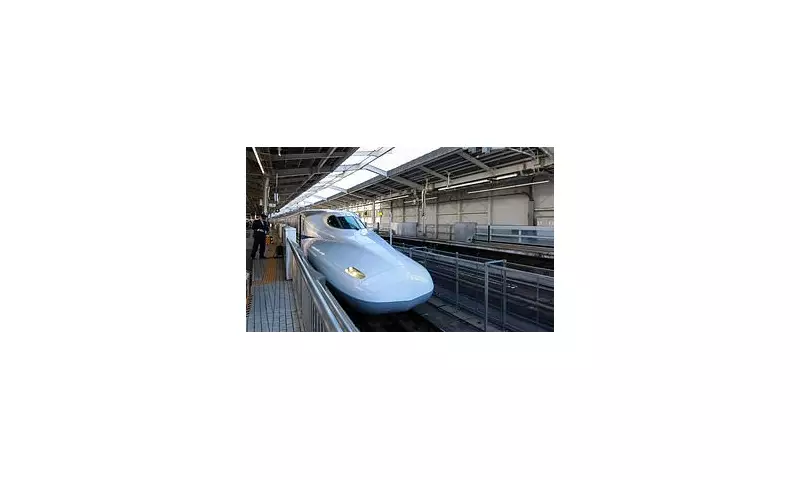
Japan is on the cusp of revolutionising global rail travel with its ambitious L0 Series maglev train, which is projected to achieve staggering speeds of up to 603.5 kilometres per hour. This groundbreaking velocity would firmly establish it as the fastest train in the world, showcasing a monumental leap in transportation engineering.
Technological Marvel and Development Timeline
The impressive new vehicle, still under active development, utilises magnetic levitation technology to lift off the tracks, while a powerful electric motor propels the carriages forward. This innovative combination enables the unprecedented speeds that have captured international attention.
Central Japan Railway Company is currently conducting extensive testing and refinement of the train. Originally slated for completion in 2027, the project has encountered delays and is now expected to be ready between 2034 and 2035. The development has reportedly incurred colossal costs, with estimates reaching a staggering £52 billion.

Transforming Japanese Travel
Upon completion, the L0 Series will serve passengers on the newly constructed Chuo-Shinkansen line, dramatically reducing travel times across Japan. The journey from Tokyo to Nagoya, which currently takes between one hour twenty-six minutes and two and a half hours, will be slashed to a mere 40 minutes.
To put this into a British context, if similar technology were applied in the United Kingdom, the train journey from London to Edinburgh – typically requiring four to five hours and forty-five minutes – could potentially be reduced to just one hour.
European Compatibility Challenges
However, significant questions remain about whether such a train could feasibly operate in European markets, including the United Kingdom. According to industry analysts, the L0 Series presents considerable challenges for European adoption.
The high-speed maglev train prioritises functionality and raw performance above all else, whereas the European railway market traditionally balances speed with passenger comfort, onboard luxury, and accessibility considerations.
Infrastructure and Cultural Considerations
Furthermore, the L0 Series design is notably smaller than conventional European trains and carries substantial expense due to its advanced power systems and cutting-edge technology. The train requires specific tunnel infrastructure to operate effectively, which would necessitate extensive new construction across the UK and European destinations.
Many British rail routes are cherished for their scenic qualities, offering passengers picturesque views of rolling hills, quaint villages, and dramatic landscapes. The emphasis on ultra-high speeds could potentially compromise these valued journey experiences.
Contrasting European Rail Developments
While Japan pursues velocity records, European rail developments continue to emphasise different priorities. New train routes are emerging across the continent, including spectacular journeys that prioritise experience over sheer speed.
One notable example is an extended rail adventure launching from London, offering passengers a fifteen-day itinerary through three European countries with stopovers in nine cities. Departing from London St Pancras, the journey begins with Eurostar service to Paris Gare du Nord, providing sweeping views of changing scenery as the train transitions from the UK into mainland Europe.
Similarly, the renowned Linha do Douro route in Portugal – widely celebrated as one of Europe's most scenic railways – exemplifies this alternative approach. This 160-kilometre journey connects Porto in the west to Pocinho in the Alto Douro region, following the Douro River through Portugal's celebrated wine-growing region, passing lush vineyards, historic towns, and traditional quintas.
The extension of such scenic routes to UK departure points highlights the diverse philosophies shaping global rail development, where Japanese technological ambition contrasts with European emphasis on landscape appreciation and leisurely travel experiences.