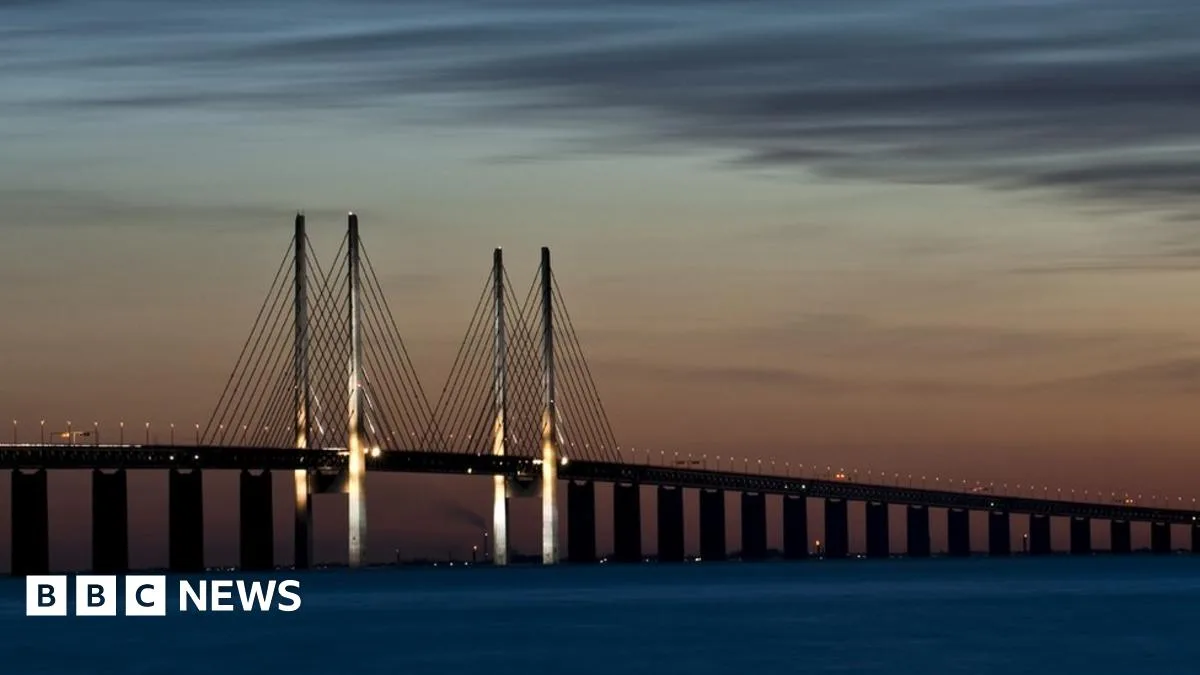
The Øresund Bridge: Europe's 'Disappearing' Link Between Denmark and Sweden
Inside the Øresund Bridge: The Link That Vanishes

For travellers seeking a unique European adventure, a remarkable feat of engineering offers the chance to visit two nations in a single day. The Øresund Bridge, a stunning link between Denmark and Sweden, captivates with its ingenious design that appears to vanish beneath the waves of the Baltic Sea.

An Engineering Marvel Connecting Two Nations

Officially opened in a grand ceremony in the year 2000 by Queen Margrethe II of Denmark and King Carl XVI Gustaf of Sweden, this structure is far more than a simple crossing. Spanning the Øresund Strait, it connects the major cities of Copenhagen and Malmö. What makes it truly extraordinary is its hybrid design: it begins as a majestic bridge before plunging into an underwater tunnel, creating the illusion that the road and rail line simply disappear into the ocean.

The entire link stretches for approximately 16 kilometres. It is composed of a nearly 8-kilometre bridge section, a 4-kilometre submerged tube tunnel, and a 4-kilometre artificial island named Peberholm, which serves as the transition point. This island has been left to nature, becoming an unintended sanctuary for local wildlife. The tunnel was a critical design choice, preventing interference with aircraft signals from Copenhagen Airport and ensuring a clear shipping lane in all weather conditions.

Cost, Traffic, and Cultural Impact

Constructed over five years at a cost of £2.3 billion (equivalent to around £4.8 billion today), the bridge has proven to be a resounding economic success. It has fostered the integrated Øresund Region, a thriving economic zone of about 4.2 million people. An average of 70,000 people cross the link daily, with tolls varying by vehicle. As of the latest figures, motorcyclists pay around £25, standard cars £50, and larger vans or cars with trailers face a fee of nearly £180.

Beyond its practical utility, the bridge stands as a powerful symbol of European unity and cooperation. Its imagery was prominently featured during the 58th Eurovision Song Contest in Malmö in 2013. It also achieved global fame as the central setting for the hit Scandinavian crime drama 'The Bridge' (Bron/Broen), which first aired in 2011. The series famously opened with a body discovered precisely on the bridge's midpoint, highlighting its role as a borderland.

A Legacy of Connection and Innovation

Now over two decades old, the Øresund Bridge remains the second-longest bridge in Europe, surpassed only by the Kerch Bridge. It has received prestigious accolades, including the IABSE Outstanding Structure Award. The link is managed by a consortium of Swedish and Danish companies and includes features like a dedicated motorway exit and a helicopter pad for emergencies.

For tourists and engineers alike, the Øresund Bridge is a must-see destination. It is a testament to human ingenuity, transforming a geographical divide into a conduit for commerce, culture, and connection, all while presenting one of the world's most breathtaking and bizarre architectural illusions.