British scientists have recorded the most significant spike in solar radiation at aviation altitude in two decades, revealing new data on the potential risks to aircraft safety from space weather.
Unprecedented Measurements from a Solar Storm
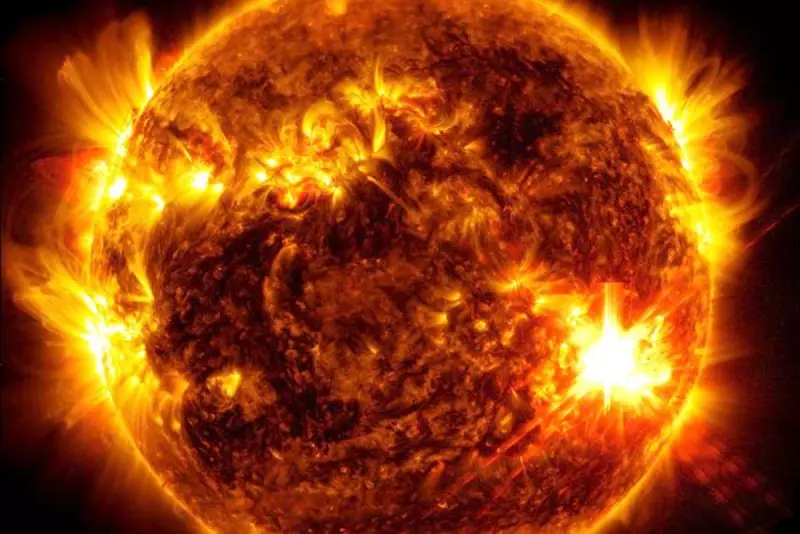
The event was triggered by a powerful solar flare released from the Sun on 11 November 2025. This flare led to a surge of energetic particles penetrating Earth's atmosphere, creating what is known as a "Ground Level Event" (GLE).
Within hours, the UK Met Office and its Dutch counterpart launched a series of specialised weather balloons. These balloons, equipped with advanced sensors, ascended to an altitude of about 12km (40,000 feet) – the cruising height for many business jets.

The real-time data showed radiation levels rose to their highest point in the last 20 years, peaking at nearly ten times the normal background level for a short period.
Implications for Aircraft and Electronic Systems
While the radiation posed no immediate health threat to passengers, researchers from the University of Surrey warn that larger future storms could be more concerning. The primary risk is to aircraft electronics.
The study found the detected energetic particles could disrupt onboard computer memory, potentially causing around 60 errors per hour per gigabyte of memory.
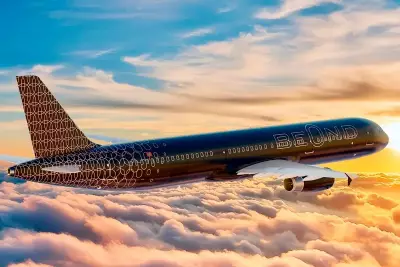
This aligns with a recent warning from Airbus, which stated that intense solar radiation could corrupt data critical to flight controls. The manufacturer identified a "significant number" of in-service A320 family aircraft that may be vulnerable.
Historical Context and Future Preparedness
Space weather expert Clive Dyer from the University of Surrey noted this was the strongest GLE since December 2006. However, he emphasised it was only about two per cent of the magnitude of the largest recorded event in 1956.
"We know from historical observations that significantly bigger events are possible, and we need to be ready," Dr Dyer stated.
The new sensor technology, which can withstand near-vacuum conditions and temperatures as low as -70°C, performed successfully in its first real-world test. Keith Ryden, director of the Surrey Space Centre, said the rapid-reaction balloons captured vital data to help fine-tune radiation models and improve the UK's resilience.
"Our research aims to improve aviation safety, and this is a great step forward," Dr Ryden concluded.