UK's First Rapid-Charging Battery Train Enters Passenger Service in West London
First Rapid-Charging Battery Train Starts UK Service

Passenger service is set to commence this weekend for the United Kingdom's inaugural superfast-charging train operating solely on battery power. This pioneering development will see the train cover a five-mile return route in west London, marking a significant step forward in sustainable rail transport.

Operational Details and Timetable

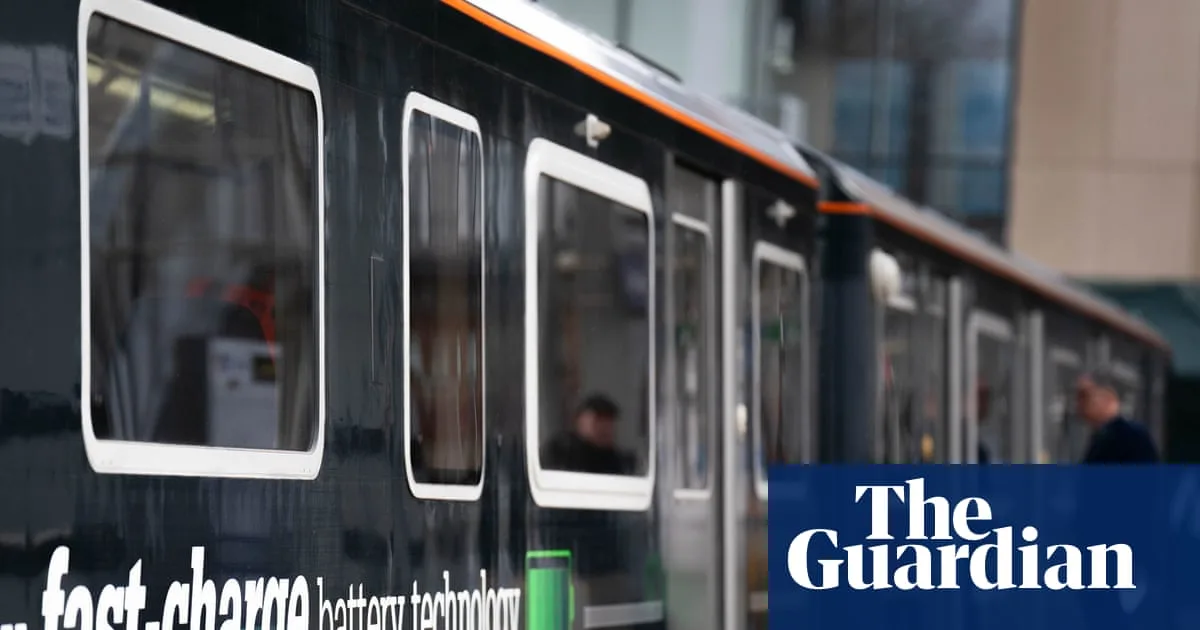
Great Western Railway (GWR) will deploy the converted London Underground train from 5.30am on Saturday to fulfil the complete timetable on the West Ealing to Greenford branch line. The journey encompasses four stops and takes approximately twelve minutes in each direction. The train has a capacity for up to 273 passengers, with operators hopeful that its novel status will generate considerable public interest and demand.

Revolutionary Charging Technology

A standout feature of this initiative is the remarkably swift recharge time. The battery can be fully recharged in just three and a half minutes back at West Ealing station between trips. This is achieved using a powerful 2,000kW charger connected to a short section of rail. Crucially, this rail segment only becomes electrically live when the train stops directly overhead, enhancing safety and efficiency.

The train has demonstrated impressive range capabilities, proving itself able to travel more than 200 miles on a single charge. Notably, last year it set a world record for the farthest distance travelled by a battery-electric train, surpassing a previous German record established in 2021.

Strategic Importance for Rail Decarbonisation

There is considerable optimism within both government circles and the rail industry that this technology could eventually replace diesel trains on routes where installing traditional overhead electrification wires has proven challenging or prohibitively expensive. This aligns with the broader, ongoing mission to decarbonise the UK's railway network.

The GWR train and its accompanying fast-charge technology have been undergoing trials on the 2.5-mile line since the beginning of 2024. However, this weekend will mark its first operation with fare-paying passengers on board.

Industry Perspectives and Statements

Simon Green, Engineering Director at GWR, emphasised the project's significance. "This is a significant moment for all those involved in this innovative project and comes at a crucial time as we focus on plans to replace our ageing diesel fleet," he stated. "Our fast-charge trial has successfully demonstrated that battery technology offers a reliable and efficient alternative to power electric trains, in cases where overhead lines aren't possible or desirable."

Marcus Jones, Network Rail's Western Route Director, whose teams were responsible for installing the charging infrastructure, highlighted the trial's success. "The trial had shown how promising this technology is and today marks another important milestone for the industry," he said. "Rail is already the greenest form of public transport, and battery‑powered trains will play a crucial role in our commitment to a low‑emission railway and ambition to reach net‑zero by 2050."

Context and Future Potential

While hybrid battery-electric trains, which use batteries where power lines are absent, are already in service in countries like Japan, and Merseyrail operates trains using battery power for short distances (primarily recharging from a third rail), the GWR service represents a distinct advancement.

The rapid charging technology enables trains to be designed and built relying on batteries alone. This approach offers enhanced public safety compared to systems using high-voltage third rails and places less strain on local electricity grids.

This innovation arrives following the cessation of the Great Western mainline electrification project in 2020, which was halted due to substantial cost overruns. GWR now believes this new battery technology could facilitate a shift away from diesel traction on considerably longer routes throughout south-west England, offering a more viable and cost-effective path to a greener railway.