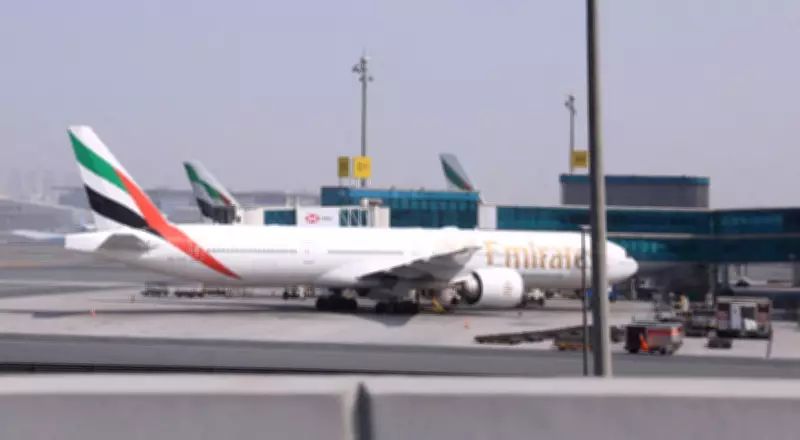
Evacuation Flights Depart UAE as Middle East Conflict Triggers Travel Chaos
Limited evacuation flights have begun departing from United Arab Emirates airports as governments worldwide scramble to extract their citizens from the escalating Middle East conflict. The travel disruption follows Iranian missile and drone attacks in response to US-Israeli strikes over the weekend, creating what aviation experts describe as the region's most severe air travel crisis in recent memory.
Governments Urge Immediate Departures Amid Safety Concerns
The US State Department has issued urgent warnings for American citizens to leave more than a dozen Middle Eastern countries immediately, including Saudi Arabia and the UAE. Assistant Secretary for Consular Affairs Mora Namdar emphasized that citizens should depart using available commercial transportation "due to safety risks," though the US has not organized official evacuation flights.
In the UK, Prime Minister Keir Starmer announced the deployment of rapid response teams to support British nationals, urging all citizens in the region to register their presence with authorities. Foreign Secretary Yvette Cooper revealed that approximately 102,000 British nationals have registered, with an estimated 300,000 UK citizens currently in Gulf countries targeted by Iran.

Airlines Operate Limited Services Amid Widespread Cancellations
Major UAE carriers Etihad Airways, Emirates, and budget airline FlyDubai are operating restricted evacuation services despite widespread flight suspensions. Aviation analytics firm Cirium reports at least 11,000 flight cancellations affecting over one million passengers since Saturday, with the disruption expected to continue for weeks.
Etihad Airways managed to operate 16 flights during a brief three-hour window on Monday, transporting passengers to destinations including London, Paris, Amsterdam, Moscow, Mumbai, and Islamabad. However, the airline's website indicates all regularly scheduled commercial flights remain suspended until Wednesday afternoon.
Emirates is prioritizing customers with existing bookings for limited flights that began Monday evening, while FlyDubai operated four departing flights and five arrivals on Monday, warning that schedules remain fluid as the situation evolves.
Airspace Closures Compound Travel Disruption
The aviation crisis has been exacerbated by extensive airspace closures across the region. Iran, Iraq, and Israel have implemented complete closures, while Jordan instituted overnight restrictions starting Monday. Partial or temporary closures in Qatar, Bahrain, Kuwait, Saudi Arabia, and Syria were scheduled to expire but may be extended according to flight-tracking services.
Travel industry analyst Henry Harteveldt of Atmosphere Research Group noted that even when restrictions lift, airlines won't resume normal operations until they're confident aircraft face minimal risk of attack. "Airlines aren't going to resume operations until they are fully confident that there is a zero – or as close as possible to zero – risk that their aircraft will be attacked," Harteveldt explained.
Global Impact and Stranded Travelers
The conflict has created international humanitarian challenges, with Indonesia reporting over 58,000 citizens stranded in Saudi Arabia during Ramadan pilgrimages to Mecca and Medina. The Philippines has upgraded travel advisories for several Gulf states, triggering deployment bans for newly hired Filipino workers.
Germany's foreign ministry estimates approximately 30,000 German tourists are stranded on cruise ships, in hotels, or at closed airports throughout the region. The Czech Republic is sending multiple aircraft to Egypt, Jordan, and Oman to evacuate citizens from Israel and neighboring countries.
Passengers who managed to secure evacuation flights expressed profound relief. Leela Rao, a 29-year-old Georgetown University law student, described her experience waiting through explosions and shelter-in-place alerts before finally boarding an Etihad flight to Delhi. "I am feeling so, so, so grateful," Rao said via text message. "Everyone clapped when we landed."

Dubai authorities have urged passengers to approach airports only if contacted directly, warning that operations remain severely limited. The selective departures provide temporary relief but don't signal a return to normalcy, with aviation experts predicting prolonged disruption as the US-Israel conflict with Iran continues to unfold.