
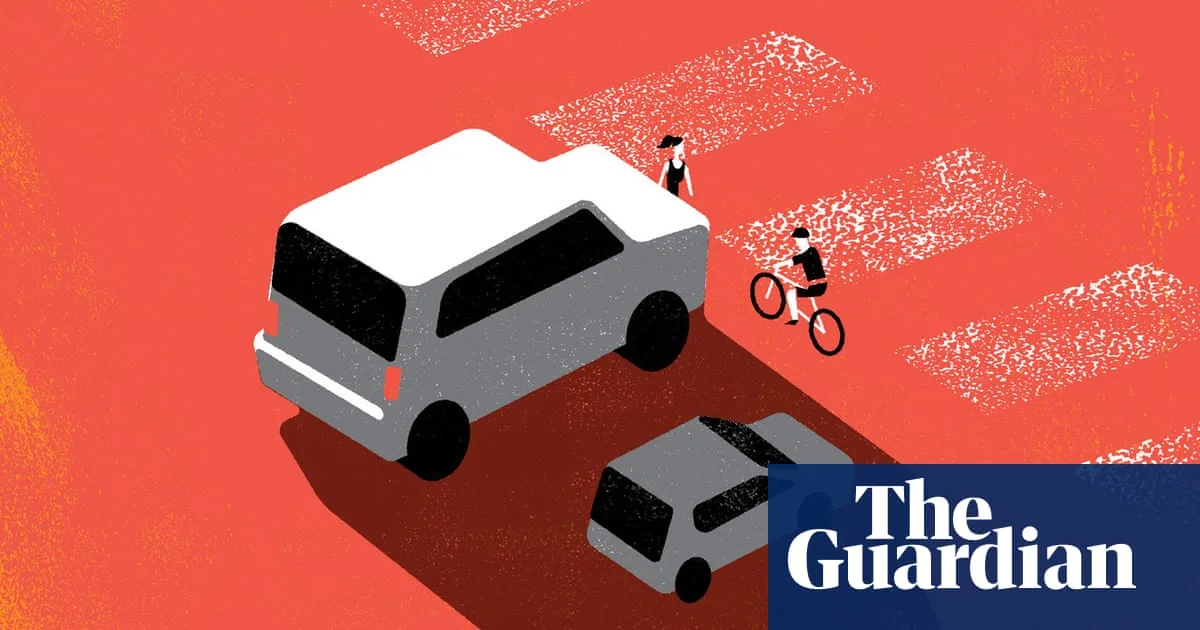
George Upjohn, a 32-year-old former pilot turned rock-climbing coach, says he has grown fearful of large SUVs after a collision in Sydney’s south. The driver of an SUV blamed her car’s sensor for not alerting her to his presence. Upjohn claims the vehicle’s bulkier body blocks visibility and its headlights are “blinding” to those lower down.
SUVs and large utes have become Australia’s most popular vehicles, accounting for nine of the top ten purchases in 2024. Of 1.22 million new cars sold last year, about 57% were SUVs, up 2.4% from the previous year, while light commercial vehicles made up 22%. Passenger cars fell to just 17% of sales, a dramatic reversal from a decade ago.
Road fatalities reached a 12-year high in 2024, with 1,300 deaths, up almost 19% since a 2021 national target was set to halve deaths by 2030. Pedestrian deaths rose 7.1% to 167, cyclist deaths jumped 11.8% to 38, and motorcyclist deaths increased 10.3% to 278. Hospitalisations from serious road injuries climbed 16.1% between 2012 and 2021.
Professor Stuart Newstead, director of Monash University’s Accident Research Centre, says vehicle choice has offset safety gains. “If you’re driving more dangerous cars more often, you have to expect more trauma,” he said. While riskier behaviour and increased driving – up from 245bn km in 2013-14 to almost 260bn km in 2023-24 – also play a role, the trend towards larger vehicles is a key concern.




