Authorities have delivered a conclusive verdict on Europe's worst peacetime maritime disaster, stating the 1994 sinking of the MS Estonia was caused by the catastrophic failure of its bow section. The long-awaited report definitively dismisses alternative theories of a collision or an explosion.
The Final Verdict on a Decades-Old Mystery
In a joint statement, Estonian, Swedish, and Finnish investigators declared, "The MV Estonia sank as a result of the collapse of its bow construction." They emphasised this finding leaves "no reason to start a new full-scale investigation of the accident," aiming to bring closure to a tragedy that has haunted the Baltic region for over thirty years.
The disaster unfolded during a storm on the night of 28 September 1994. The roll-on, roll-off ferry was en route from Tallinn to Stockholm when it sank in the Baltic Sea, claiming 852 lives. An official probe in 1997 initially pointed to the failure of the vessel's bow visor, which led to rapid flooding and the ship's descent to the seabed.

New Evidence Examined and Explained
Despite the 1997 findings, persistent alternative theories prompted a fresh examination. This was catalysed in 2020 by a television documentary that revealed previously unseen damage to the ship's hull. The latest investigation, comprising six separate examinations of the wreck site, survivor interviews, modelling, and technical analysis, sought to address these claims head-on.
The report offers a clear explanation for the hull damage that fuelled speculation. Investigators concluded that the holes were caused by contact with rocks on the sea bottom after the vessel sank, not by an external impact or internal blast during its voyage.
"The inspections do not reveal any signs that the MV Estonia collided with any other vessel or object during its voyage," the investigators stated. "Nor are there any signs that an explosion occurred on the ship." This aligns with a preliminary report issued in 2023, which also questioned the ferry's seaworthiness at the time of its final journey.
Closure for the Victims and Families
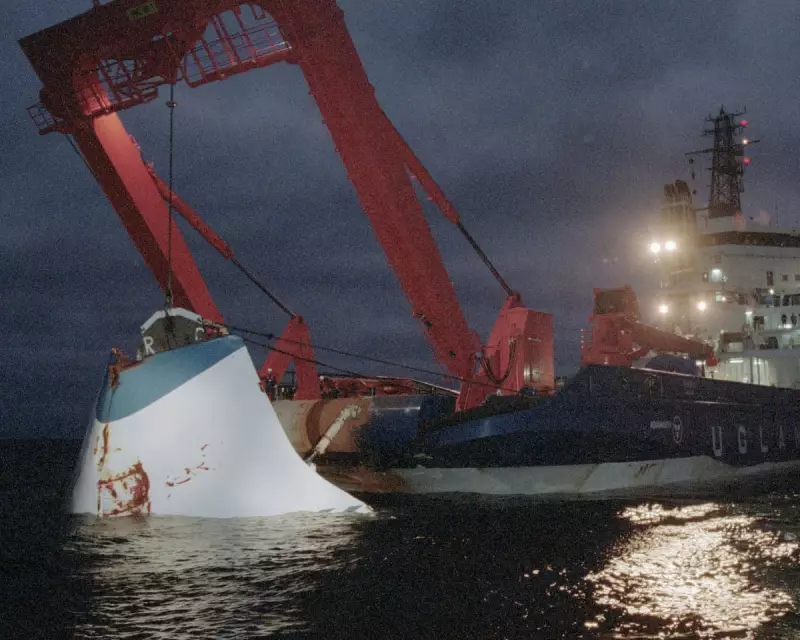
The image of the ferry's mangled bow door being lifted from the depths near Utö island in November 1994 became an iconic symbol of the tragedy. Now, three decades later, the joint investigation team hopes its definitive conclusions will finally lay the mystery to rest.
By systematically ruling out collision and explosion scenarios, the report reinforces the original technical assessment while utilising modern methods to scrutinise new claims. The findings are intended to provide a clear, evidence-based endpoint to one of maritime history's most sorrowful chapters, offering certainty to the families of the victims and the nations forever marked by the loss.