London is poised to become a central hub for the future of urban transport, with ride-hailing giants Uber and Lyft announcing a landmark partnership with Chinese tech leader Baidu to introduce fully driverless taxis to the capital's streets. The ambitious trial, targeting a start in 2026, will see a fleet of all-electric, autonomous vehicles begin testing, pending regulatory approval.
A Three-Way Alliance for Autonomous Ambition
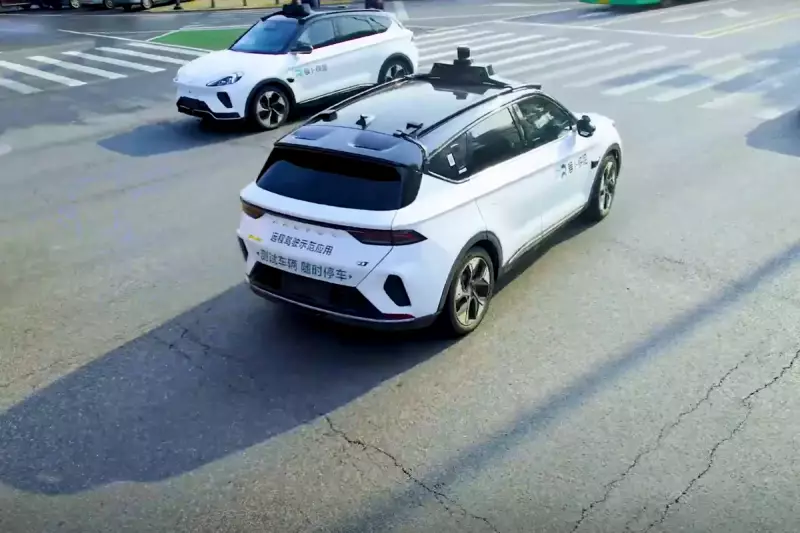
This new alliance sees American mobility platforms Uber and Lyft joining forces with Baidu, which describes itself as the world's largest autonomous vehicle operator. The plan is for London passengers to be the first in the UK to experience Baidu's purpose-built Apollo Go electric vehicles, specifically designed for ride-hailing without a driver. A fleet of dozens of these cars is anticipated to commence operations in 2026.
The move signals a significant escalation in the race to deploy self-driving technology in one of Europe's most complex urban environments. It follows the recent announcement from Waymo – the autonomous unit of Google's parent company Alphabet – which has also begun testing its own driverless cabs in London with a view to a public launch in 2026. These parallel initiatives aim to prove that the technology can handle London's dense, historic, and often unpredictable road network, a far cry from the more regimented layouts common in many US and modern Chinese cities.

Proven Technology Meets London's Streets
Baidu brings considerable experience to the table, claiming its systems have completed over 17 million cumulative rides across 22 cities globally, covering more than 240 million kilometres. The company states it now handles over 250,000 autonomous rides weekly, a figure matched by Waymo as of April 2025.
The vehicles destined for London are Baidu's RT6 models. Unlike Waymo's converted Jaguar I-Pace fleet, the RT6 is engineered from the ground up as a driverless taxi. This dedicated design focuses on maximising passenger space, safety, and efficiency for urban journeys.
Lyft, which entered the UK market in 2025 via its acquisition of Freenow, emphasised that the service will function as part of a 'hybrid network'. This means autonomous vehicles will operate alongside human-driven cars initially, rather than replacing them, ensuring a broad range of travel needs can be met while integrating the new technology.
Regulation and the Road Ahead
Extensive preparatory work is already underway with Transport for London (TfL), regulators, and local communities. As with all autonomous vehicle deployments in the UK, the programme will be subject to stringent regulatory scrutiny and close oversight, especially during initial testing phases.
While firm public launch dates are yet to be confirmed – with Uber indicating the first half of 2026 – all companies involved see London as just the beginning. If successful, the planned expansion to hundreds of vehicles could fundamentally alter short-distance travel within the capital.
For Londoners, this partnership offers a first glimpse of a mature, large-scale autonomous ride-hailing platform that is already operational abroad. For Baidu, London represents a high-profile European showcase to demonstrate its technology's capability outside China. With Baidu, Uber, and Lyft now joining Waymo in targeting the city, London is fast establishing itself as one of the world's most critical proving grounds for the future of autonomous mobility.