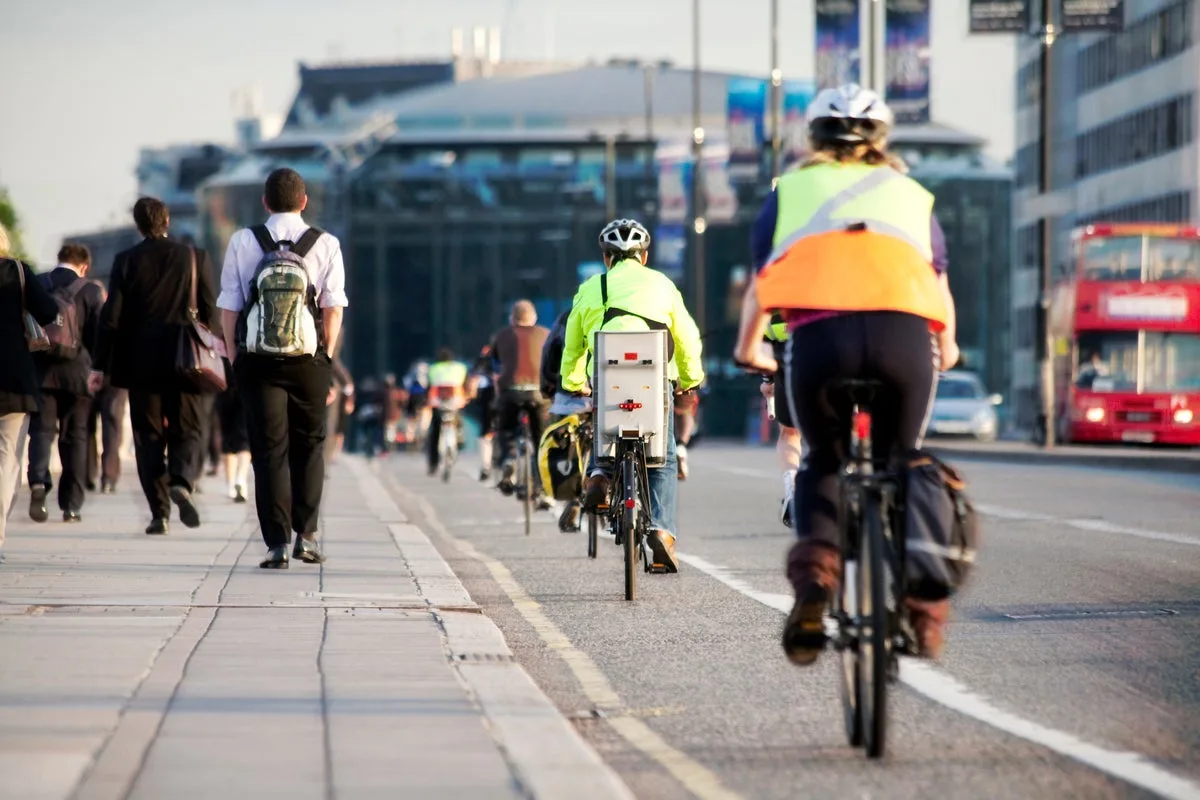
Imagine facing a five-kilometre commute to work without a car or bus. You could walk for an hour, or hop on a bicycle and arrive in a mere fifteen minutes, barely breaking a sweat. For many, the choice is obvious. This preference is rooted in a fundamental truth: cycling is at least four times more energy-efficient than walking, and up to eight times more efficient than running.
The Biomechanical Brilliance of the Bicycle
With over a billion bicycles estimated to be in use worldwide, this two-wheeled machine stands as one of humanity's most ingenious and efficient transport inventions. But what makes pedalling feel so effortless compared to the effort of walking? The answer lies in the elegant synergy between the bicycle's design and human biomechanics, as explained by exercise scientist Professor Anthony Blazevich of Edith Cowan University in an article for The Conversation on Tuesday 2 December 2025.
At its core, a bicycle is a wonderfully simple device. However, this simplicity conceals engineering that perfectly complements our physiology. When we walk or run, our bodies perform a controlled fall, swinging heavy limbs through large arcs and fighting gravity with every stride. This motion alone consumes significant energy.
On a bicycle, the motion transforms. Your legs move through a compact, circular pedalling cycle instead of swinging. This immediately conserves energy. But the real gains come from how power is transferred. Walking involves a mini-collision with the ground with each step—energy is lost as sound, heat, and vibration through your joints. Furthermore, each footstep creates a slight braking force that your muscles must then overcome to propel you forward again.
How Wheels and Gears Maximise Human Power
The bicycle elegantly solves these inefficiencies with one of history's great inventions: the wheel. Rolling contact replaces collision; the tyre gently kisses the road, eliminating energy-sapping impact. The force from your pedals translates directly into smooth, forward motion with no stop-start braking action.
Bicycles also cleverly navigate a fundamental limitation of human muscles: the faster they contract, the weaker and less efficient they become. This is why sprinting is so exhausting. Bicycle gears act as a personal performance assistant. As you accelerate, shifting to a higher gear allows your leg muscles to maintain an optimal, efficient contraction speed, keeping you in a physiological sweet spot for endurance and power.
When Walking Still Has the Advantage
Despite its superior efficiency, cycling isn't always the best tool for the job. On very steep hills with a gradient exceeding approximately 15 per cent, the circular pedalling motion struggles to generate enough force to lift both rider and bike. In these scenarios, the straight-leg pushing motion of walking or climbing becomes more effective. As Professor Blazevich notes, "Even if roads were built, we wouldn't pedal up Mount Everest."
The opposite is true for descents. While cycling downhill becomes progressively easier, walking down steep slopes (over about 10 per cent gradient) becomes harder, creating jarring impacts that waste energy and stress joints.
The evidence is compelling. By minimising the major energy drains of limb swing, ground impact, and inefficient muscle speeds, the bicycle transforms human power into remarkably efficient motion. So, the next time you glide past pedestrians on your commute, appreciate the biomechanical masterpiece you're riding. It's not merely a vehicle but a perfected partner to your own body, engineered to turn effort into easy, exhilarating travel.




