British travellers embarking on their festive getaways were plunged into travel misery this weekend, as a major IT failure at French border controls triggered severe delays at the Port of Dover. The disruption, which began early on Saturday morning, caused significant tailbacks and left furious holidaymakers accusing France of ruining their Christmas plans.
Dover Gridlock and Political Fury
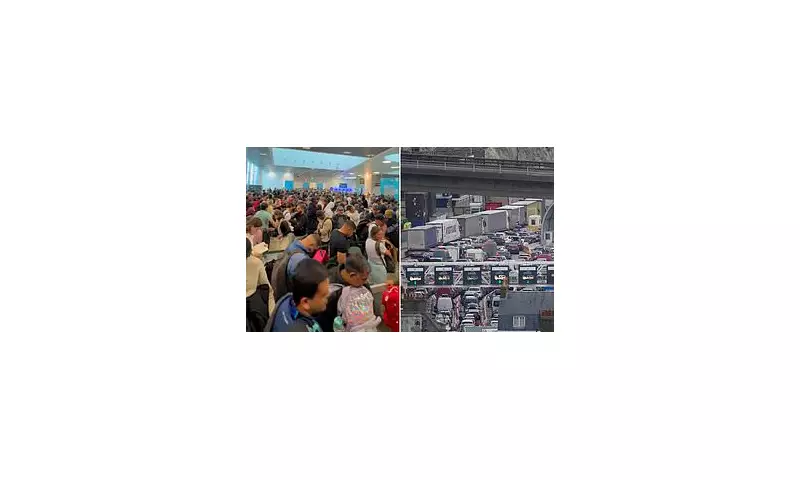
The systems failure, which affected French passport checks, forced traffic to build up around the busy Kent port. Officials worked to restore operations, but at one point, queues for outbound passengers stretched to around an hour. The chaos struck as millions began their Christmas journeys, with an estimated 30,000 cars expected to pass through Dover over the festive period.
By mid-afternoon, port authorities confirmed the situation had improved and traffic was flowing freely again. However, the morning's backlog had already caused widespread frustration. P&O Ferries acknowledged heavy traffic on approach roads, reassuring travellers who missed sailings they would be placed on the next available ferry.

The incident provoked a sharp political reaction from senior Conservative MPs. Mark Francois, the shadow defence minister and chairman of the European Research Group, criticised the French response. "It seems daft that France, our ally in Nato and fellow partner in the 'coalition of the willing', is prepared to treat Brits just trying to take a Christmas break in this way," he told The Telegraph. "If we can co-operate successfully in defence of Ukraine, why can't France run a more efficient border regime, just across the Channel?"
European Airport Chaos and EES System Woes
Meanwhile, air passengers across Europe faced their own ordeal. At Lisbon Airport, travellers reported queues lasting up to five hours as thousands attempted to reach their destinations before Christmas. Videos shared on social media showed passengers crammed together in lengthy lines, with one user branding the airport a "consistent, complete failure."
This disruption is partly linked to the ongoing rollout of the EU's new Entry/Exit System (EES), which began on October 12. The system, designed to automate border records for non-EU travellers using biometric data like fingerprints and facial scans, was intended to speed up controls. Instead, early implementation problems have triggered major delays.
The Public Security Police in Portugal cited technical difficulties, stating they were working at "maximum capacity" to resolve issues. Reports indicate waiting times of up to five hours at several European airports, with Portugal's secretary of state for infrastructure recently describing the airport situation as an "embarrassment for the government." Officials even considered switching the EES off entirely over Christmas to ease pressure.
Industry Warnings and Wider Disruption
The Airports Council International (ACI) Europe has called for an urgent review of the EES scheme. It warns that the requirement to capture biometric data has increased border processing times by as much as 70 per cent. The impact has been most acute at airports in France, Germany, Greece, Iceland, Italy, Portugal, and Spain.
The ACI cited repeated system outages and configuration failures, including problems with self-service kiosks for registration, as key reasons for the delays. The travel woes extended beyond borders, with several airlines, including Air France and easyJet, experiencing extreme disruptions and cancellations, leaving thousands of passengers stranded across the continent during one of the busiest travel periods of the year.