‘Anxious and Unsafe’: Half of Blind People Fear Being Stranded at Train Stations
Blind and partially sighted individuals across the UK are expressing profound anxiety and a sense of vulnerability when using the rail network, with many reporting consistent failures in the passenger assistance services designed to support them. A stark new report from the Royal National Institute of Blind People (RNIB) has revealed that half of this community lives in fear of being abandoned at train stations, left feeling stressed and profoundly disoriented by the unpredictability of their travel experiences.
Survey Exposes Systemic Failures in Rail Assistance
Based on a comprehensive survey of nearly 1,200 blind and partially sighted people, the charity uncovered alarming statistics about the reliability of rail staff support. Three in four respondents stated they simply cannot depend on railway employees for essential assistance and crucial travel information. More than 60 per cent reported that staff frequently fail to meet them when passenger assistance has been pre-booked, a basic expectation for safe travel. Perhaps most concerning, a mere 27 per cent felt confident that staff would reliably inform them if their train’s destination was changed, a scenario that could lead to dangerous situations.
Personal Stories of Anxiety and Abandonment
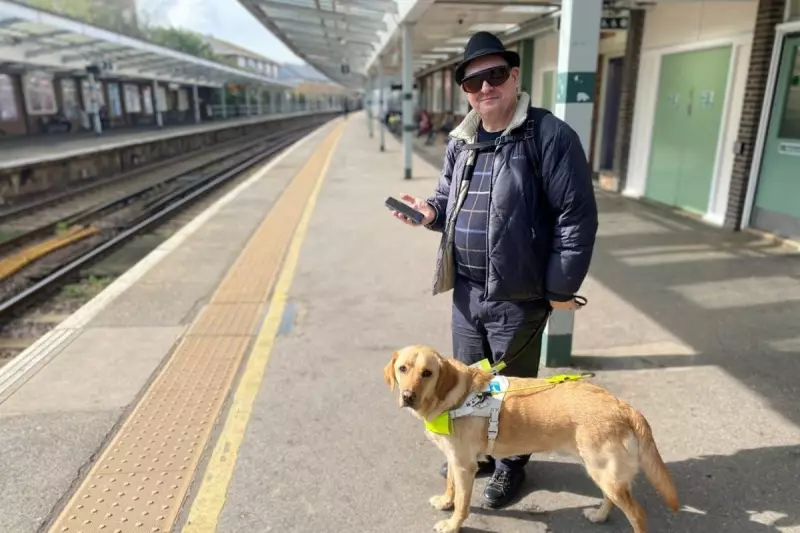
For 53-year-old Paul Goddard, who is blind, these findings are a grim reflection of his daily reality. He regularly travels to London Bridge, a journey that fills him with dread due to past experiences. “It's incredibly dangerous and it makes me very anxious when I'm travelling,” Mr Goddard explained. “I can't relax. I'm thinking, ‘Oh my goodness, am I going to be met?’ And then when I'm pulling into London Bridge, I think, ‘here we go’. You shouldn't be left feeling like that.” He has been left stranded in empty, dark carriages, and describes his journeys as fraught with uncertainty, leaving him feeling nervous, unsafe, and overwhelmed.

Blind disability campaigner Lucy Edwards, 30, who lost her vision at age 17, shares this profound frustration. She recalls feeling physically sick at the thought of leaving her home and crying herself to sleep after particularly difficult journeys. “Only one chink in the system has to fall and you can't get on the train,” she said. Ms Edwards now routinely books trains two hours early to buffer against potential failures. “I genuinely feel so frustrated because I'm such an independent person. I feel like the train for me is one place where I just really don't feel like myself, because I have to give up that independence to someone else.” She wholeheartedly endorsed the RNIB report, calling its findings “completely and totally accurate.”
Government Policy Decisions Exacerbate Fears
The anxiety within the blind community has been intensified by recent government transport decisions. Last week, the Department for Transport announced the cancellation of plans to install step-free access at 19 stations. For campaigners like Mr Goddard and Ms Edwards, this move signals a distressing lack of commitment to accessibility. “I think that any form of cancellation for accessibility is a step backwards and shows a complete lack of respect for disabled passengers,” Mr Goddard stated.
Ms Edwards was even more pointed in her criticism. “It says we're okay for disabled people to be late to meetings, to be late to work. It says that we don't support disabled people, and we don't necessarily value them as a functioning part of our society.” She argues that simple, effective measures like tactile paving—textured ground surfaces to aid navigation—are desperately needed, a view supported by 68 per cent of survey respondents.

A Call for Reliable and Respectful Travel
The core issue, as articulated by those affected, is a fundamental lack of reliability and respect. Delays, staff no-shows, poor-quality announcements, and sudden platform changes can derail a journey entirely for a blind passenger. “You can't guarantee anything,” lamented Mr Goddard. “It would be great to be able to be like everyone else and get on a train, get off it, and have had a pleasant journey and not have to worry about what's going to happen when you get there.” He notes that efficient, respectful service is possible, citing positive experiences at stations like Crowborough and East Croydon, but these remain the exception rather than the rule.
The RNIB report and the powerful testimonies from individuals like Paul Goddard and Lucy Edwards present a clear challenge to rail operators and the government. They highlight an urgent need to transform passenger assistance from an unreliable promise into a dependable, dignified service that ensures blind and partially sighted people can travel with the same confidence and safety as everyone else.