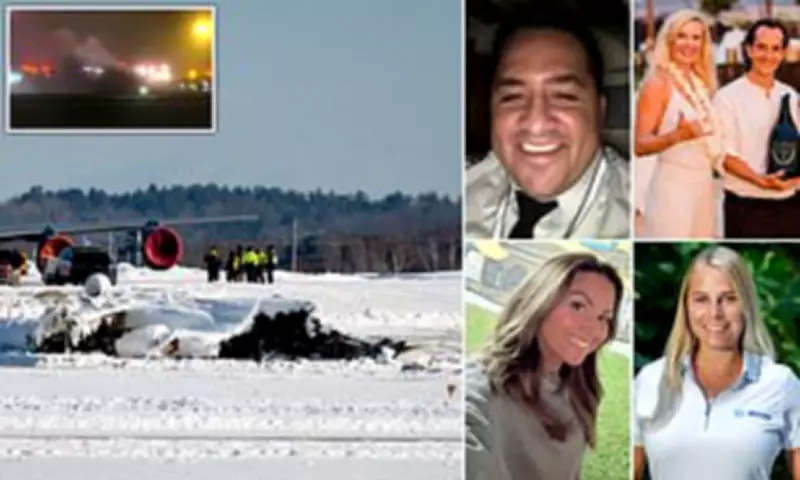
A devastating private jet crash at Bangor International Airport in Maine, which claimed six lives, is being linked to a critical vulnerability in the aircraft's wings, with ice contamination emerging as the prime suspect. The Bombardier CL-600-2B16 Challenger 650 flipped and burst into flames during takeoff around 7.45pm on Sunday, amidst severe winter conditions brought by Winter Storm Fern.
Victims and Circumstances of the Tragedy
The victims included prominent individuals: top lawyer Tara Arnold, 46; private chef Nick Mastrascusa, 43; wine expert Shelby Kuyawa, 34; event planner Shawna Collins, 39; and pilot Jacob Hosmer, 47. The aircraft was owned by the powerful law firm Arnold & Itkin and was en route to Paris for a location scouting trip related to Arnold's luxury travel venture, Beyond. As investigators begin sifting through the snow-covered wreckage, with bodies still frozen inside, aviation experts point to a buildup of ice on the wings as the likely cause, leading to a stall and catastrophic flip.
Historical Precedents and Design Flaws
This incident echoes eerily similar crashes involving Bombardier CL-600 series jets. Former National Transportation Safety Board investigator Jeff Guzzetti highlighted that the wing design makes these planes "particularly susceptible" to ice contamination. The Federal Aviation Administration issued directives in 2005, prompted by reports that even minute amounts of frost, ice, snow, or slush on wing surfaces could cause adverse changes in controllability.

Notable past incidents include a crash in Birmingham, UK, in January 2002, which killed all five on board due to asymmetric ice contamination, and another in Montrose, Colorado, in November 2004, that resulted in three fatalities. Investigations found that ice on wings can reduce maximum lift by up to 33 percent, with even 1/64th of an inch posing a danger. The FAA reiterated warnings in 2008 after further incidents in Canada, citing risks of anti-ice system failures.
De-Icing Procedures and Storm Challenges
Airport logs indicate the Challenger arrived from Houston at 6.09pm, underwent de-icing from 7.17pm to 7.36pm, and took off at 7.44pm. However, with temperatures plummeting to 3°F and a mix of snow and sleet from Winter Storm Fern, the anti-icing fluid may have been ineffective. Guzzetti noted that the unique precipitation could render such fluids useless, a concern shared by other pilots that night.
For instance, an Allegiant Air Boeing 737 Max aborted takeoff after manually checking for ice, with pilots reporting that de-ice fluid had failed and visibility was poor. Similarly, a Breeze Airways plane considered staying overnight due to the same issues. Guidebooks for the Type 4 anti-ice fluid used advise takeoff within nine minutes under such conditions, yet the Challenger took off just eight minutes after treatment, potentially leaving residual ice.
Flight Data and Investigative Insights
Flight communications revealed the crew waited only 30 seconds at the hold-short line for final checks. Surveillance data showed the plane accelerated to 158 knots, then slowed to 147 knots for three seconds before crashing 33 seconds after takeoff began. Witnesses described the aircraft lifting off, then crashing back onto the runway and exploding.
Guzzetti explained that the "supercritical wing" design of the Bombardier CL-600 series, while reducing drag in cruise, makes it prone to stalling and rapid lift loss if airflow is disturbed, such as by ice. Pilots have described these wings as "unforgiving" and "very light in the pitch axis." Additionally, anecdotal reports suggest possible pre-existing issues, with a pilot who flew the plane to Houston the previous night mentioning flight data errors and maintenance delays.
Broader Implications and Unanswered Questions
As the investigation unfolds, questions remain about why the flight proceeded in such hazardous conditions. The crash has sent shockwaves through the aviation community, highlighting ongoing risks associated with winter operations and specific aircraft vulnerabilities. With six lives lost and families grieving, the focus turns to enhancing safety protocols and learning from this tragedy to prevent future occurrences.