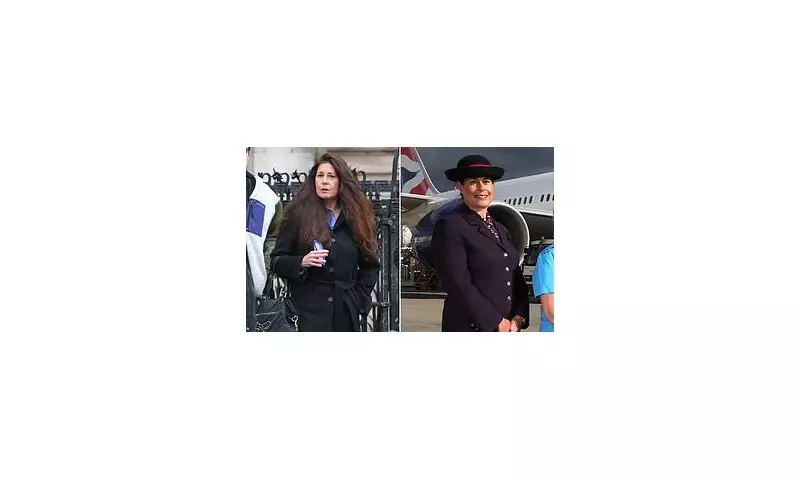
British Airways Faces £72,500 Lawsuit Over Turbulence Incident That Injured Veteran Stewardess
A long-serving British Airways stewardess is taking legal action against the airline, seeking £72,500 in damages after suffering severe injuries during what she describes as the worst turbulence of her three-decade career. The incident has raised serious questions about pilot decision-making and aviation safety protocols.
The Incident Over Mumbai
Laura Lanigan, a 56-year-old resident of Richmond, Surrey, was working aboard a British Airways Boeing 777 on a routine flight from London Heathrow to Mumbai in June 2019. As the aircraft prepared for landing, it encountered what court documents describe as a "violent drop" and "sudden and severe" bout of turbulence.
Mrs Lanigan, who had dedicated nearly 30 years to British Airways, was stationed in the plane's galley when the extreme jolt occurred. She was hurled into the air before crashing back to the floor, sustaining a fractured knee and dislocated shoulder. To compound her injuries, an unsecured drinks canister then fell on top of her.

Allegations of Pilot Negligence
The central claim in Mrs Lanigan's lawsuit alleges that the pilot failed to maintain proper distance from storm conditions. Her legal team argues that the aircraft entered what they term the "danger zone" by flying too close to a cumulonimbus cloud - a large, dark storm formation known for generating severe turbulence.
"We say the path that was being taken was sufficiently proximate to the cumulonimbus cloud that it was within the danger zone," stated Sinclair Cramsie, Mrs Lanigan's barrister, during proceedings at Central London County Court. "The turbulence was described by Mrs Lanigan as the worst turbulence she had experienced in circa 30 years flying."
Aviation protocol typically requires aircraft to maintain at least 20 miles distance from such storm clouds. Mrs Lanigan's legal representatives contend that the pilot should have either diverted further away from the cloud formation or instructed cabin crew to secure themselves with seat belts.
British Airways' Defence
British Airways is vigorously contesting the claim, with company barrister Peter Savory presenting a markedly different account of the weather conditions. The airline maintains that pilots conducted proper observations and found no visual evidence of storm clouds.
"The defendant's case is quite simply that the pilot made proper observations," Mr Savory told the court. "Whatever they saw, the pilots say it wasn't a cumulonimbus. In using the weather radar on the aircraft, they didn't see anything indicative of a cumulonimbus."
The airline's defence describes the incident as "a single bump of turbulence" and nothing more substantial. They further note that crew members, including Mrs Lanigan, had received multiple warnings about potential bumpy conditions during the flight's approach to Mumbai.
Crew Safety Protocols Under Scrutiny
The case has brought cabin crew safety procedures into sharp focus. Mrs Lanigan testified that although passenger seat belt signs were illuminated, she continued working based on her professional judgment as an experienced crew member.
"If you feel you can't put one foot in front of the other, if you feel unsafe, you sit down and strap in," she explained to Judge David Saunders. "I did what I thought was best at the time."
She described the moments following her injury as particularly distressing, recalling: "I remember trying to move. It felt like forever." The continuing turbulence prevented her from reaching a seat, and she was eventually removed from the aircraft in a wheelchair upon landing.
Expert Testimony and Continuing Proceedings
Weather experts consulted for the case have suggested that the turbulence experienced at relatively low altitude was likely thermal turbulence caused by cumulonimbus activity. This supports Mrs Lanigan's contention that storm clouds were present in the vicinity.
British Airways counters that their pilots were properly aware of weather conditions and took reasonable precautions. The airline's legal team emphasised that crew members had opportunities to secure themselves if they felt conditions warranted such action.

The trial continues at Central London County Court, with both sides presenting detailed evidence about aviation safety standards, weather monitoring procedures, and cabin crew protection protocols. The outcome could have significant implications for how airlines manage crew safety during turbulent conditions.