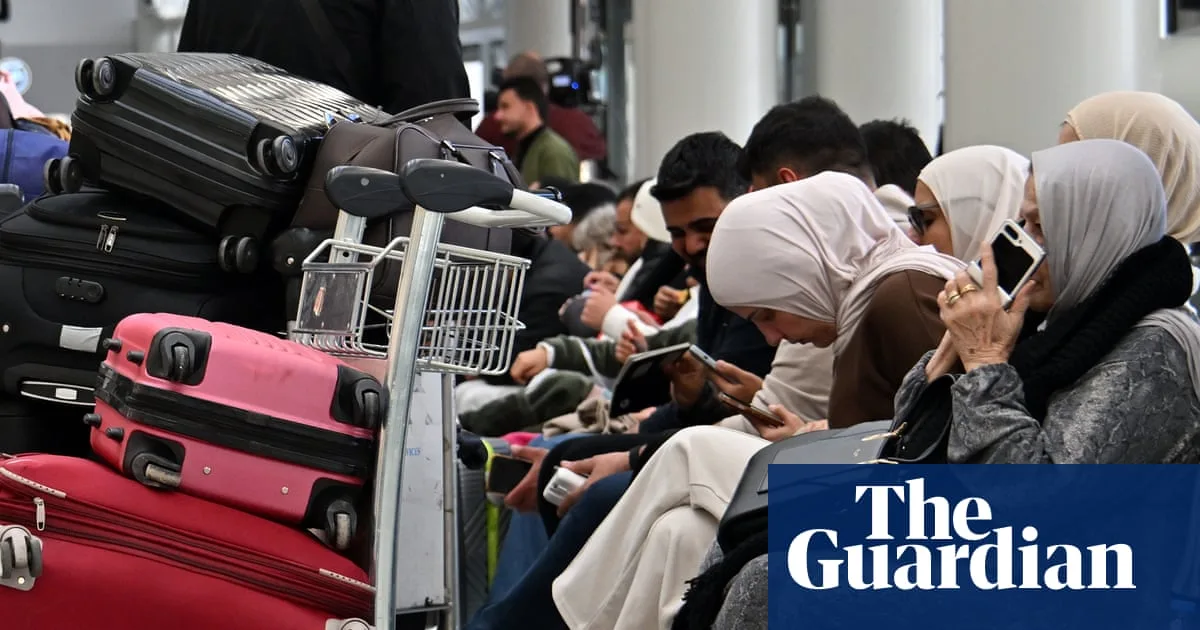
British Airways Passengers Stranded in Dubai Demand Direct Flights Home
Hundreds of thousands of travellers have been affected by the closure of airspace and airports in the Middle East following Iranian missile attacks in the region. Dubai International Airport was shut down after Iran retaliated against attacks by the US and Israel, targeting Gulf states, leading to widespread flight cancellations and disruptions.
Passenger Rights and Flight Replacement Debates
One passenger, Mike Boreham, had his British Airways flight from Dubai to London cancelled and was rebooked on a Qatar Airways flight with a 12-hour layover in Doha. He requested a non-stop alternative but was told by BA that they lack an interline agreement with Emirates and have no policy entitling passengers to direct flights during disruptions.
Under air passengers' rights rules, travellers whose flights are cancelled by European airlines are entitled to be flown to their destination as soon as possible on any carrier with available seats under comparable conditions. This typically implies a like-for-like nonstop trip. In a similar past incident, when a BA flight from London to Singapore was cancelled, the airline initially offered a connecting flight via Doha but later agreed to a nonstop replacement with Singapore Airlines.
The Civil Aviation Authority has declined to provide firm guidance on whether airlines must replace cancelled nonstop flights with direct alternatives, stating it is a matter for courts or alternative dispute resolution to resolve. Passengers considering buying new nonstop tickets on other carriers, such as Emirates, may face challenges as availability is limited due to ongoing recovery efforts from the disruption.
Lessons from the Aviation Shutdown in the Gulf
Jonathan H. questions what lessons should be learned from the aviation shutdown. He suggests that while avoiding regions near dysfunctional states is impractical, airlines need thoughtful backup plans. Each day of airspace closures disrupts half a million people, severely impacting Gulf carriers like Emirates, Etihad, and Qatar Airways, whose hub-and-spoke operations are compromised.
As operations slowly resume, with Emirates announcing limited flights from Dubai, the backlog of distressed passengers remains significant. Airlines are urged to consider setting up shadow operations or temporary hubs in cities like Muscat, Riyadh, or Amman to maintain partial services and deploy stranded aircraft and crew on busy routes to European destinations.
Baggage Rules and Itinerary Changes for Connecting Flights
In a related query, Sharon C. asks about her son's travel plans from the US to Manchester via Toronto, where he needs to extend his stay in Toronto. Air Canada informed him he must stick to his original routing and cannot collect luggage during the transfer, as checked baggage is tagged through to the final destination.
If he ends his journey in Toronto, he technically breaches his contract, though enforcement is unlikely. The solution involves managing with carry-on luggage only, utilizing Air Canada's allowances for a rollalong bag and a personal item. This approach requires careful packing and may involve donating unnecessary items after his trip.
Experts emphasize that minimal cabin baggage is feasible, even for extended travel, as demonstrated by travellers managing with small backpacks on multi-country journeys. Passengers are advised to plan accordingly and avoid checked baggage if itinerary changes are anticipated.