A significant overhaul of airport security screening is set to make travel far more convenient for millions of passengers across Australia. The long-standing requirement to unpack electronic devices and liquids from hand luggage is being abolished nationwide, thanks to a major technological upgrade.
The End of the Unpacking Hassle
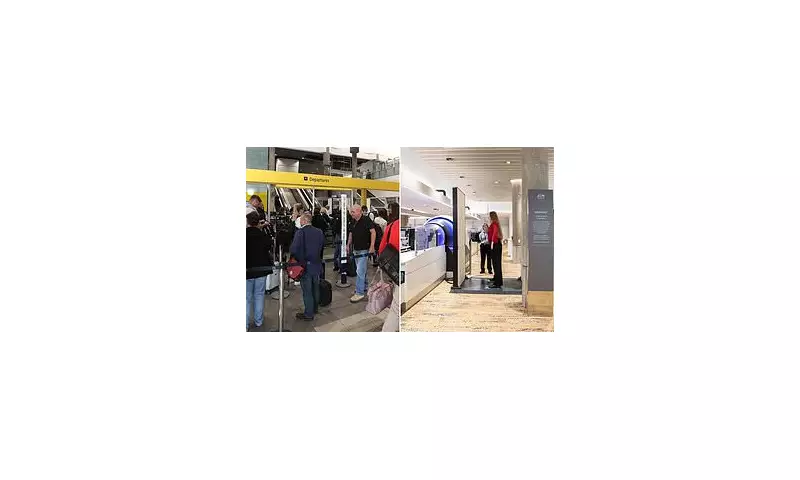
The catalyst for this change is the nationwide rollout of advanced Computed Tomography (CT) X-ray scanners. Major airports were given a deadline of Wednesday, 31 December, to install this cutting-edge equipment. These high-tech machines generate detailed 3D images of carry-on bags, allowing security staff to inspect contents thoroughly without the need for travellers to remove items. The result promises to be shorter queues, fewer delays, and a much more seamless journey through the terminal.
However, the Department of Home Affairs has noted that on occasion, a secondary review might still necessitate some items being taken out of bags for clearance. The primary screening process, nonetheless, will be dramatically faster.

Airports Racing to Implement New Systems
Sydney Airport, the nation's busiest, is leading the charge. Eleven of its planned 15 new high-tech security lanes at the T1 International terminal are already operational. Once fully installed, these upgrades are expected to boost screening capacity by nearly 30%, easing congestion for countless domestic and international travellers.
This is part of a broader $200 million redevelopment of the T2 domestic terminal, which will add seven new screening lanes alongside self-service bag drops. The goal is to slash the entire kerb-to-gate process to a mere 15 minutes. "The investments we are making in screening technology, terminal upgrades and digital services are improving the travel experience across all terminals," said Sydney Airport's chief executive, Scott Charlton.
The transformation is not confined to Sydney. Brisbane Airport activated its first five CT lanes in October and is in the final stages of its rollout. "The fact that passengers will be able to leave laptops and aerosols in their bags will make a real difference," remarked Stacey Pollard, the airport's head of terminal operations.
A National Strategy for Future Travel
This nationwide shift is backed by substantial federal investment. The Australian government has committed $2 billion to upgrading airport security systems. This forms part of a national strategy designed to enhance aviation safety and bring the country in line with international best practice. The upgrades are also intended to future-proof terminals for an anticipated 72 million passengers annually by 2045.
Other major airports are deeply involved in their own upgrade programmes:
- Adelaide Airport has begun a $600 million expansion, introducing body scanners and new CT systems.
- Melbourne Airport is installing CT and body scanners throughout all terminals.
- Airports in Perth, Canberra, Hobart, and the Gold Coast are also well-advanced in their security overhaul projects.
The push for efficiency comes at a crucial time. With international visitor numbers rising and new airlines like Turkish Airlines entering the market, airports are racing to complete these systemic updates in time for the new year. This drive for improvement is further supported by initiatives like the NSW government's recent two-year trial of capped $60 taxi fares between Sydney Airport and the city centre, all aimed at improving overall passenger flow.