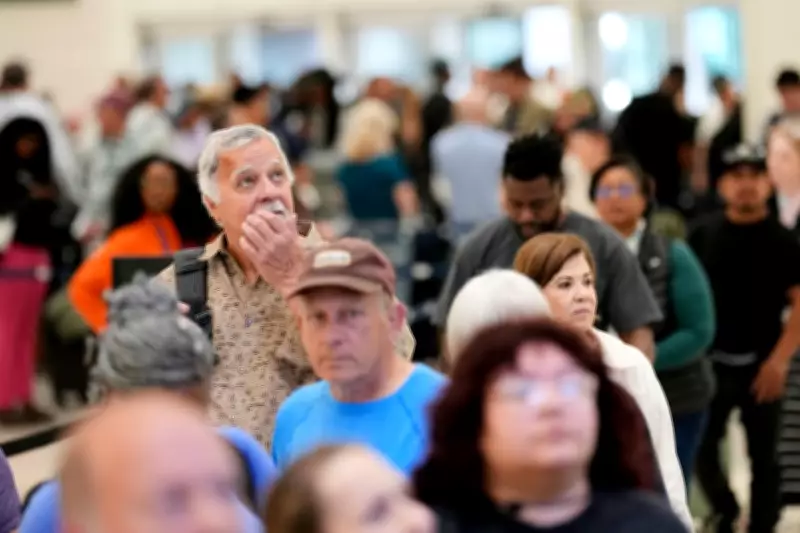
Images of endless security queues at U.S. airports and frustrating stories of missed flights are driving panicked travelers to arrive hours before their departures. However, some airports where wait times have remained manageable are now issuing a counterintuitive message: stop coming so early.
Early Birds Exacerbating Bottlenecks
In Ohio, John Glenn International Airport in Columbus has highlighted that early arrivals—spurred by a funding standoff on Capitol Hill that is congesting security checkpoints—are worsening the situation by creating bottlenecks during peak hours. "Arriving too early can actually create longer lines right when we open," the airport stated in a social media post on Thursday. "Spacing out arrival times helps keep things moving smoothly for everyone." To clarify, the airport even provided a chart recommending that passengers arrive just 90 minutes before departure, emphasizing that this is sufficient under current conditions.
Unpredictable Security Line Woes
What confuses air passengers is the unpredictability of which airports will next be plagued by security lines spilling out of terminals. The government shutdown, which has strained Transportation Security Administration staffing, has ballooned checkpoint wait times to over two hours at some major hubs. George Bush Intercontinental Airport in Houston has emerged as the biggest chokepoint, with security lines stretching to four hours in extreme cases.

Mixed Reports Across Airports
These scenarios represent the worst-case situations. Many airports, such as the one in Columbus, Ohio, are experiencing wait times comparable to normal periods. Consequently, airlines advise that the best strategy for passengers is to check real-time TSA wait times before their scheduled departures, rather than relying on blanket early arrivals.
Psychological Impact and Media Influence
In some ways, the current travel panic echoes the "panic buying" phenomena seen during the early days of the COVID-19 pandemic in 2020. Shari Botwin, a clinical social worker from Philadelphia who counsels individuals on anxiety, explained, "It's human nature. You don't have control over what's going on at an airport." She added, "There's so much media attention about the chaos at airports. They might not trust when someone says, 'Well, you don't need to come out early anymore.'"
This psychological response, fueled by widespread media coverage, complicates efforts to manage passenger flow efficiently. As airports and airlines navigate this crisis, clear communication and updated information remain crucial to alleviating traveler stress and preventing further congestion.