
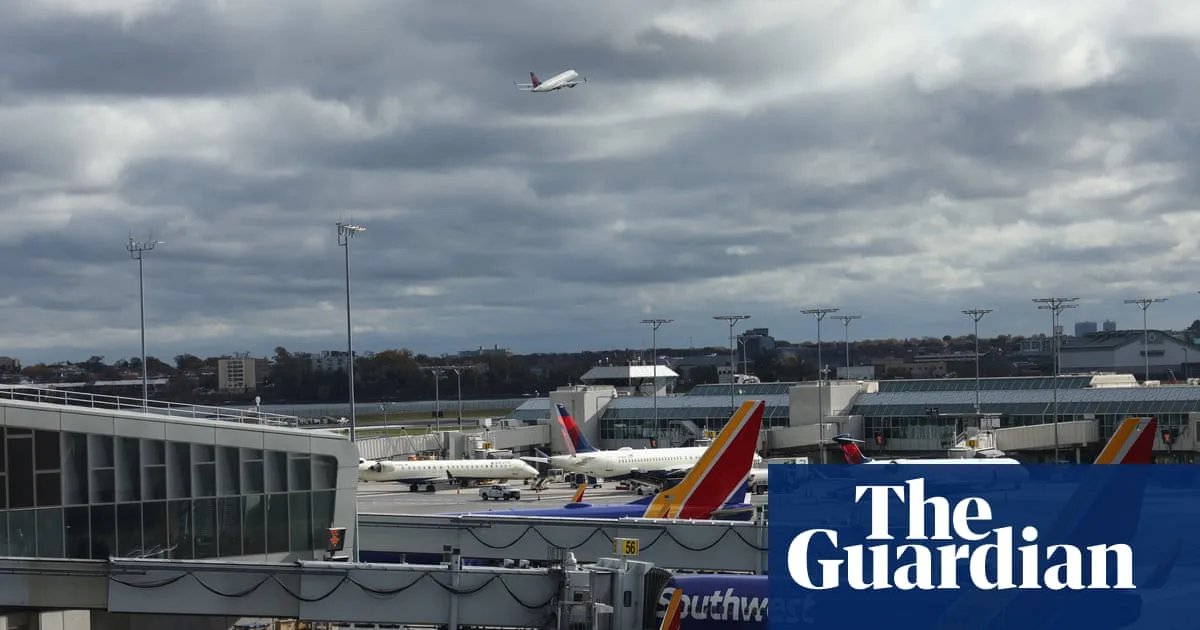
Nearly half of the 30 busiest airports in the United States experienced shortages of air traffic controllers on Friday, causing widespread flight delays as the federal government shutdown entered its 31st day. The Federal Aviation Administration (FAA) said at least 35 of its facilities, including several at major airports, reported staffing problems.
The New York region was the worst affected, with 80 per cent of air traffic controllers absent. Other affected airports included those in Austin, Newark, Phoenix, Washington, Nashville, Dallas and Denver, with delays at some averaging more than an hour. FlightAware data showed more than 5,600 flights were delayed and 500 cancelled on Friday. At New York's LaGuardia airport, half of all flights were delayed and 12 per cent cancelled, with average delays of 140 minutes, while a quarter of flights at Washington's Reagan National were delayed.
The shutdown has forced 13,000 air traffic controllers and 50,000 Transportation Security Administration officers to work without pay. The FAA said: "After 31 days without pay, air traffic controllers are under immense stress and fatigue." It added: "The shutdown must end so that these controllers receive the pay they've earned and travellers can avoid further disruptions and delays." On Thursday, staffing shortages had already affected airports in Orlando, Dallas/Fort Worth and Washington, with 7,300 flights delayed and 1,250 cancelled.
Major airlines including Delta, United, Southwest and American have called on Congress to pass a stopgap funding bill to reopen the government. The National Air Traffic Controllers Association, whose president Nick Daniels also urged a resolution, joined the appeal. The US transportation secretary, Sean Duffy, warned of further disruptions, saying: "Coming into this weekend and then the week after, I think you are going to see even more disruptions in the airspace."
The shutdown began on 1 October, with a federal funding bill stalled in Congress. Republican lawmakers want a clean measure, while Democrats are demanding talks on extending healthcare subsidies. The FAA is already about 3,500 air traffic controllers short of its target staffing level, and many controllers had been working mandatory overtime and six-day weeks before the shutdown began. Halloween evening traffic was about 20 per cent lower than usual, which helped mitigate the impact on Friday.




