European Airlines Halt Middle East Operations as Iran Issues Stark War Warning
Two of Europe's leading airlines, Air France and KLM, have taken the significant step of suspending flights to and through the Middle East. This decisive action comes in direct response to escalating geopolitical tensions, following a stark warning from a senior Iranian official that Tehran would treat any American military strike as an act of full-scale war.
Military Buildup Fuels Regional Fears
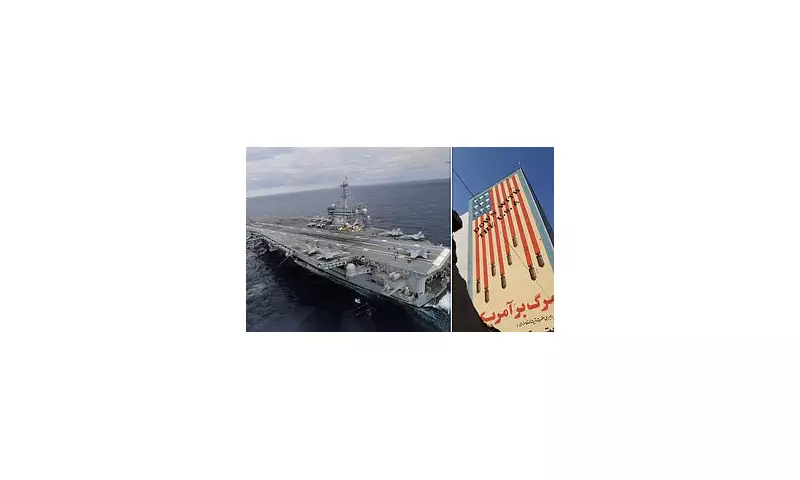
The aviation suspensions coincide with a substantial military buildup in the region. Washington has deployed an aircraft carrier strike group, including the USS Abraham Lincoln, alongside other military assets. This movement has intensified fears of a major confrontation, occurring almost two weeks after former US President Donald Trump publicly urged Iranian protesters to continue demonstrating against the regime.
A senior Iranian official, speaking anonymously to Reuters, delivered a chilling ultimatum: "This time we will treat any attack - limited, unlimited, surgical, kinetic, whatever they call it - as an all-out war against us, and we will respond in the hardest way possible to settle this." The official stated Iran's military is "ready for the worst-case scenario" and that the country is on high alert.

Airline Safety Measures Implemented
In light of the heightened threat level, Air France announced it will temporarily cease its service to Dubai. The French carrier stated it is "constantly monitoring the evolution of the geopolitical situation" to ensure the highest safety standards for its flights and aircraft.
Similarly, Dutch airline KLM confirmed to the Netherlands' national broadcaster, NOS, that it has suspended flights until further notice to several destinations, including Tel Aviv, Dubai, Dammam, and Riyadh. Crucially, KLM will also avoid the airspace of multiple countries in the region, specifically Iraq, Iran, Israel, and several Gulf states. The airline cited ongoing consultations with Dutch authorities but did not publicly disclose the precise reason for the suspensions.
Broader Context of Protest Crackdown and Strategic Posturing
This military and diplomatic crisis unfolds against the backdrop of a severe and violent crackdown on dissent within Iran. Protests that began in late December over economic grievances have spread nationwide, meeting a brutal response from security forces. While official Iranian figures claim over 3,000 deaths, activist groups estimate the toll to be significantly higher, potentially exceeding 5,000, including dozens of children.
The Pentagon's recently published national defence strategy offers a stark assessment, accusing Iran of having "the blood of Americans on its hands" and warning that its leaders may again attempt to acquire a nuclear weapon. The document reaffirms Washington's support for Israel and condemns Iran's role in regional instability.
Experts suggest the Iranian regime viewed the protest movement as an existential threat, leading to the decision to employ extreme violence. The regime has historically used forces like the Basij, the volunteer arm of the Revolutionary Guard, to suppress demonstrations, with recent videos showing security personnel firing shotguns and pellet guns into crowds.
As the situation remains volatile, with the potential for renewed demonstrations linked to traditional 40-day mourning periods, the suspension of commercial flights by major European carriers underscores the serious and immediate risks perceived in the region. The international community watches closely as diplomatic and military manoeuvres continue to shape this high-stakes confrontation.