Africa's Road Safety Crisis: A Continent in Peril
Africa continues to hold the unenviable title of the world's most dangerous continent for road users, a stark reality underscored by recent high-profile accidents. A deadly car crash in Nigeria involving former heavyweight boxing champion Anthony Joshua, coupled with two separate minibus accidents in South Africa that claimed at least 25 lives, has brought the continent's profound road safety challenges back into sharp focus. These tragic incidents highlight a systemic failure that claims hundreds of thousands of lives annually across Africa.
Disproportionate Fatality Rates Paint a Grim Picture
The statistics are alarming and unequivocal. According to the United Nations Economic Commission for Africa, the continent suffers from a road death rate of 26 fatalities per 100,000 people. This figure stands in stark contrast to the global average of approximately 18 and is more than double the European rate, which sits below 10. Crucially, this crisis unfolds against a backdrop of relatively low motorisation; Africa is home to only about 3% of the world's vehicles yet endures a massively disproportionate share of global road deaths, with over 300,000 lives lost each year.
A 2024 World Health Organization report delivered a particularly concerning finding: while road deaths have decreased globally, they have increased across Africa. The UN health agency has labelled road accidents "a serious public health concern for African countries, with hundreds of thousands of lives being lost unnecessarily." This trend reversal on a continent of some 1.5 billion people signals a deepening crisis that demands urgent attention.

Vulnerable Road Users Bear the Brunt
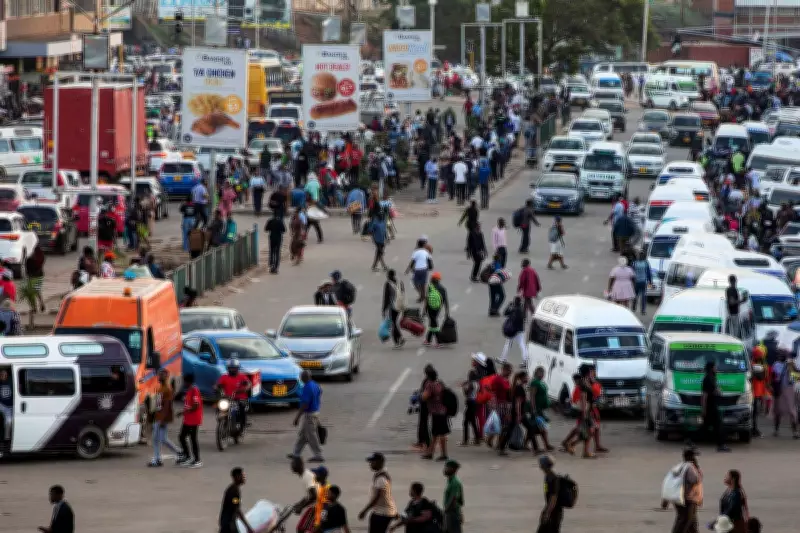
The nature of transport in many African nations exacerbates the danger. With low car ownership due to economic constraints, roads become a chaotic mix of pedestrians, bicycles, motorcycles, cars, buses, and trucks all vying for limited space, often without dedicated infrastructure for non-motorised users. This environment proves especially deadly for those on foot.
Around 40% of all road deaths in Africa are pedestrians, a figure that is twice the global average. In some African countries, this proportion rises to almost 50%, highlighting a catastrophic failure to protect the most vulnerable. The 2024 WHO report noted that few African countries have made significant progress in developing transport systems that safely accommodate these alternative modes of travel.
Systemic Failures in Regulation and Infrastructure
Limited and often unreliable public transport systems force millions of Africans into perilous travel choices. Many have no alternative but to use overloaded buses of questionable roadworthiness or to rely on motorcycle taxis, which offer little protection. In South Africa, a nation with one of the continent's more developed road networks, around 70% of commuters—more than 10 million people daily—use minibus taxis. Authorities frequently struggle to regulate this sector effectively, ensuring drivers are properly licensed, vehicles are roadworthy, and traffic laws are obeyed.
Enforcement of road laws is generally weak across the continent. Furthermore, WHO assessments indicate that road infrastructure safety ratings are notably low in Africa, with only a small fraction of the road network meeting acceptable international standards. This combination of poor regulation, inadequate infrastructure, and high-risk travel modes creates a perfect storm for accidents.
Holiday Periods Amplify the Danger
The risk escalates dramatically during peak travel times, such as the December to January holiday period, when vast numbers of people take to already strained road systems. Even in South Africa, the continent's most advanced economy, the holiday season remains deadly. For the period from 1st December 2025 to 11th January 2026, authorities recorded 1,427 road deaths, averaging more than 30 fatalities per day. While this represented a small decrease from previous years, the toll remains unacceptably high, illustrating the scale of the challenge even for nations with greater resources.

The road safety crisis in Africa is a complex, multifaceted problem rooted in infrastructure deficits, regulatory challenges, economic necessity, and the peril faced by vulnerable road users. Without coordinated, continent-wide action to address these fundamental causes, the tragic loss of life on African roads will continue unabated.