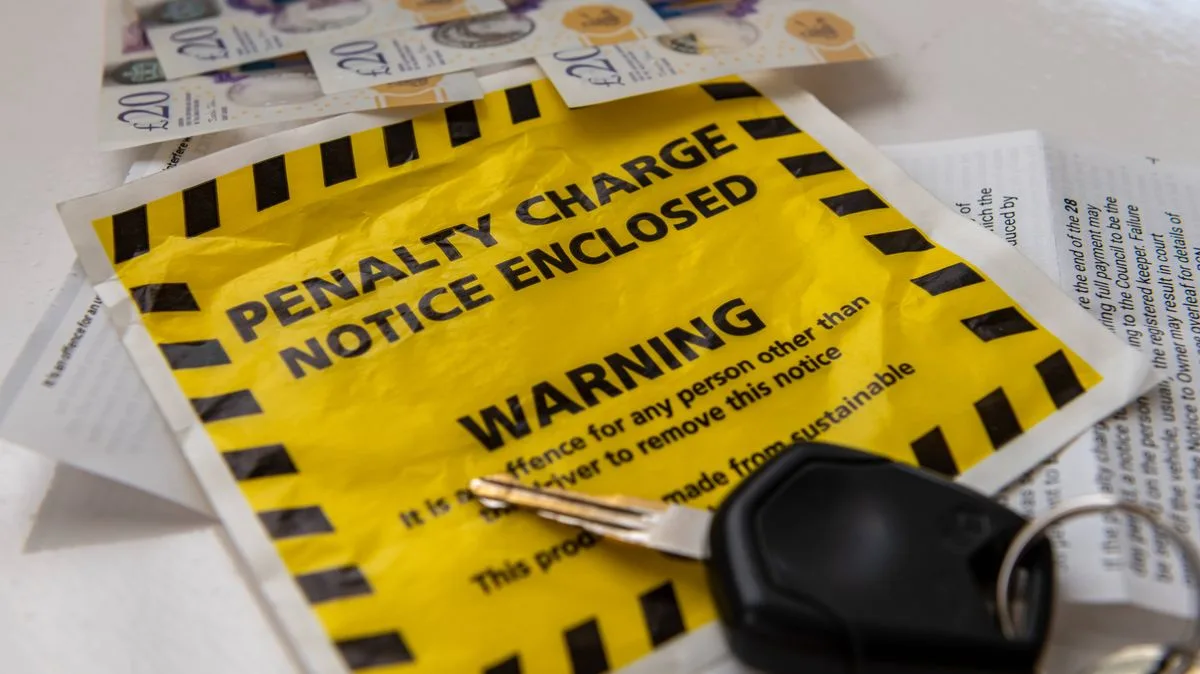
Countless motorists across the United Kingdom are inadvertently breaking a specific Highway Code regulation every time they park on the street, potentially exposing themselves to significant financial penalties. The issue centres not on the more familiar double yellow lines, but on a precise measurement from the kerb that many drivers simply do not realise exists.
The Overlooked 50-Centimetre Regulation
When a car park space is unavailable, drivers often assume that parking on the street is permissible as long as no obvious restrictions like double yellow lines are present. However, a frequently missed stipulation in the Highway Code states that vehicles must not be left "in a dangerous position or where it causes any unnecessary obstruction of the road." A critical component of this rule involves the vehicle's proximity to the kerb.
Specifically, the code dictates that drivers can be issued a Penalty Charge Notice (PCN) if "no part of the vehicle is within 50cm of the edge of the carriageway (kerb line)." For visual reference, 50 centimetres is approximately the width of a standard wheelie bin lid. The only exception to this rule is if a vehicle is parked completely within the boundaries of a marked bay.
Consequences of Incorrect Parking
Failing to adhere to this 50cm rule can lead to immediate fines. Penalty Charge Notice costs typically vary by local council area but generally fall within a range of £50 to £80. Many authorities offer a discount of up to 50 percent if the fine is paid promptly within 14 days. Conversely, ignoring the PCN can result in additional charges being applied after 30 days, and persistent non-payment risks escalation to court proceedings.
This escalation can add hundreds of pounds to the original penalty amount. Furthermore, unpaid parking fines are a common precursor to County Court Judgments (CCJs), which can severely damage an individual's credit rating and financial standing for years.
Related Parking Pitfalls: Pavements and Bays
While focusing on the kerb rule, drivers should also be mindful of other parking nuances. Some motorists, perhaps trying to avoid being too far from the kerb, opt to park on the pavement instead. Although pavement parking is not explicitly illegal across most of England (outside London) and differs in Scotland, doing so in a manner that causes an obstruction can still warrant a PCN. Discussions about a potential England-wide ban on pavement parking continue, but no definitive legislation or implementation date has been established.
Additionally, when using a marked parking bay, it is crucial to ensure the entire vehicle remains inside the painted lines. Straying outside these boundaries, even slightly, can constitute a separate parking violation.
Ultimately, with fines fluctuating and rules differing slightly between local authorities, the onus is on drivers to familiarise themselves with the Highway Code's detailed provisions. A small oversight in parking position, measured in mere centimetres, can lead to a costly and administratively burdensome penalty.