Spain Train Crash: 39 Killed as High-Speed Trains Collide in Córdoba
39 Dead in Spain High-Speed Train Crash, Investigation Launched

At least 39 people have been killed and dozens more injured in a catastrophic collision involving two high-speed trains in southern Spain. The devastating incident occurred on Sunday evening near the town of Adamuz in the Córdoba region, sending shockwaves across the country and prompting a major investigation.

The Moment of Impact: A Timeline of the Disaster

The crash unfolded at 7:45 pm local time on 18 January 2026. According to initial reports, an Iryo train travelling from Málaga to Madrid derailed on a straight section of recently renewed track. In a horrifying chain of events, the derailed train then jumped onto an adjacent track, where it smashed into an oncoming Renfe service that was travelling from Madrid to Huelva.

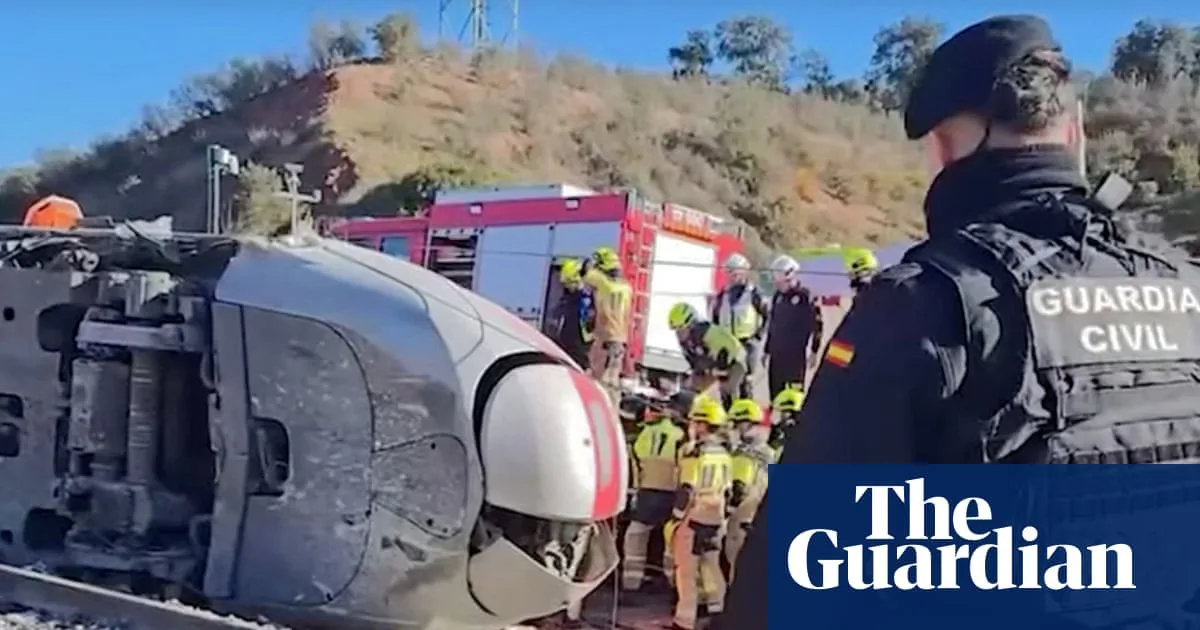
The force of the collision was immense, pushing the second train off the tracks and down an embankment. Footage from inside the carriages, later shared online, showed terrified passengers attempting to escape the mangled wreckage in the immediate aftermath.

Rescue Efforts and Casualty Toll

Emergency services worked tirelessly through the night in a desperate race to rescue survivors trapped within the twisted metal. The scale of the operation was vast, with medical teams treating the injured at the scene before transporting them to nearby hospitals.

The human cost of the crash is severe. Alongside the 39 confirmed fatalities, at least 75 people were hospitalised. Of those, 15 individuals remain in a serious condition, fighting for their lives. The rescue phase has now concluded, with the focus shifting to recovery and supporting the victims' families.

An 'Extremely Strange' Incident Under Investigation

Spain's Transport Minister has publicly described the crash as "really strange" and "extremely strange," highlighting the perplexing circumstances. The collision happened on a straight section of line that had been recently renewed, raising immediate questions about the root cause.

A full official inquiry has been launched and is expected to take up to a month to complete. Investigators will be examining a range of potential factors, including:

  • Signalling systems and track safety mechanisms.
  • The condition of the rolling stock involved.
  • Operational procedures and human factors.
  • Data from the trains' black box recorders.

This tragedy represents one of the worst rail accidents in Spain in recent years and has cast a shadow over the country's otherwise strong high-speed rail safety record. The nation now mourns as it seeks urgent answers to prevent a repeat of such a disaster.