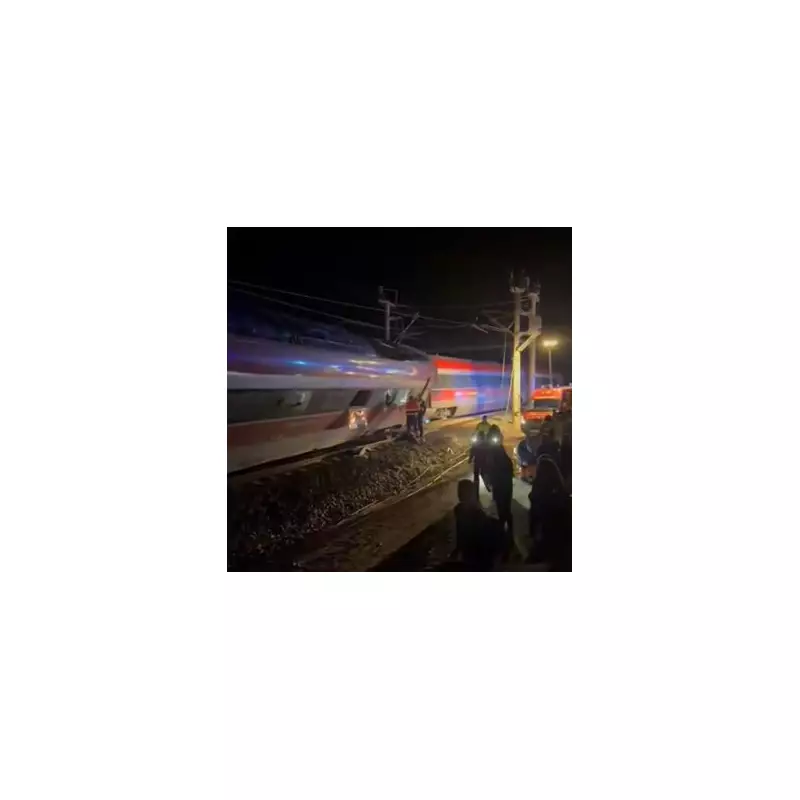
At least twenty people have been killed and scores more are injured after two high-speed trains derailed in southern Spain in a catastrophic collision. The incident occurred on the evening of Sunday, 18 January 2026, near the town of Adamuz, close to Córdoba, plunging the nation into mourning and sparking a major emergency response.
Chaos on the Tracks: The Sequence of Events
According to the national railway infrastructure manager ADIF, the initial derailment involved an Iyro high-speed service travelling from Málaga to the capital, Madrid. The train, which had departed Málaga at 18:40 local time, was carrying approximately 300 passengers. It derailed upon entering the sidings of track one at Adamuz station, violently spilling onto an adjacent line.
Tragically, a second high-speed service, this one on a route from Madrid to Huelva, was travelling on that neighbouring track. It was unable to avoid the wreckage and also derailed, resulting in a devastating double accident. Salvador Jiminez, a journalist for RTVE who was on the Cordoba to Madrid train, reported that one carriage had "completely overturned." Eyewitness accounts and images from the scene showed shattered windows and severe damage, with many passengers suffering lacerations and other injuries.

Emergency Response and Nationwide Disruption
Emergency services worked through the night in a desperate race to free trapped passengers from the mangled carriages. While many people from the first train were able to walk away, rescue efforts were intensely focused on the last carriage of the Málaga service. Spanish Prime Minister Pedro Sánchez expressed he was "very concerned" about the accident, confirming the government was coordinating with all relevant authorities and emergency teams.
The operator, Iyro, which runs high-speed services in Spain, activated all emergency protocols and expressed deep regret for the tragedy. In the aftermath, all high-speed rail connections between Madrid and the Andalusia region have been suspended. ADIF confirmed that services between Madrid and Córdoba, Seville, Málaga, and Huelva will remain halted throughout Monday, 19 January, with the possibility of further extensions.
Investigation and Aftermath
The immediate priority remains the rescue and treatment of the injured. The scale of the incident, involving two separate trains on a key transport corridor, marks one of Spain's worst rail disasters in recent years. The suspension of a major part of the high-speed network will cause significant travel chaos, with trains already in transit being turned back to their stations of origin.
As dawn breaks over the crash site, the focus will inevitably shift to determining the cause of the initial derailment. The investigation will scrutinise track conditions, signalling, and train performance. For now, the nation is left counting the cost of a night of horror on the rails near Córdoba.