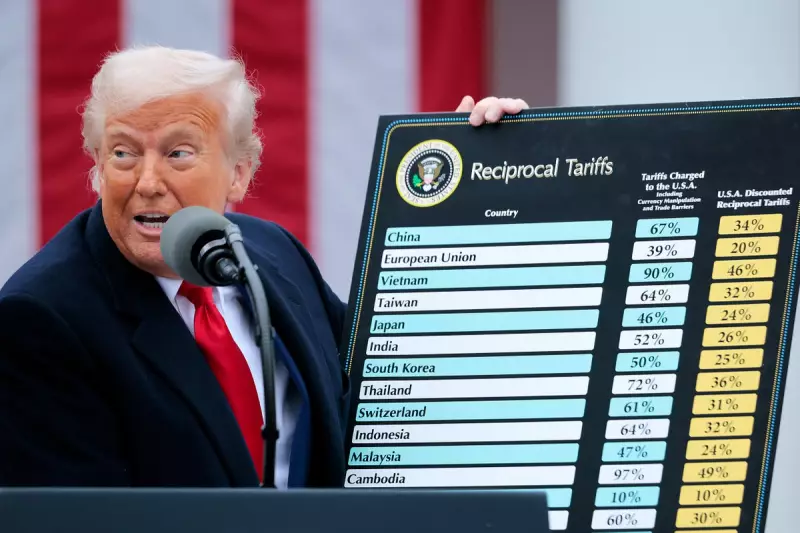
In April 2025, the Trump administration unveiled its controversial 'Liberation Day' tariffs, targeting Britain and other nations with a comprehensive regime designed to reshape global economic dynamics. The policy's ambitious goals included reviving domestic manufacturing, rebalancing trade deficits, boosting government revenue, and altering China's trade practices. Now, one year later, a detailed analysis reveals a complex picture of mixed outcomes and unintended consequences.
Revenue Gains Versus Trade Balance Failures
The tariffs proved highly effective in one key area: raising substantial customs revenue for the US government. Over the past year, they generated an impressive $287 billion, primarily extracted from American importers and, ultimately, consumers. However, this financial windfall did not translate into a sustained improvement in the overall US trade balance. While imports from China saw a notable decline, China adeptly diversified its trade partners and reconfigured supply chains, leading to a phenomenon known as transshipment.
Trade was simply rerouted through other nations rather than significantly weakening China's global economic position. This outcome highlights the resilience and adaptability of international supply networks in the face of protectionist measures.

Domestic Impacts: Modest Gains and Consumer Pain
Within the United States, the tariffs delivered only a modest one per cent increase in manufacturing output, falling short of the administration's revival ambitions. Industrial growth was further hampered by persistent labour shortages, limiting the potential for a more robust expansion. More significantly, the policy contributed to higher consumer prices, placing an additional financial burden on American households already grappling with inflationary pressures.
The economic strain was not confined to US borders. Low- and middle-income countries, particularly those heavily reliant on the US market, bore a disproportionate share of the hardship. Estimates suggest these nations face potential annual export earnings reductions of up to $89 billion, threatening economic stability and development progress in vulnerable regions.
A Global Reconfiguration of Trade Flows
The tariffs have accelerated a broader reconfiguration of global trade patterns. As China strengthened ties with alternative partners and supply chains adapted, the intended shock to its trade dominance was largely mitigated. This outcome underscores the complexities of unilateral trade actions in an interconnected global economy, where businesses and nations swiftly adjust to new regulatory landscapes.
In summary, while the 'Liberation Day' tariffs succeeded as a revenue-raising tool, they failed to achieve their core strategic objectives. The policy imposed significant costs on American consumers and inflicted economic hardship on some of the world's most vulnerable nations, all while delivering only marginal benefits to US manufacturing.