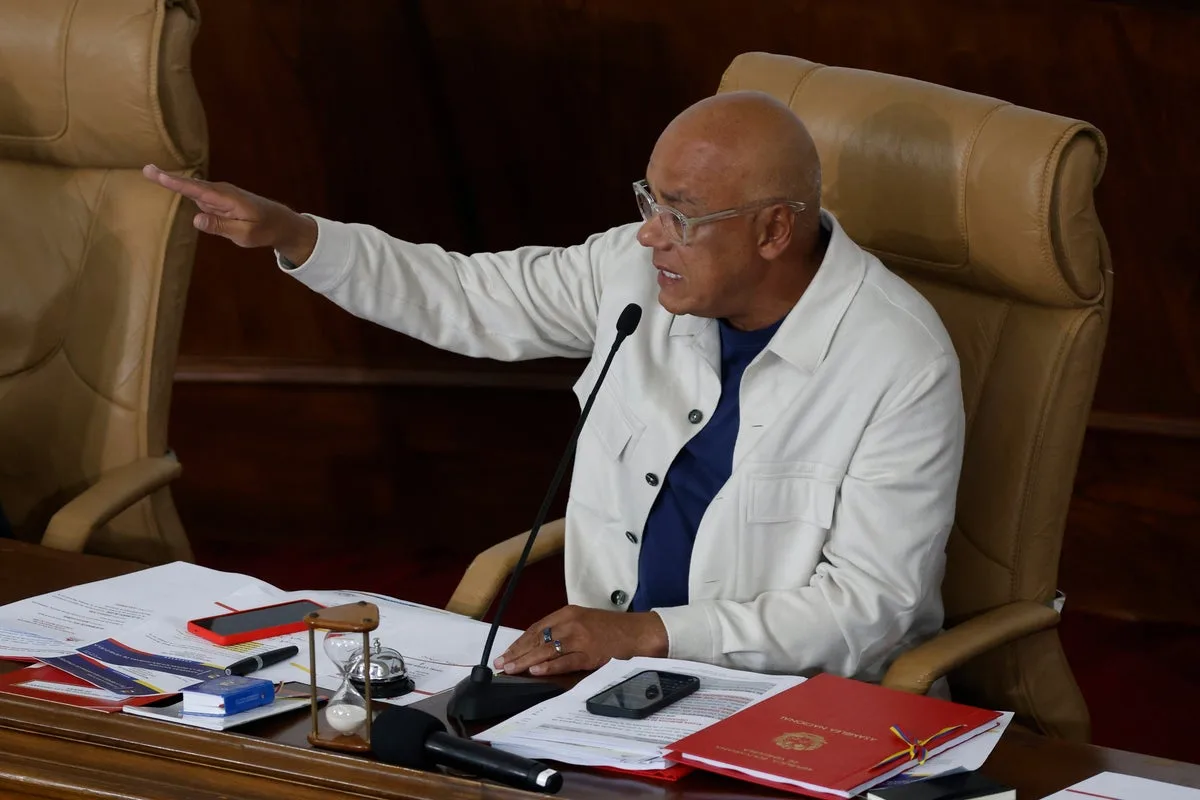
Venezuelan lawmakers have commenced deliberations on a new mining bill designed to regulate the industry and attract crucial foreign capital, marking a significant legislative move under acting President Delcy Rodríguez. The bill seeks to rebuild trust among international investors, many of whom suffered asset losses through expropriations decades ago, and aims to draw much-needed investment to boost the country's economic recovery.
Legislative Context and International Relations
The proposed legislation partially mirrors a recently approved oil-industry reform that opened the door to privatization, moving away from long-standing socialist principles that have governed Venezuela for over two decades. This initiative comes as Rodríguez faces pressure from the Trump administration, following the U.S. military's deposition of former President Nicolás Maduro in January. The bill was announced last week during a visit to Caracas by U.S. Secretary of the Interior Doug Burgum, highlighting efforts to counter China's influence on critical minerals and advance a phased stabilization plan for Venezuela.
Resource Wealth and Critical Minerals
Venezuela is rich in resources beyond oil, including gold, copper, coltan, bauxite, and diamonds. The mining industry has been poorly regulated, often characterized by unsafe working conditions. Notably, coltan contains niobium and tantalum, critical minerals essential for smartphones and electric vehicle batteries, while bauxite is processed into aluminum, also listed as critical by the U.S. Lawmaker Félix Freites emphasized that restored U.S.-Venezuela relations are prompting global mining corporations to consider significant investments to secure these vital minerals for technology and energy sectors.
Key Provisions of the Bill
The bill regulates mineral rights, establishes categories for small, medium, and large-scale mining, and includes provisions for independent arbitration of disputes—a measure viewed as key by foreign investors to prevent future expropriations. Similar arbitration was incorporated into the recent oil industry overhaul. Additionally, the legislation bans high-ranking officials, such as the president, vice president, ministers, and governors, from holding mining titles, aiming to curb corruption.
Challenges and Illegal Mining
Venezuela's mineral-rich areas have long been controlled by guerrilla groups, gangs, and illegal miners, often operating with the consent and benefit of officials and the military. Since 2016, when Maduro's government established a large mining zone to supplement declining oil revenues, wildcat mines have proliferated, attracting desperate Venezuelans seeking quick wealth amid poverty. These operations are marked by brutal conditions and criminal involvement, with officials and military members taking cuts from illegal revenue in exchange for permits and resources.
Economic and Social Implications
Rodríguez has touted the bill as a win for social well-being, stating it will showcase the benefits of improved international relations, particularly with the United States. The U.S. recently issued a sanctions license authorizing dealings with Minerven, Venezuela's state-owned gold mining company, signaling potential for increased cooperation. This legislative effort represents a pivotal step in Venezuela's attempt to revitalize its economy and integrate into global markets, though challenges from past expropriations and ongoing illegal activities remain significant hurdles.




