
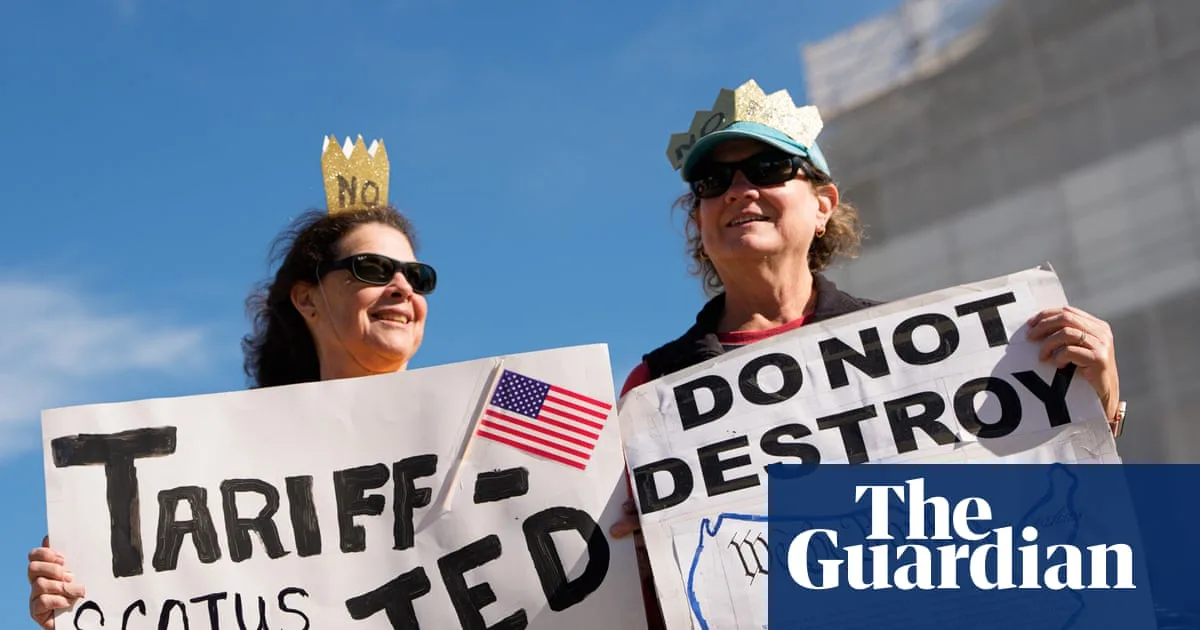
The US Supreme Court has declared many of Donald Trump's tariffs illegal, dealing a significant blow to the president's economic agenda. In a 6-3 ruling, the court found that a 1977 law intended for national emergencies did not provide legal justification for most of the tariffs imposed by the Trump administration on countries worldwide. This marks the first time the court has overruled a policy from Trump's second term.
The ruling centred on the International Emergency Economic Powers Act (IEEPA), which Trump had used to justify the tariffs. The court stated that the power to enact tariffs during peacetime belongs to Congress, not the executive branch. The majority opinion cited the Constitution's framers, who 'recognised the unique importance of this taxing power' and gave Congress 'alone access to the pockets of the people'.
In response, Trump announced he would enact a new 10% global baseline tariff under Section 122 of the Trade Act of 1974, which allows tariffs for 150 days. He also said the administration would launch investigations into unfair trading practices that could lead to permanent tariffs. Trump criticised the justices who ruled against him, calling them 'a disgrace to the nation'.
The court's decision highlighted the 'major questions doctrine', which prevents the executive branch from using ambiguous language in laws to justify significant actions. The ruling noted that when Congress delegates tariff powers, it does so 'in explicit terms and subject to strict limits'. The president must 'point to clear congressional authorisation' to justify such power, which he could not.
Voting to strike down the tariffs were the court's liberal justices—Sonia Sotomayor, Elena Kagan and Ketanji Brown Jackson—along with Chief Justice John Roberts and Trump appointees Neil Gorsuch and Amy Coney Barrett. In dissent, Justice Brett Kavanaugh argued the ruling would not greatly restrict presidential tariff authority, as Trump could simply use other legal grounds. He also raised concerns about potential refunds of billions of dollars collected from the tariffs.




