European stock markets stumbled on Monday, 19th January 2026, as renewed threats of aggressive US tariffs from President Donald Trump cast a shadow over transatlantic relations and sent investors seeking safety.
Market Reaction to Trade Tensions
The FTSE 100 index closed down 39.94 points, or 0.4%, at 10,195.35, reflecting the broader unease. The domestically-focused FTSE 250 fell more sharply, ending 199.56 points lower at 23,111.81. Across the Channel, the sell-off was more pronounced, with Paris's CAC 40 closing down 1.8% and Frankfurt's DAX 40 ending 1.3% lower.
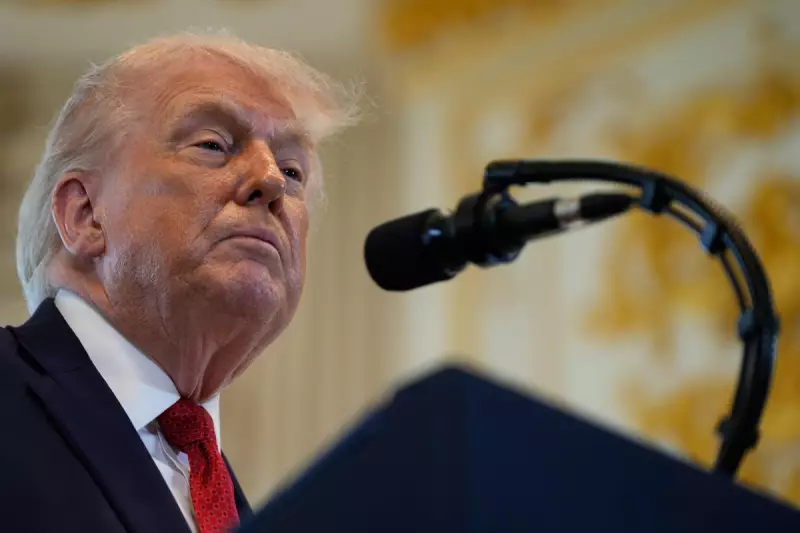
The trigger was a post on Trump's Truth Social platform on Saturday, in which the US President threatened to impose tariffs on nations opposing his controversial plan to acquire Greenland. He stated that from 1st February 2026, countries including Denmark, the UK, Germany, and France would face a 10% tariff on all goods sent to the US.

"On June 1st, 2026, the tariff will be increased to 25%. This tariff will be due and payable until such time as a deal is reached for the complete and total purchase of Greenland," Trump wrote.
Political Fallout and a Lone Bright Spot
The threat prompted immediate political repercussions. Aides to French President Emmanuel Macron indicated he would urge the EU to deploy its "anti-coercion instrument," a never-before-used measure allowing the bloc to curb imports. In contrast, UK Prime Minister Sir Keir Starmer advocated for "calm discussion between allies."
US Treasury Secretary Scott Bessent, speaking at the World Economic Forum, warned European nations against retaliation, calling such a move "very unwise."
Amid the turmoil, one company shone brightly on the London market. Insurer Beazley saw its shares rocket by 43% after Zurich Insurance tabled a £7.7 billion takeover bid. Zurich's improved cash offer of 1,280 pence per share, valuing Beazley at £7.67 billion, followed a rejected proposal earlier in January. The news lifted peers Lancashire and Hiscox by 4.3% and 9.1% respectively.
Broader Economic Ripples and Forecasts
The uncertainty boosted traditional safe havens. The gold price rose to $4,671.76 an ounce, lifting miners Fresnillo and Endeavour Mining. Currency markets saw the pound firm to $1.3428 and the euro to $1.1643.
Analyst Kathleen Brooks of XTB outlined three key risks from the escalating situation: a breakdown in transatlantic relations, the potential undermining of NATO and European security, and the danger of tariffs being used as a random tool of economic force.
In a separate development, the International Monetary Fund (IMF) upgraded its 2026 global growth forecast to 3.3%, citing a tech investment boom. However, it warned that renewed trade tensions could disrupt this fragile resilience.
In other London movers, WH Smith shares jumped 11% after appointing turnaround expert Leo Quinn as executive chairman, as it deals with an accounting error. Oil prices dipped slightly, with Brent crude trading at $64.13 a barrel.
The economic calendar for Tuesday, 20th January, features UK unemployment data and eurozone trade figures, which will be closely watched for further signs of strain.