US President Donald Trump has dramatically escalated a transatlantic crisis by pledging to impose punishing tariffs on the United Kingdom and key European allies in a dispute over his ambition to annex Greenland. The threat comes just hours after Prime Minister Sir Keir Starmer made a public appeal for calm, seeking to de-escalate the situation.
Starmer's Appeal for Calm Amid Trump's Threats
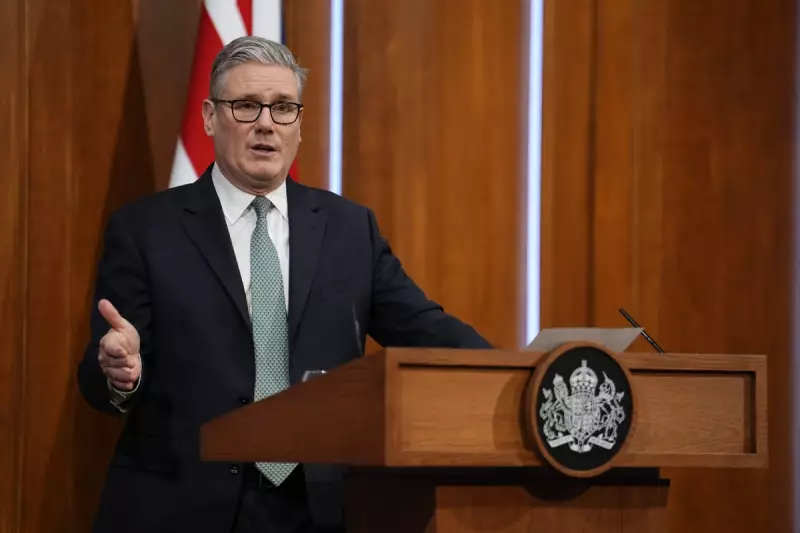
Sir Keir called an emergency press conference in Downing Street on Monday morning, 19 January 2026, to address the growing diplomatic storm. He insisted that military action by the US to seize the mineral-rich Danish territory was not a serious prospect and urged for resolution through dialogue. "I think that this can be resolved and should be resolved through calm discussion," the Prime Minister stated, firmly adding that "the use of tariffs against allies is completely wrong."
The Prime Minister emphasised that the future sovereignty of Greenland is a matter solely for its people and Denmark. He signalled that Britain would not engage in a retaliatory trade war, stating such tactics were "not the right way to resolve differences within an alliance." The seriousness of the moment was underscored by the presence of Chancellor Rachel Reeves in the audience, who cancelled an appearance at the London Stock Exchange to attend.

Trump's "100%" Commitment to Tariffs and Military Ambiguity
In a stark rebuttal to Sir Keir's conciliatory tone, President Trump, in an interview with NBC News, declared he was "100%" committed to following through on his tariff threat. He outlined a plan to charge Britain a 10% tariff "on any and all goods" arriving in the US from 1 February, escalating to a staggering 25% from 1 June. He stated these measures would remain until a deal is reached for Washington to purchase Greenland from Denmark.
When pressed on whether he would consider using military force to seize the strategically vital Arctic island, President Trump responded with a terse "No comment," refusing to rule out the option. He also applied the same tariff threat to fellow NATO members Denmark, Norway, Sweden, France, Germany, the Netherlands, and Finland. Deflecting criticism, Trump suggested Europe should focus on the war in Ukraine instead of Greenland.
Diplomatic Flurry and Cross-Party Condemnation
The crisis has triggered a flurry of diplomatic activity. Foreign Secretary Yvette Cooper met with her Danish counterpart, Lars Lokke Rasmussen, in London on Monday afternoon, reiterating the UK's stance that "tariffs and threats against allies in this way is completely wrong and counterproductive." Mr Rasmussen thanked the UK for its support, urging allies to combine forces against the common challenge posed by Russia.
Condemnation of President Trump's actions was notably unified across the UK political spectrum:
- James Cartlidge, the Shadow Defence Secretary, labelled the threats "totally unacceptable."
- Sir Ed Davey, the Liberal Democrat leader, called for a coordinated European package of retaliatory tariffs, branding Trump's actions "economic thuggery."
- Even Nigel Farage of Reform UK described the tariff threats as "wrong," though he favoured negotiation over a trade war.
The Prime Minister confirmed he would speak to President Trump again "in the coming days," with key figures including Chancellor Reeves and Foreign Secretary Cooper expected to attend the World Economic Forum in Davos, where the US President is also due. The diplomatic row, rooted in Trump's long-standing interest in Greenland's resources and strategic position, now threatens to fracture the Western alliance and disrupt global trade at a critical time.