

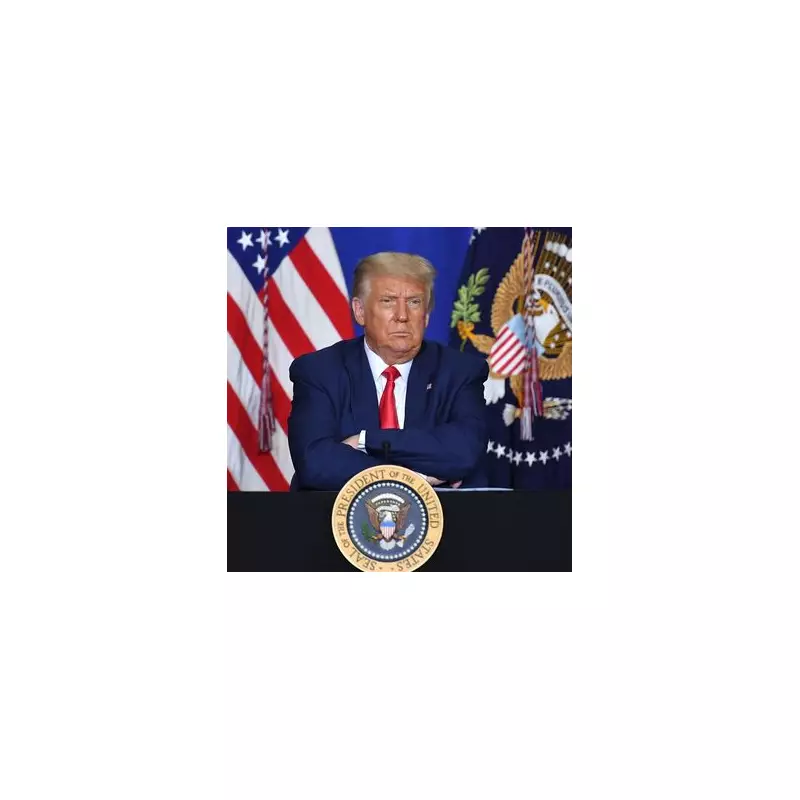
Former US President Donald Trump has ignited a fresh transatlantic crisis by threatening to impose crippling tariffs on the United Kingdom and key European allies in a dramatic escalation of his campaign to acquire Greenland.
Tariff Ultimatum Over Arctic Territory
In a move that has stunned diplomats, Trump declared he would slap tariffs of up to 25% on all imports from eight nations unless they acquiesce to his ambition to purchase the vast Arctic island. The countries targeted include the UK, Denmark, Norway, Sweden, France, Germany, the Netherlands, and Finland.
Trump outlined the punitive schedule on his Truth Social platform, stating a 10% tariff would take effect on 1 February 2026, rising to 25% on 1 June 2026. He asserted the measures were a response to European nations sending representatives to Greenland for what he called "reasons unknown," framing it as a risk to global security.

"It is time for Denmark to give back," Trump wrote, adding, "China and Russia want Greenland, and there is not a thing that Denmark can do about it." He claimed the US was "immediately open to negotiation" for the "Complete and Total purchase of Greenland."
UK and Cross-Party Condemnation
The threat prompted a swift and stern rebuke from Prime Minister Keir Starmer. In a strongly-worded response, Starmer affirmed the UK's position that Greenland's future is a matter for its people and Denmark. He condemned applying tariffs on allies for bolstering collective NATO security, particularly against Russian activity in the Arctic, vowing to pursue the matter directly with Washington.
Criticism came from across the political spectrum. Liberal Democrat leader Ed Davey said Starmer's US policy lay "in tatters" and urged the PM to "stand firm against the bully in the White House." Former Conservative minister Kemi Badenoch labelled the tariff plan a "terrible idea" that would burden businesses and raise costs in both countries.
Even Brexit architect Nigel Farage offered rare criticism, stating, "We don't always agree with the US government and in this case we certainly don't. These tariffs will hurt us."
A Pattern of Unpredictable Behaviour
The Greenland ultimatum capped a 24-hour period marked by further controversial statements from Trump. When asked by reporters to rule out using the US military against NATO allies, he responded cryptically, "I don't talk about that."
In a bizarre episode, Trump met with Venezuelan opposition leader and Nobel Peace Prize laureate Maria Corina Machado. During the meeting, Machado presented him with her Nobel medal in a gilded frame. However, just a day later, Trump appeared to forget her name, referring to her only as "a person" whom he was "very very impressed" by.
Trump also made headlines by thanking the Iranian government for reportedly cancelling the execution of hundreds of political prisoners, a comment that seemed to walk back recent threats of military action against Tehran.
Amid the diplomatic storm, Trump travelled to his Mar-a-Lago estate in Florida, where a stretch of road was renamed "Donald J. Trump Boulevard" in his honour. He told attendees the honour would fill people with "pride in our country."
Diplomatic Reckoning
Analysts suggest the tariff threat is not an isolated incident but the culmination of a prolonged period of diplomatic appeasement. Critics argue that normalising Trump's use of trade penalties as a tool of geopolitical coercion, and failing to firmly respond to previous aggressive actions, has emboldened this latest escalation.
The UK government's response, arriving over three hours after the threat was issued and following France's reaction, has raised questions about Westminster's preparedness for such a crisis. The episode plunges the vital UK-US trade and security relationship into fresh uncertainty and tests the unity of NATO allies facing a common demand.






