

Former US President Donald Trump has sparked a major diplomatic row by threatening to impose significant tariffs on the United Kingdom and several other European NATO allies, linking the punitive trade measures directly to the potential purchase of Greenland.
Tariff Threat Escalates Over Arctic Island
In a post on his Truth Social platform, Trump declared that 10% tariffs would be applied from 1 February to NATO members including the UK, France, and Germany. He justified this by citing their deployment of troops to Greenland amidst growing uncertainty over the vast Arctic island's future.
The threat did not stop there. Trump warned that these levies would skyrocket to 25% on 1 June if a deal for the United States to purchase Greenland from Denmark had not been finalised by that date. He described the European military presence as a "very dangerous situation for the Safety, Security, and Survival of our Planet."

Cross-Party Condemnation from British Politicians
The announcement has drawn swift and fierce criticism from across the British political spectrum. While Downing Street has yet to issue an official public comment, opposition and party leaders were quick to respond.
Conservative leader Kemi Badenoch stated unequivocally that President Trump is "completely wrong" to announce the tariffs. She emphasised that the move would place another burden on UK businesses and insisted that "the sovereignty of Greenland should only be decided by the people of Greenland."
Liberal Democrat leader Ed Davey accused Trump of "punishing the UK and NATO allies just for doing the right thing." He called for Prime Minister Keir Starmer to "stand firm against the bully in the White House" and collaborate with European and Commonwealth partners to force a retreat from this "reckless plan."
Reform UK leader Nigel Farage, often seen as an ally of Trump, broke ranks, stating the tariffs would "hurt" the UK and that "we certainly don't" agree with the US government on this issue.
Diplomatic Fallout and Strategic Concerns
The threat has triggered serious concerns about the future of transatlantic relations and NATO cohesion. Labour MP Stella Creasy argued it was "make your mind up time," suggesting the UK must get serious about its strategic future with Europe if it cannot rely on America.
Offering a seasoned diplomatic perspective, Lord Peter Ricketts, a former National Security Adviser, advised calm. He suggested European countries should continue making the case that US security interests are best served by working with Denmark and NATO, not through unilateral threats.
He pointed out a historical precedent, noting that America had 10,000 troops in Greenland during the Cold War, proving cooperation is possible. Lord Ricketts also highlighted a potential flaw in Trump's plan, explaining that the European Union has a single tariff, meaning he cannot legally target individual EU member states like France or Germany in isolation.
The former diplomat advocated for private diplomacy, recalling that Starmer and others had previously been effective in working with Trump behind the scenes. He urged a return to that approach to find a solution on Arctic security without resorting to "threatening, blustering language about tariffs."
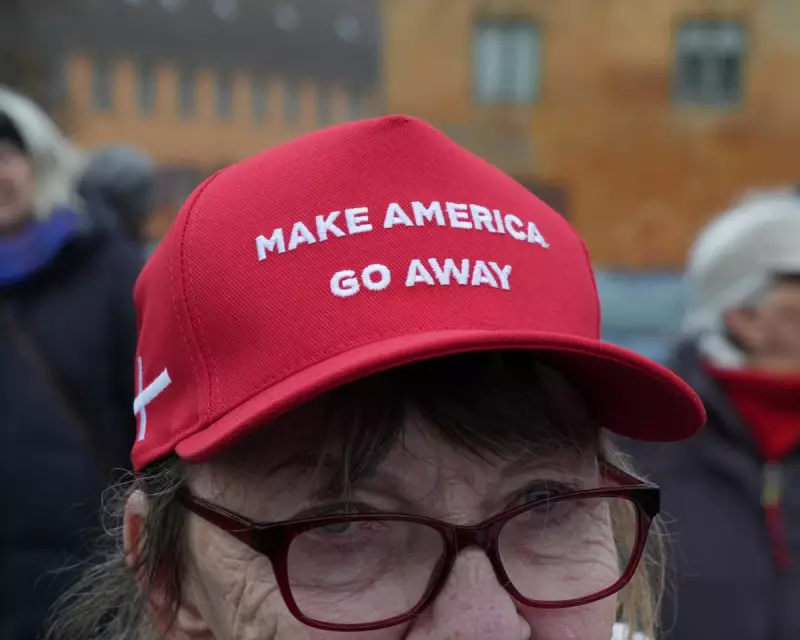
The crisis unfolds as protesters in Copenhagen rally under banners reading 'hands off Greenland' and 'Greenland for Greenlanders,' underscoring the local opposition to any sale and the profound geopolitical tensions now swirling around the island's future.






