

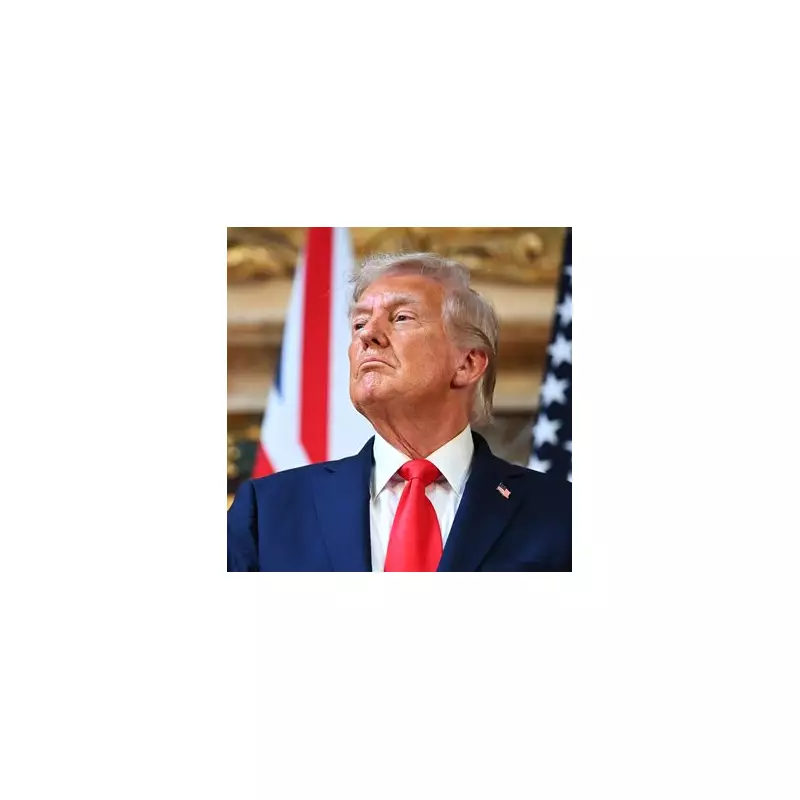
Former US President Donald Trump has issued a stark economic threat to the United Kingdom and several European allies, warning he will impose punitive tariffs unless they fall in line with his controversial ambition to annex Greenland.
The Tariff Ultimatum
In a post on his Truth Social platform on January 17, 2026, Trump declared he would slap an initial 10 per cent tariff on all imports from the UK, France, Germany, the Netherlands, Denmark, Norway, Sweden, and Finland. He stated this levy would remain in place "until such time as a Deal is reached for the Complete and Total purchase of Greenland."
The threat escalates further, with Trump warning the tariffs could skyrocket to 25 per cent by June 1 if the listed countries continue to oppose his territorial designs on the vast Arctic island. Justifying the move, Trump claimed the nations were "playing this very dangerous game" and argued strong measures were needed to "protect Global Peace and Security." He has repeatedly framed Greenland as vital to US national security, a position firmly rejected by Denmark and its NATO partners.

Swift Rejection from London and Copenhagen
UK Prime Minister Keir Starmer responded robustly to the extraordinary threat. A spokesperson for the Prime Minister stated: "Our position on Greenland is very clear - it is part of the Kingdom of Denmark and its future is a matter for the Greenlanders and the Danes."
Starmer directly challenged the logic of Trump's tariff plan, linking it to broader Arctic defence concerns. "We have also made clear that Arctic Security matters for the whole of NATO and allies should all do more together to address the threat from Russia," the statement continued. "Applying tariffs on allies for pursuing the collective security of NATO allies is completely wrong. We will of course be pursuing this directly with the US administration."
Danish Foreign Minister Lars Løkke Rasmussen also expressed surprise, noting recent constructive talks with US Vice President JD Vance and Secretary of State Marco Rubio. In a post on X, Rasmussen emphasised that enhanced military cooperation in the Arctic, referenced by Trump, was about bolstering shared security in a "no longer low tension area" and was conducted in "full transparency with our American allies."
A Deeply Unpopular Proposal
The core of Trump's proposal faces insurmountable local opposition. The overwhelming majority of Greenland's population resolutely opposes becoming part of the United States. The autonomous territory, while under the Danish realm, governs its own domestic affairs and has consistently asserted its right to self-determination.
This episode threatens to trigger a significant diplomatic and trade rift between the US and some of its oldest partners. The threat of tariffs, typically used as a tool in disputes with strategic competitors, being wielded against close NATO allies over a territorial acquisition plan marks a severe escalation in rhetoric. The UK government's commitment to challenge the move directly sets the stage for a tense period in transatlantic relations should Trump return to power.






