

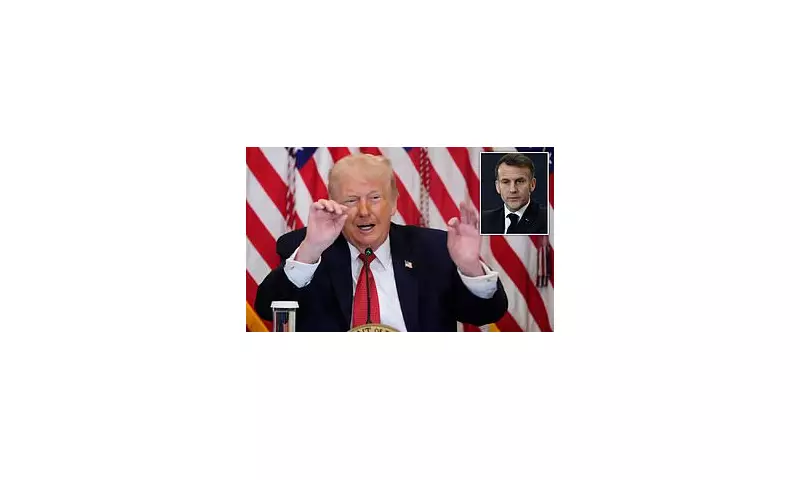
In a striking display of diplomatic theatrics, former US President Donald Trump has publicly mimicked the French accent of President Emmanuel Macron while recounting a private phone call about pharmaceutical costs. The incident occurred during a White House roundtable discussion on Friday, where Trump detailed his efforts to force other nations to pay more for prescription drugs.
A Gallic Impersonation Over Global Drug Pricing
Trump described a conversation with the French leader, adopting what he called a "Gallic accent" to impersonate Macron. According to Trump, the call began with Macron saying, "Yes, Donald, Donald. Thank you so much for calling." Trump then claimed he warned Macron, "You're not going to like this call. You're going to have to get your drug prices up."
In his continued impersonation, Trump stated that Macron responded with a rapid, "No, no, no, no, no, I will not do that." The former president, who signed an executive order in May aimed at introducing 'most-favoured-nation' drug pricing, asserted he told Macron that the US pays "13 times more" for certain pharmaceuticals than France.

The Tariff Threat: Champagne and Wine in the Crosshairs
The anecdote took a sharper turn as Trump revealed the leverage he used. He claimed to have told President Macron that if France did not agree to increase its drug prices, he would impose a 25 percent tariff on all French goods entering the United States. Trump specifically mentioned wine and champagne as products that would be affected.
"Here's the story, Emmanuel. If you don't do it, I'm going to put a 25 percent tariff on all goods, wine, champagnes and everything else coming into the United States of America," Trump recounted saying.
Trump claimed the threat was immediately effective, with his impersonated Macron swiftly capitulating: "Donald, I would love to do this for you. It would be a great honour to do it." Trump added that Macron supposedly pleaded, "Please don't tell the population, I beg you." The former president stated he then pursued similar negotiations with other countries.
Fondness Amidst Friction: A Complicated Diplomatic Relationship
Despite the confrontational tone of the recounted exchange, Trump insisted he holds a personal fondness for the French President. "I like him a lot. I hope he's listening, because he doesn't believe that, but I do. He's a nice man," Trump remarked during the roundtable.
This incident is not the first time Trump has shared this story. He appeared to recount a similar version using the French accent at a House GOP member retreat on 6 January. Before launching into the tale on that occasion, he quipped, "I love the French accent."
The public mimicking comes just days after Macron levelled pointed criticism at US foreign policy. In a speech to ambassadors at the Élysée Palace, the French leader accused the United States of "breaking free from international rules" and "gradually turning away from some of its allies." Macron warned of a world where great powers are tempted to divide global influence, stating that multilateral institutions are functioning less effectively.
The episode underscores the ongoing tensions in transatlantic trade relations and the unconventional diplomatic methods employed during the Trump administration, with significant implications for global pharmaceutical pricing and international trade frameworks.






