Supreme Court Strikes Down Trump's Tariffs in Constitutional Rebuke
In a stunning reversal, the US Supreme Court has delivered a significant blow to Donald Trump's executive authority, ruling on Friday that his expansive tariffs are unlawful. The decision, which came as a surprise to many observers, saw two of Trump's own appointees join the majority, handing the president a rare defeat in a conservative-heavy court that has largely favored his agenda.
A Shift in Judicial Dynamics
After a year where the Supreme Court often stood by as Trump challenged constitutional norms, this ruling marks a pivotal moment. The court declared that Trump's use of the International Emergency Economic Powers Act (IEEPA) to justify global tariffs exceeded his authority. Tariffs are taxes, the ruling emphasized, and the power to levy them rests solely with Congress under the US Constitution.
Barb McQuade, a law professor at the University of Michigan, hailed the decision, stating it reminded the nation that "Congress is a separate and co-equal branch of government." She added, "One of Trump's favorite levers is removed from the arsenal of extortion."

Trump's Furious Response
Trump did not take the ruling lightly. He launched a vitriolic attack on social media, denigrating the justices in all-caps posts. He labeled the three liberal-leaning justices in the majority as "FOOLS" and "LAPDOGS," while praising the dissenting conservatives for their "strength, wisdom, and love of our Country." This public outburst, even by Trump's standards, underscored his frustration at being checked by the judiciary.
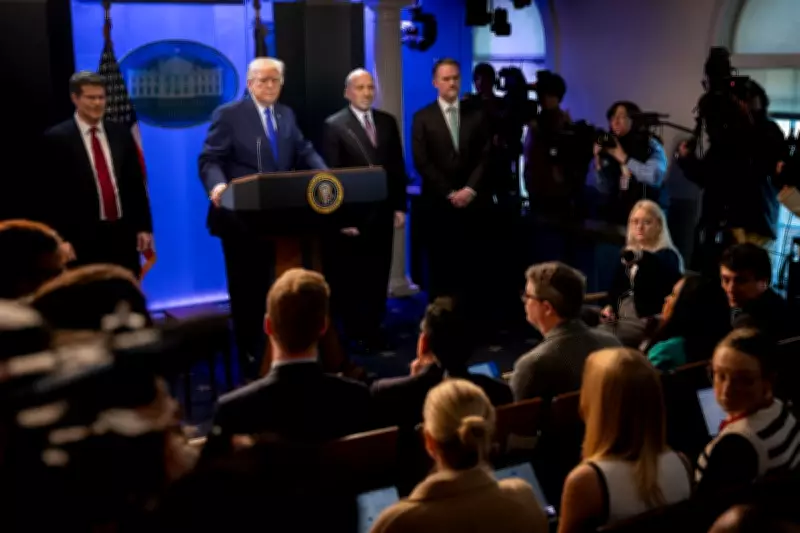
At a White House press conference following the ruling, Trump singled out his appointees, Neil Gorsuch and Amy Coney Barrett, for criticism, calling their decision "terrible" and "an embarrassment to their families."
Analysis of the Court's Decision
The 6-3 majority was notable for its composition: Chief Justice John Roberts authored the ruling and was joined by the three liberal-leaning justices and two conservatives—Gorsuch and Barrett. This alliance signals a potential shift in the court's dynamics, with Roberts reasserting control after recent rulings like the anti-abortion Dobbs case had left him in the minority.
Gorsuch's vote, in particular, has raised eyebrows. Known for his hard-right stance, his concurring opinion highlighted Trump's overreach, writing that Congress did not clearly grant the president sweeping tariff powers. Barrett, meanwhile, has shown independence before, but her alignment here reinforces the ruling's significance.
Broader Implications for Trump's Agenda
This ruling puts Trump on notice that there are limits to his executive actions. While he immediately announced plans to impose new tariffs under different authority, the court's message is clear: constitutional boundaries must be respected. Experts suggest this could impact other controversial policies, such as attempts to undermine birthright citizenship under the 14th Amendment.
However, caution is advised. Lisa Graves, an expert on rightwing legal movements, noted that this ruling represents "the bare minimum to rein in Trump's abuse of power," rather than a broader judicial courage. The decision may curb some excesses but does not signal a wholesale retreat from conservative judicial trends.
Looking Ahead
As midterm elections approach, Trump has lost a key tool in his political arsenal. The ruling not only affects trade policy but also serves as a reminder of the checks and balances inherent in the US system. Students and analysts will dissect the decision for clues about future court behavior, but for now, it stands as a landmark moment in the ongoing tension between presidential power and constitutional law.