
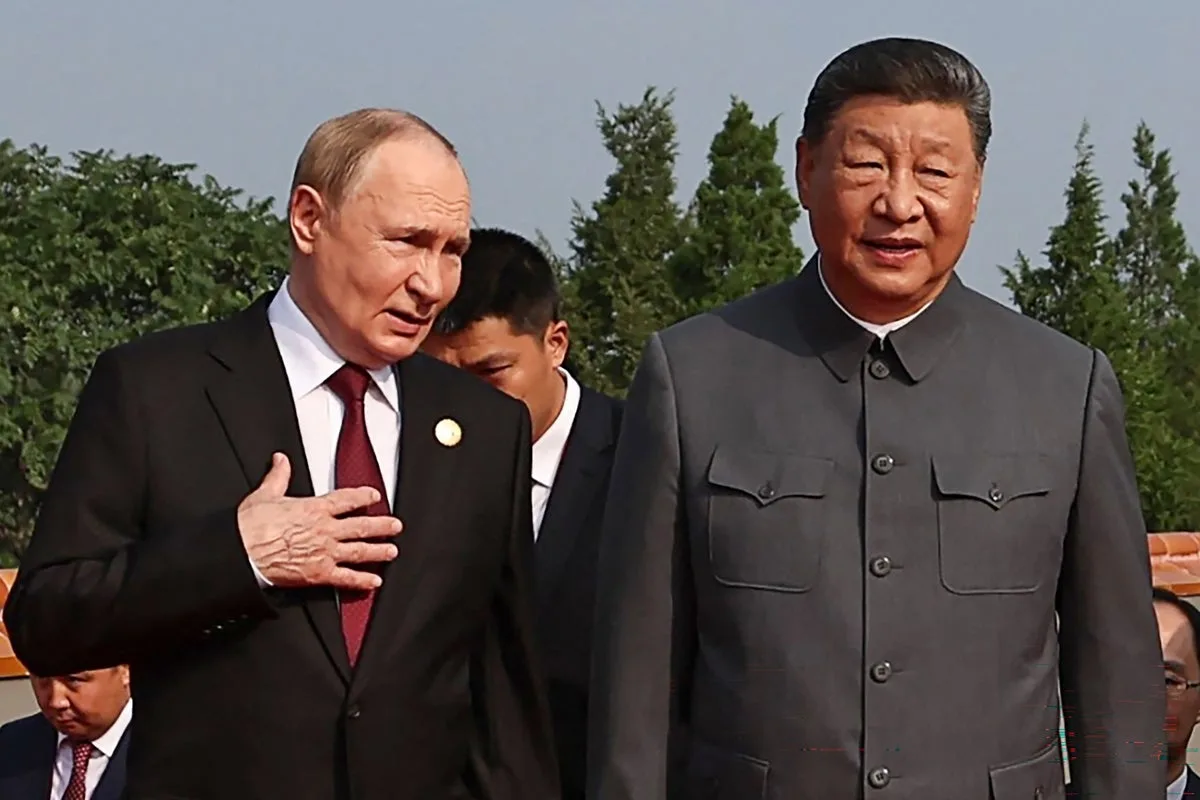
Vladimir Putin has arrived in Beijing for a two-day visit hosted by Xi Jinping, with economic cooperation at the fore as the Russian president seeks further energy deals with the world’s second-largest economy. The talks come days after Donald Trump’s first visit to China since 2017, which yielded promises of smoother trade but no tangible commitments on tariffs or rare earths.
Russia’s economy, once predicted to collapse under Western sanctions, has defied expectations, rising from the world’s 11th largest economy at the outset of the Ukraine conflict to ninth last year. The war stoked industrial activity, peaking in mid-2023, but such growth is not considered sustainable, with public services and manpower depleting.
China has capitalised on Western sanctions, purchasing cheap Russian energy and providing a lifeline. Oil and gas now account for roughly 75% of Russian exports to China, up from a pre-2022 average of 60–65%. In 2015, Russia exported goods worth $33.2bn to China; by 2024, that figure had risen to $129.32bn – a 289% increase over ten years. Beijing is now Moscow’s top client for seaborne and pipeline oil, with exports growing 35% in the first quarter of this year to 31 million tonnes.
Russia’s state-owned Gazprom supplies gas via the Power of Siberia pipeline, and a new pipeline is reportedly under discussion during this week’s talks. Meanwhile, China has become more self-sufficient in weapons production, reducing imports from Russia. Russia, in turn, imported $115.49bn worth of Chinese goods last year, up from $34.8bn in 2015, with cars, tractors, computers and household goods among the exports.
The United States, despite its tariff war, remains China’s largest trading partner. In 2025, US imports from China totalled $331.58bn, while exports to China stood at $162.96bn. Trump’s tariffs, expanded in his second term, have not altered the fundamental interdependence between Washington and Beijing, a reality both Moscow and Washington must navigate as they court the world’s second-largest economy.




