Northern Ireland's First Minister has expressed profound alarm over the potential economic fallout for the region from former US President Donald Trump's threat to impose tariffs on American allies.
Assembly Confronts International Crisis
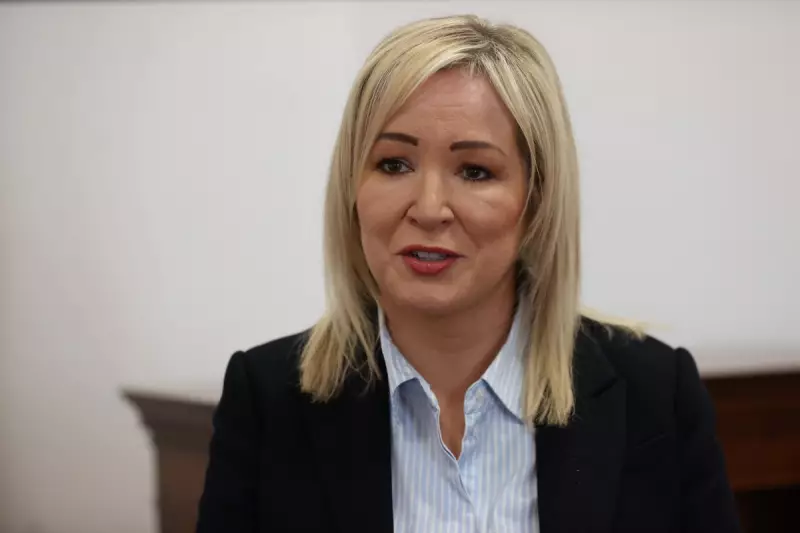
During question time at the Northern Ireland Assembly on Monday 19 January 2026, Sinn Féin's Michelle O'Neill stated she was "deeply concerned" about the implications of Mr Trump's proposal. The threat involves imposing trade penalties on the UK and EU countries unless they support a US takeover of Greenland, a semi-autonomous Danish territory.
Ms O'Neill told MLAs that people were "aghast" at the developments, which she labelled another breach of international law and an attempt to snatch territory. She criticised the approach as an effort to "bully others into kowtowing" to a US position.

Unique Post-Brexit Vulnerabilities
The First Minister highlighted Northern Ireland's special and unique circumstances under the Windsor Framework, which make it particularly vulnerable to shifts in trade policy. "What happens across the EU or what happens in Britain... has a real impact for us," she warned.
She revealed that her party colleague, Economy Minister Caoimhe Archibald, had already written to both the UK and Irish governments to raise the alarm and had convened her trade committee. Ms O'Neill urged for "calm heads" and a resolution that supports local industry, arguing that trade wars are a race to the bottom.
Cross-Party Concern and Calls for Action
DUP leader Gavin Robinson echoed the concerns, stating it was widely recognised that tariff differentials would not be beneficial for Northern Ireland or the United Kingdom. He referenced past experiences with tariff threats and expressed hope that, as before, the damaging measures would not materialise.
Economy Minister Caoimhe Archibald was more direct, describing Mr Trump's behaviour as "simply outrageous" and stating it must be challenged. She confirmed her ongoing engagement with both governments, stressing the need for Northern Ireland's position to be central in any response. "Tariffs are bad for business, bad for our economy, bad for ordinary householders," she said, while keeping all options on the table to counter the threat.
Both leaders emphasised that the stability of the NATO alliance, crucial for security, should not be undermined by the dispute over Greenland, a territory Mr Trump has not ruled out acquiring by military force.