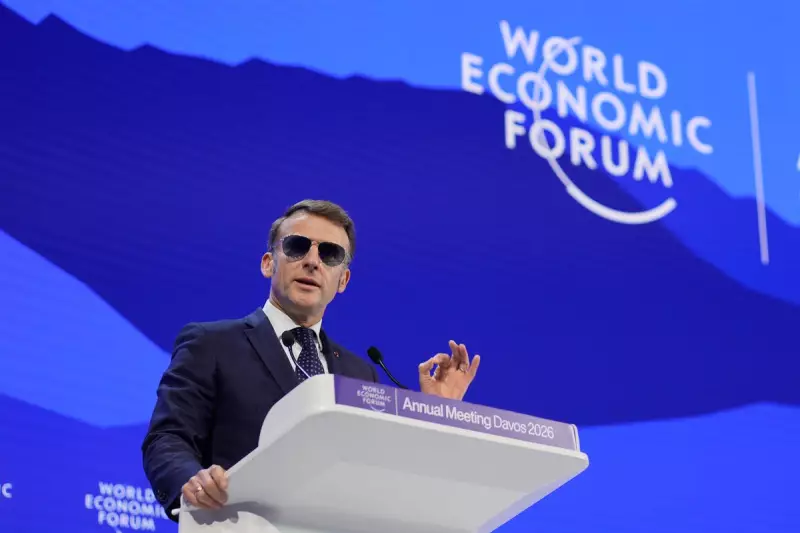
French President Emmanuel Macron has issued a stark warning to the European Union, urging the bloc to consider deploying its formidable "trade bazooka" in response to escalating tariff threats from the United States. The call comes amid heightened transatlantic tensions, partly fuelled by former President Donald Trump's aggressive posture towards Greenland.
EU Readies Counter-Measures Amid US Aggression
Rattled by what Macron termed "unnecessary aggressiveness" from the US, the European Union is actively preparing robust counter-measures. As a primarily economic and trading alliance of 27 member states, the EU's arsenal is predominantly financial, ranging from imposing steep tariffs on American goods to activating the powerful mechanism championed by the French leader.
The 'Trade Bazooka': EU's Anti-Coercion Instrument
The so-called "trade bazooka" is shorthand for the EU's Anti-Coercion Instrument (ACI), a regulatory tool established in 2021. This mechanism empowers the bloc to sanction individuals, companies, or institutions deemed to be exerting undue economic or political pressure on the Union or its member states.

Potential sanctions under the ACI could inflict billions of dollars in costs on US corporations by:
- Restricting or denying access to the vast EU single market
- Barring participation in lucrative EU public procurement tenders
- Limiting foreign direct investment flows
- Curtailing the export and import of goods and services
Macron's Davos Warning: A First Against the US
Speaking at the World Economic Forum in Davos on Tuesday, President Macron delivered a sobering message. He cautioned that additional US tariffs could compel the EU to trigger its anti-coercion mechanism for the very first time—and against its traditional ally.
"The crazy thing is that we could find ourselves in a situation where we use the anti-coercion mechanism for the very first time against the United States," Macron stated. "Can you imagine it? It's crazy. I regret it, but it is the consequence of unnecessary aggressiveness. Still, we must all remain calm."
The French leader described the ACI as "a powerful instrument and we should not hesitate to deploy it in today's tough environment." However, he emphasised that allied nations should ideally be focusing collective efforts on supporting peace in Ukraine, rather than engaging in trade disputes.
Limited Backing and Emergency Summit
Despite Macron's forceful advocacy, there remains little broad support within the 27-nation bloc to activate the instrument, with France standing as the primary proponent. EU leaders are scheduled to convene for an emergency summit in Brussels on Thursday to address the escalating tensions with the Trump administration.
Origins and Deterrent Purpose of the ACI
The Anti-Coercion Instrument was created by the European Commission following Beijing's restriction of trade with Lithuania in 2021, a move linked to Lithuania's strengthening ties with Taiwan. A commission statement issued prior to the Greenland dispute clarified the tool's primary objective: "The primary objective of the ACI is deterrence. The instrument will, therefore, be most successful if there is no need to use it."
Activating the ACI is not a swift process; it would require at least six months to implement fully, providing a window for diplomatic resolution.
The Stakes: A Trillion-Euro Trading Relationship
The economic relationship at risk is colossal. According to Eurostat, the EU's statistical agency, the total value of EU-US trade in goods and services reached approximately 1.7 trillion euros (around $2 trillion) in 2024. This equates to an average daily trade flow of 4.6 billion euros.
Europe's most significant exports to the American market include:
- Pharmaceuticals and medical instruments
- Automobiles and aircraft
- Industrial and specialty chemicals
- Wine and spirits
The potential deployment of the EU's trade bazooka marks a critical juncture in transatlantic relations, underscoring how geopolitical friction can threaten the world's largest economic partnership.