
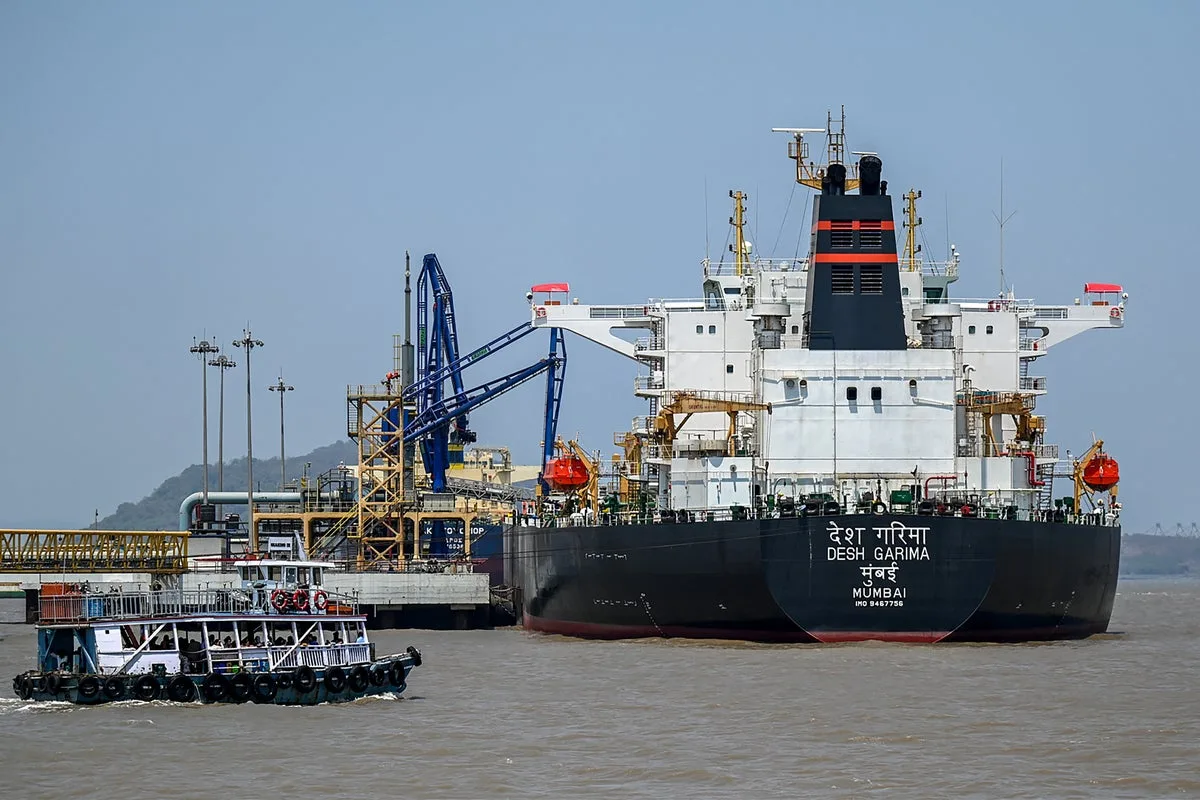
A US naval blockade of Iranian ports has significantly reduced Tehran's oil exports, leading to a growing stockpile of crude on tankers as the nation's storage sites run out of space, shipping data and analysts have revealed.
Measuring the exact amount of crude Iran delivers to customers, especially its main buyer China, is proving impossible due to some vessels switching off tracking systems and US forces actively turning back Iranian tankers. Between 13 and 25 April, only a handful of carriers transporting Iranian crude left the Gulf of Oman, according to oil analytics firm Vortexa, marking a sharp decline of over 80 per cent from a comparable period in March, when LSEG data showed Iran exported 23.4 million barrels.
Some of Tehran's vessels have also been intercepted by US forces after departing Iranian ports, alongside sanctioned container ships and Iranian tankers in Asian waters. Vortexa told Reuters: 'At this stage, we estimate that around 4 million barrels of Iranian crude has successfully moved out of the Gulf of Oman. We are not currently able to confirm whether any of those vessels have since been interdicted.'
The loss of Iranian supply adds to wider market tightness as the war has effectively closed the Strait of Hormuz, curtailing oil exports from Saudi Arabia, the UAE, Kuwait and Iraq and sending prices higher. Last month, the US granted Tehran an unexpected temporary sanctions waiver on energy exports to allow prices to cool. Benchmark Brent crude oil futures have jumped by about $50 a barrel since the Iran war began on 28 February, raising prices of gasoline, diesel and jet fuel.
US authorities said on Wednesday their blockade was denying Tehran of much-needed revenue from crude exports. 'Right now there are 41 tankers with 69 million barrels of oil that Iranian regime can't sell,' US Central Command said. Iran's currency, the rial, fell to a record low against the US dollar on Wednesday, highlighting the financial difficulties that face the oil-reliant economy.
Despite the pressure, Iran is still loading crude at its main export hub on Kharg Island, maritime intelligence firm TankerTrackers said. Satellite imagery shows at least 10 tankers parked off Iran's Chah Bahar port on the Gulf of Oman. Onshore storage is about 60 per cent full, Kpler said, with stocks above 50 million barrels, and capacity at 86 million barrels. Capacity constraints could force Iran to curb production in mid-June, consultancy FGE NextantECA estimated on 15 April.




