
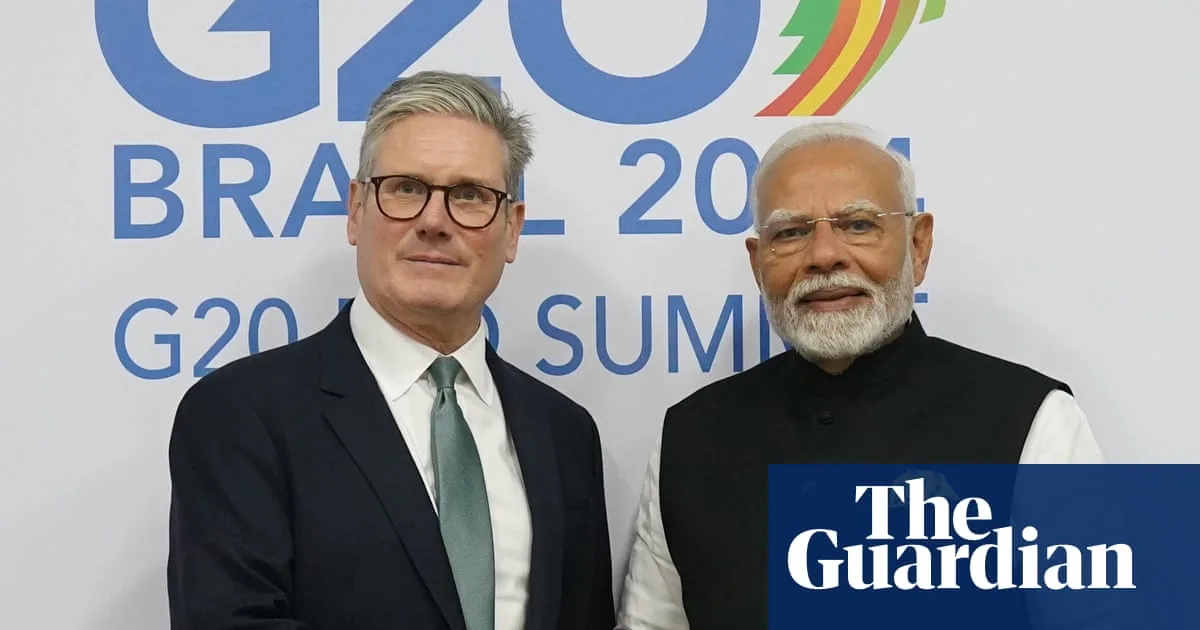
India's Prime Minister Narendra Modi has arrived in London to sign a landmark free trade agreement with the UK, a deal seen as a major post-Brexit prize for Britain and India's first major trade pact outside Asia. The agreement, which covers goods, services, and investment, is expected to boost British car and whisky exports while granting India concessions on work visas and professional qualifications.
Under the deal, 99% of Indian exports to the UK will face zero tariffs, while the UK will see phased tariff cuts on 90% of its exports to India. Duties on Scotch whisky will fall from 150% to 75% immediately and to 40% over ten years. British cars, currently subject to tariffs of over 100%, will see duties reduced to 10% under a quota. Other gains for the UK include tariff relief on medical devices, pharmaceuticals, and aircraft parts.
India secured concessions on work visas, recognition of professional qualifications, and exemptions from national insurance contributions for Indian nationals working temporarily in the UK. However, sensitive issues such as agriculture, financial services, and the UK's proposed carbon border adjustment mechanism (CBAM) were left out of the agreement. Analysts warn that the carbon tax could undermine the benefits for Indian exporters.
The deal must still be ratified by both parliaments, likely delaying implementation until mid-2026. Indian economist Sanjaya Baru cautioned that the fine print would need close scrutiny, while domestic producers of whisky and cars may face backlash from increased competition.




