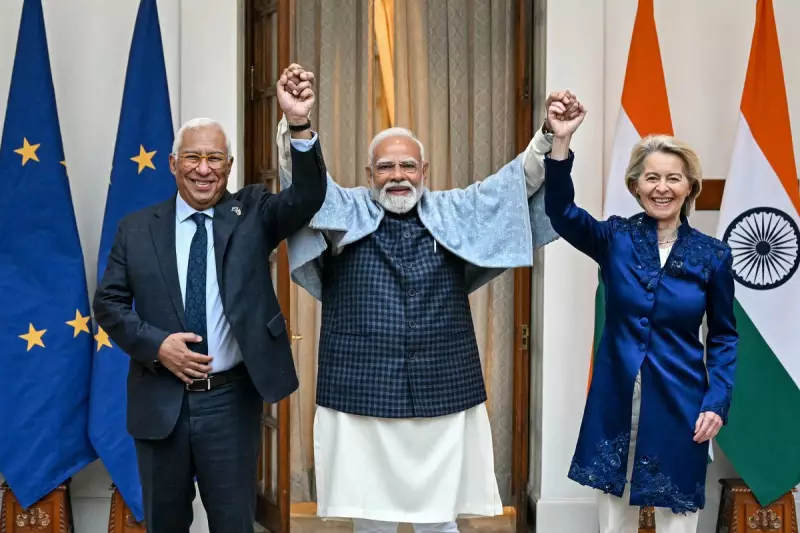
India and the European Union have officially finalised a landmark free trade agreement, bringing to a close negotiations that have spanned almost two decades. The historic deal was announced during a high-profile summit in New Delhi, marking a significant milestone in international trade relations.
A Monumental Agreement Decades in the Making
The comprehensive trade pact, described by both parties as "the mother of all trade deals," establishes a free trade bloc encompassing more than two billion people. This represents approximately a quarter of the entire global economy, positioning the agreement as one of the most substantial economic partnerships ever forged.
Overcoming Final Hurdles
Negotiations in the concluding stages focused on resolving several critical sticking points that had previously stalled progress. Key areas of discussion included market access for European automobile manufacturers seeking entry into India's protected automotive sector, sensitive agricultural products, and the European Union's proposed carbon-linked climate tariffs on imports.

This agreement effectively opens India's vast and traditionally guarded market to its largest trading partner, the European Union. Initial talks commenced in 2007 but encountered repeated obstacles as both sides grappled with fundamental differences regarding market access, regulatory frameworks, and political sensitivities.
Renewed Momentum from Geopolitical Shifts
The negotiations received fresh impetus in July 2022 when they were formally restarted following Russia's invasion of Ukraine. This geopolitical development provided new urgency for the European Union to reduce economic dependencies on Russia and China while diversifying supply chains across Asia.
Indian Prime Minister Narendra Modi heralded the achievement on social media, stating: "People around the world are calling this the mother of all deals. This agreement will bring major opportunities for the 1.4 billion people of India and the millions of people in Europe."
Formal Implementation Timeline
While the substantive terms were agreed upon on Tuesday, the formal signing ceremony will not occur until after a comprehensive legal vetting process. Indian government officials familiar with the matter indicate this review is expected to take between five and six months before the agreement can be formally ratified and implemented.
Strategic Significance and Global Implications
European Commission President Ursula von der Leyen emphasised the broader strategic importance of the pact, declaring: "The EU and India make history today, deepening the partnership between the world's biggest democracies. We have sent a signal to the world that rules-based cooperation still delivers great outcomes."
The agreement represents a substantial shift in global trade dynamics, creating new economic opportunities while reinforcing the commitment to multilateral cooperation between two of the world's most significant democratic powers.