Beyond Oil: Hormuz Closure Threatens Global Food Security Through Fertiliser Crisis
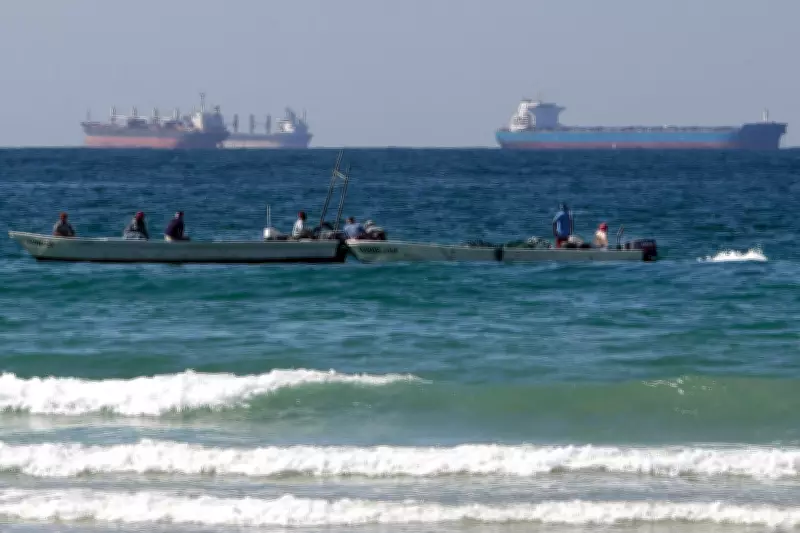
While markets have reacted sharply to the potential closure of the Strait of Hormuz, focusing predominantly on oil and gas flows, the real threat extends far beyond energy. A sustained disruption of this critical maritime chokepoint would not merely constitute an energy crisis but would precipitate a severe fertiliser shock, directly endangering global food security.
The Fertiliser Lifeline of Modern Agriculture
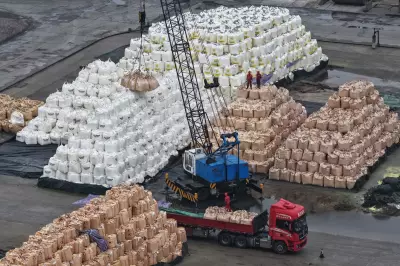
Modern agriculture depends fundamentally on synthetic nitrogen fertilisers, primarily urea, which are produced using natural gas. The groundbreaking Haber-Bosch process, developed in the early 20th century, enabled the large-scale production of ammonia, revolutionising agriculture and supporting the global population. Today, approximately one-third of globally traded urea passes through the Strait of Hormuz.
The Persian Gulf region has become a central hub for fertiliser production due to its access to inexpensive natural gas and decades of substantial capital investment. Countries like Qatar, Saudi Arabia, and the United Arab Emirates have developed significant ammonia and urea capacity aimed at export markets. Consequently, a closure of the strait would threaten not only hydrocarbon exports but also the physical flow of nitrogen-based fertilisers and the liquefied natural gas required to produce them elsewhere.

Immediate and Cascading Impacts
The immediate effect of a closure would be delays or complete stoppages in shipments of ammonia, urea, and LNG, accompanied by prohibitively high freight and insurance costs. However, the deeper, more consequential impact would unfold over subsequent months across farms worldwide.
In the northern hemisphere, fertiliser purchases accelerate before planting seasons. Even modest delays of weeks can be disruptive, while prolonged disruptions of months could force farmers into difficult decisions: paying sharply higher prices, reducing application rates, or altering crop mixes. Because crop yields are highly sensitive to nitrogen availability, even slight reductions in fertiliser use can lead to disproportionately large declines in harvests, potentially resulting in millions of tonnes of lost crops.
The repercussions would ripple through global supply chains, affecting feed markets, livestock production, biofuels, and ultimately retail food prices. This scenario is exacerbated by the fact that many nations lack self-sufficiency in fertiliser production. For instance, India relies heavily on LNG imports from the Persian Gulf for its domestic urea plants, while Brazil depends substantially on imported nitrogen and phosphate fertilisers for soybean and maize production. Even the United States, a major fertiliser producer, imports significant volumes of ammonia and urea to meet regional demand and stabilise prices.
Systemic Fragility and Broader Vulnerabilities
The fragility of the global food system extends beyond nitrogen fertilisers. Sulphur, an essential plant nutrient, is largely a byproduct of oil and gas processing. Disruptions in energy shipments through Hormuz would consequently reduce sulphur output, further constraining fertiliser production. Moreover, synthetic nitrogen production is tightly coupled to energy markets, as it is manufactured continuously from natural gas. Any disruption in gas supply or ammonia trade immediately constrains global nitrogen availability.
Estimates suggest that without synthetic nitrogen fertilisers, the world could feed only a fraction of its current population. This underscores how the Strait of Hormuz sits at the critical intersection of energy and food security. Changing fertiliser production locations cannot occur overnight; financing and constructing new ammonia plants takes years. In the interim, a double-digit contraction in exports from the Persian Gulf region could not be swiftly offset, leading to price surges, rerouted trade flows, and planting decisions made under severe uncertainty.

Policy Implications and Historical Lessons
Food price inflation, historically correlated with social unrest, could intensify significantly. Central banks, primarily focused on fuel-driven inflation, might underestimate the contribution of fertiliser scarcity to overall price levels. Crucially, fertiliser shocks do not register with the same immediacy as oil shocks. While petrol prices can change overnight, crop yield impacts reveal themselves months later, potentially proving more destabilising in the long term.
If the 20th century taught policymakers to fear oil embargoes, the 21st should teach them to fear a fertiliser shock. Energy markets possess buffers such as reserves and substitution options, but the global food system operates with far thinner margins. A prolonged disruption at Hormuz would not simply reprice crude oil; it would critically test the resilience of the industrial nitrogen cycle on which modern civilisation depends.
In essence, while oil powers vehicles, nitrogen powers crops. If the Strait of Hormuz closes, the most consequential price may not be Brent crude but the escalating cost of feeding the world's population, highlighting an urgent need for diversified supply chains and enhanced food system resilience.