Irish Deputy Premier Issues Stark Warning on Trump's Trade Policy
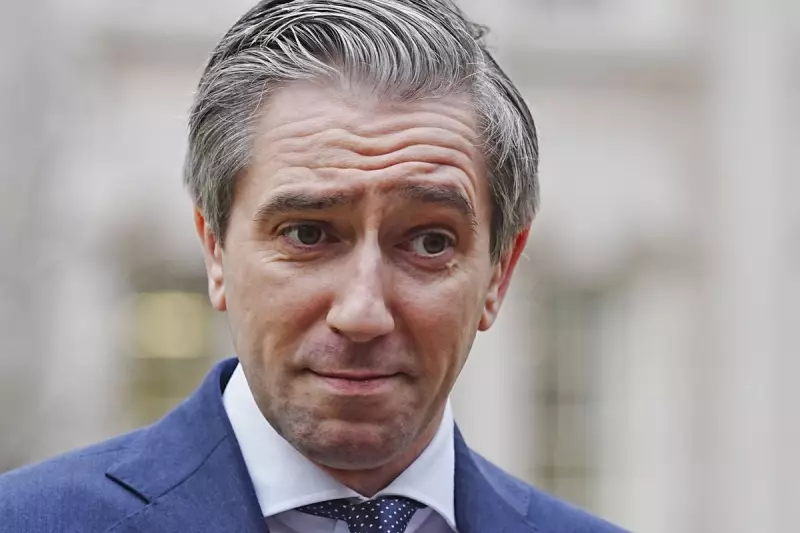
Ireland's Tánaiste Simon Harris has delivered a sobering assessment of transatlantic trade relations, declaring it would be "foolish" to assume former US President Donald Trump will not threaten tariffs again during his current tenure. The warning comes after a tumultuous week where Europe came "extraordinarily close" to economic catastrophe following Trump's threats against six EU nations, the UK, and Norway.
A European Wake-Up Call on Economic Sovereignty
Speaking to reporters at Government Buildings in Dublin following a Government Trade Forum, Harris described the recent confrontation as a significant "wake-up call" for Europe. "We have seen a situation where in a very short period of time, the threat of additional tariffs on European Union member states was levied, and indeed for the first time, the conflation of trade tariffs with sovereignty and with territory," he stated.
The immediate crisis was defused when Trump withdrew his tariff threats after announcing a framework deal on Arctic security in Davos, Switzerland. However, Harris emphasized that "fundamental issues of concern" remain unresolved and warned against complacency.

Scenario Planning and Strategic Response
In response to the escalating tensions, Harris revealed he has directed officials in Ireland's Department of Finance to conduct comprehensive economic "scenario planning" to prepare for potential future disruptions. He stressed the urgent need for the European Union to accelerate efforts toward greater self-reliance in both defence and economic matters.
"It would be a brave person to try to predict the president of the United States' mind in relation to this," Harris told assembled media, reflecting on the unpredictable nature of recent US trade policy. "I think we have seen on two occasions now where the United States engaged in a degree of adventurism around tariffs."
Defending the EU's Response to Greenland Tensions
Harris strongly defended the European Union's handling of the Greenland situation, where Trump had threatened annexation alongside tariff measures. This response came after Ukrainian President Volodymyr Zelensky suggested during his Davos speech that "Europe looks lost" and uncertain about self-defence.
"I have great respect for President Zelensky, I certainly don't think that's what happened," Harris countered. "I actually think what happened this week was the European Union maintaining its nerve, keeping a cool head, sticking together, and making it very, very clear that if those tariffs were levied, we would respond in an unflinching manner."
The Tánaiste argued that the EU's measured approach—avoiding a "knee-jerk" reaction—had been "somewhat vindicated" by the eventual outcome. "We condemned it and made it clear that if it was anything more than random musings, there'd be very significant economic responses, and we got to a point where the president of the United States backed down, quite frankly, and changed his position in real time."
Market Diversification and Diplomatic Continuity
Foreign Affairs Minister Helen McEntee, speaking alongside Harris, acknowledged that the EU-US relationship remains "the most important relationship it has," despite recent strains that have "certainly tested that" bond. She outlined Ireland's strategy to diversify international markets in response to Trump's tariff threats, with St Patrick's Day diplomatic trips playing a key role in this expansion.
"It's about expanding our footprint in many economies, whether it's in India, whether it's in China, whether it's further afield in Australia," McEntee explained. Despite the challenging week, she affirmed that the Irish Taoiseach should maintain the traditional White House visit for St Patrick's Day, describing it as "a really important visit in the overall context, and certainly something that we're not going to pull back from."

Clarification Sought on 'Board of Peace' Proposal
Both ministers addressed questions about Ireland's potential participation in Trump's proposed "Board of Peace," originally conceived as a small UN-approved group overseeing Middle East ceasefires but which appears to have evolved into a broader organisation. McEntee revealed they have sought clarification on whether the group could focus specifically on peace in Gaza and questioned the substantial financial commitment required.
"We cannot join a structure that essentially will try to mimic or undermine the UN Security Council," she stated firmly, indicating Ireland's cautious approach to the proposal.
Harris concluded with a reflection on the changing global landscape, referencing Canadian Prime Minister Mark Carney's Davos comments about a "new world order" where traditional international norms are being tested. "I think it would be foolish to presume and depend on this never happening again," he reiterated, underscoring the need for continued vigilance in an increasingly unpredictable geopolitical environment.