Ghana's Cocoa Industry in Crisis as Buyers Struggle with Funding
Ghana's vital cocoa sector is confronting a severe financial crisis, with licensed buyers unable to secure funds to purchase beans from farmers despite a recent government-mandated price reduction. According to sources speaking to Reuters, the market regulator Cocobod is disbursing payments primarily to clear old debts for delivered beans rather than financing new purchases, leaving many producers in a precarious position.
Pricing Disparity Exacerbates Market Slump
Earlier this month, the government implemented a significant price cut, reducing the fixed farmer price by almost 30 percent to 41,392 cedis ($3,797) per metric ton. However, this new price remains substantially above global market rates, which hover around $3,200 per ton. This pricing mismatch has created little incentive for international traders to engage in purchases, further destabilising the market.
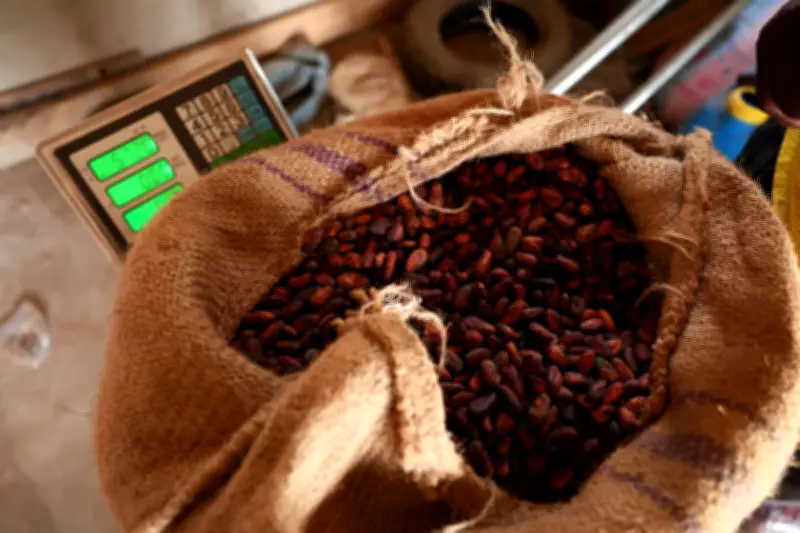
This disparity previously resulted in at least 50,000 tons of unsold cocoa beans accumulating at Ghanaian ports before Cocobod intervened with the price adjustment. The situation underscores a critical disconnect between governmental policy efforts and the harsh on-the-ground realities faced by farmers and buyers alike.

Farmers Left Unpaid and Frustrated
Cocobod has reported disbursing 4.2 billion cedis ($385.32 million) to licensed buying companies (LBCs) to address arrears owed to farmers since November. Despite this, numerous producers and purchasing clerks confirm that these funds have yet to reach them, exacerbating financial hardships.
Ebenezer Asiful, a 54-year-old cocoa farmer, voiced his frustration: "It has been four months now and some of us have still not received payment for cocoa we delivered. We don't know why the government has decided to treat farmers this way." This sentiment is echoed across farming communities, where uncertainty and delayed payments are becoming the norm.
Purchasing Clerks Refuse New Beans
Farmer Joseph Prenya told Reuters that many LBC purchasing clerks are now refusing to accept additional beans due to liquidity constraints. "What we do now is move from one town to another to find out which purchasing clerk is open and has cash before we bring our beans," Prenya explained, highlighting the logistical challenges and inefficiencies plaguing the sector.
With farmer prices still elevated above global levels, opposition lawmakers have warned that Cocobod may be compelled to implement another price cut—a move that farmers have vowed to resist vehemently. Jerome Sam, Cocobod's Head of Public Affairs, countered this by stating that while some buyers face liquidity issues, others remain active, and he insisted the farmer price would not be reduced again this season regardless of global price fluctuations.
Mounting Debts and Financial Pressures
Cocobod's chief executive recently acknowledged that the organisation is grappling with mounting debts. A cocoa trade executive at a global agri-commodities firm noted that the regulator is contending with both unpaid bills and new liabilities, which will continue to accumulate as long as the farmer price remains higher than global prices.
Compounding the crisis, a Ghanaian association representing LBCs has admitted owing local banks approximately $750 million in debts taken on to prefinance purchases. The association has urged its members to prioritise settling debts owed to farmers before repaying banks, though this directive has yet to alleviate the widespread financial strain.
The ongoing turmoil in Ghana's cocoa industry not only threatens the livelihoods of thousands of farmers but also poses significant risks to the nation's economy, which relies heavily on cocoa exports. As stakeholders navigate these challenges, the need for cohesive and effective policy interventions becomes increasingly urgent to stabilise the market and support those at its core.